
 Algeria
 Egypt
 Libya
 Morocco
 Sudan
 Tunisia
 Benin
 Burkina Faso
 Cabo Verde
 Côte d'Ivoire
 Ghana
 Guinea
 Guinea-Bissau
 Liberia
 Mali
 Mauritania
 Niger
 Nigeria
 Senegal
 Sierra Leone
 The Gambia
 Togo
 Central African Republic
 Chad
 DR Congo
 Equatorial Guinea
 Gabon
 Republic of the Congo
 São Tomé and Príncipe
 Burundi
 Comoros
 Djibouti
 Eritrea
 Ethiopia
 Kenya
 Madagascar
 Malawi
 Mauritius
 Mozambique
 Rwanda
 Seychelles
 Somalia
 South Sudan
 Tanzania
 Uganda
 Angola
 Botswana
 Eswatini
 Lesotho
 Namibia
 South Africa
 Zambia
 Zimbabwe
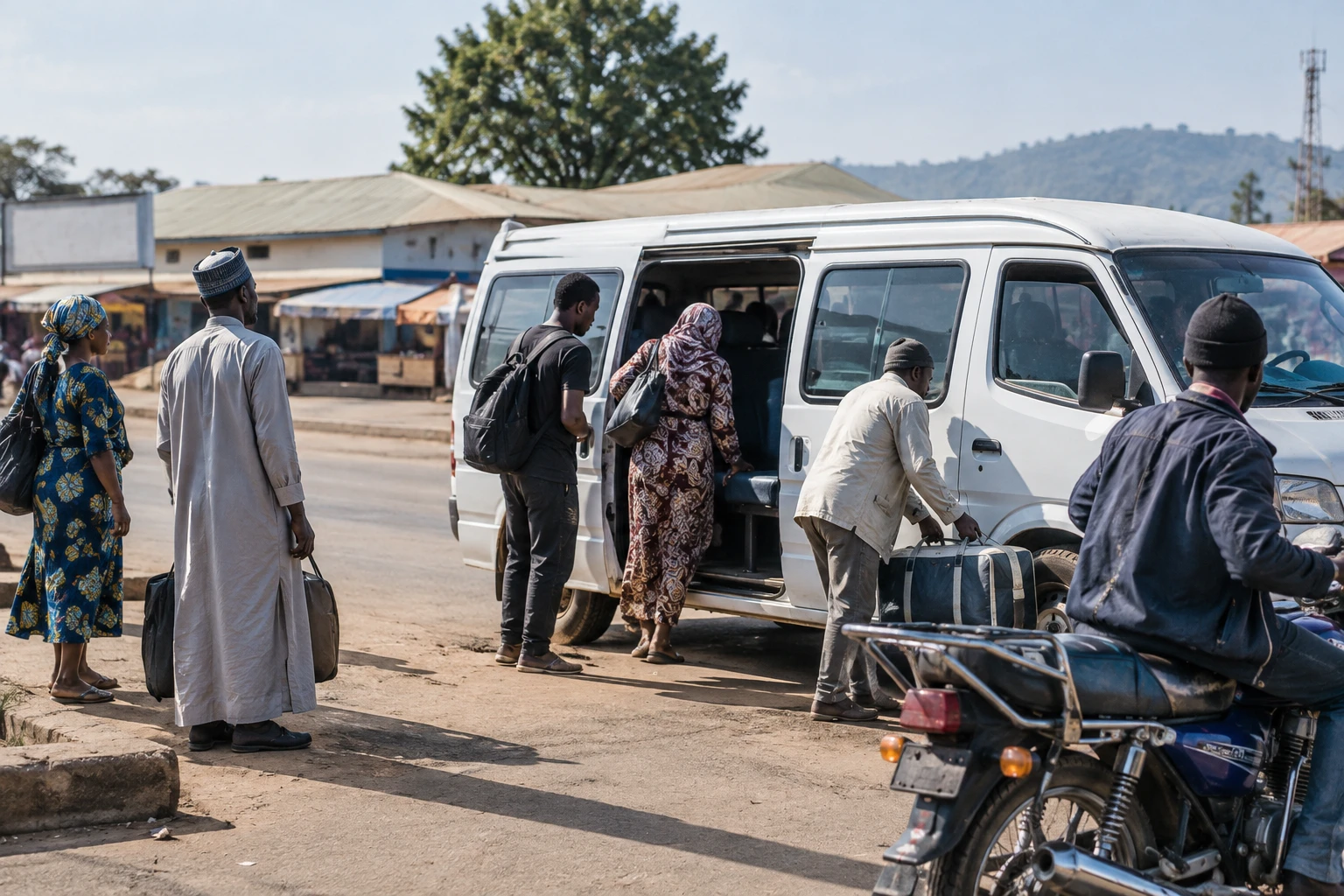
At Bibemi, in the North Region, gold is not yet being mined on an industrial scale. The project led by Oriole Resources remains dependent on negotiations with the Cameroonian state. Their outcome will affect the mine’s schedule, as well as how the country intends to regulate and benefit from its resources.
A project still between exploration and production
Cameroon is seeking to broaden an extractive economy long dominated by hydrocarbons. In the mining sector, several gold projects could mark a new phase. Bibemi is one of them, alongside Mbe, also being developed by Oriole Resources, and projects led by other operators.
This ambition is part of Central Africa and the CEMAC, the Economic and Monetary Community of Central Africa. But the prospect of new deposits alone does not guarantee near-term production. Between studies, negotiations, approvals and funding, a mining project can remain at the preparatory stage for a long time.
Cameroon’s Mining Code, adopted in December 2023, sets out, among other things, mining permits and mining agreements. These agreements between the state and the company establish the project’s terms. They can specify production-sharing arrangements, commitments to neighbouring communities and local-content obligations. The Cameroonian law establishing the Mining Code provides that the agreement must precede the award of a mining permit.
Talks continue, with no permit announced
Oriole submitted an application for a mining permit in 2024. In December 2025, the company updated its application to include recent technical studies, including a preliminary economic assessment. Known in the mining sector as a PEA, the study examines the economic viability of a development scenario based on the data available. It is neither permission to build nor a final investment decision.
On 12 October 2026, Oriole chief executive Martin Rosser said discussions with the Cameroonian authorities were ongoing. The company also reported talks with the National Mining Corporation (SONAMINES) and the Ministry of Mines, Industry and Technological Development. A meeting with the Directorate General of Customs was mentioned. However, publicly available information provides no details of the issues still under negotiation or a firm timetable for the permit to be issued.
The page on Bibemi published by Oriole Resources confirms that the permit application has been updated and that the company is working to formalise a mining agreement. It also says the environmental and social impact assessment received formal approval in November 2025. This is an important step, but it does not replace the mining permit.
The company’s initial timetable targeted the permit being granted in the first half of 2026. That deadline has now passed without a public announcement that it has been issued. The latest status therefore describes a project still under negotiation, not a mine ready to begin construction. A news report carried in Cameroon also says talks are continuing, but provides no independent detail about their content.
Figures should be read as forecasts
Oriole’s scenario envisages seven years of open-pit mining. The company estimates total production at 72,000 ounces of gold, or about 2.24 tonnes, and the initial capital required for construction at $60.4 million. These figures come from the company’s preliminary assessment. They describe a scenario under consideration, not guaranteed production or expenditure already incurred.
The distinction also matters for geological resources. A mineral resource is an estimate of the amount of ore that may be present, with different levels of confidence. It is not automatically equivalent to a reserve, which must meet stricter technical and economic feasibility criteria. Oriole says there is still scope for exploration and optimisation at Bibemi. This work could change the project’s parameters in either direction.
The permit would therefore be only one milestone among several. The mining agreement must establish, among other things, the company’s commitments and the arrangements for sharing value. For the authorities, the challenge is to translate any eventual mining into public revenue, jobs, purchases from local businesses and benefits for people living near the site. For communities, practical concerns also include access to land, livelihoods and the monitoring of environmental impacts.
A test for Cameroon’s mining governance
The legal framework provides for several of these requirements, but their force will depend on the agreements reached, their publication and their implementation. The governance of extractive revenues remains an issue monitored by the Extractive Industries Transparency Initiative. In 2024, the EITI identified shortcomings in the implementation of its standard in Cameroon, particularly regarding civil society engagement. This underlines the importance of accessible information on contracts, revenues and operators’ obligations.
Across CEMAC, Bibemi illustrates a question shared by the region’s economies: how can natural resources be turned into sustainable economic activity and benefits that are more widely shared? The interests of the state, the company, workers and local residents do not necessarily align. The agreement’s contents and the oversight mechanisms will make it possible to assess how they are balanced, beyond production announcements.
The next steps to watch are therefore the conclusion of the agreement, followed by the formal decision on the mining permit. Until these actions are announced, Bibemi remains a project at an advanced study stage, but not yet a mine under construction. For Cameroon, this process tests both the sector’s attractiveness and its ability to negotiate clear, verifiable rules.



