Algeria
 Egypt
 Libya
 Morocco
 Sudan
 Tunisia
 Benin
 Cabo Verde
 Côte d'Ivoire
 Ghana
 Guinea
 Guinea-Bissau
 Liberia
 Mali
 Mauritania
 Niger
 Nigeria
 Senegal
 Sierra Leone
 The Gambia
 Togo
 Cameroon
 Central African Republic
 Chad
 DR Congo
 Equatorial Guinea
 Gabon
 Republic of the Congo
 São Tomé and Príncipe
 Burundi
 Comoros
 Djibouti
 Eritrea
 Ethiopia
 Kenya
 Madagascar
 Malawi
 Mauritius
 Mozambique
 Rwanda
 Seychelles
 Somalia
 South Sudan
 Tanzania
 Uganda
 Angola
 Botswana
 Eswatini
 Lesotho
 Namibia
 South Africa
 Zambia
 Zimbabwe
Claimed gains, but the situation remains fluid
In a country where roads, markets and schools often depend on the security of a route, every recovered area matters. In Burkina Faso, the transitional authorities are now presenting the reconquest as a concrete process, visible in several localities where the administration and residents say they have returned. They also say supplies are reaching these areas more consistently, a sign that military control alone is no longer enough: logistics, public services and the movement of goods must also be maintained.
The assessment was presented in Ouagadougou as the Burkinabè state seeks to show that territorial defence and administrative continuity are advancing hand in hand. The Minister of War and Patriotic Defence, General Célestin Simporé, highlighted the expansion of operational capacity, equipment and logistics. At the same time, the country remains committed to the Sahelian framework it has chosen with Mali and Niger, within the Confederation of Sahel States, while WAEMU remains an active regional forum for monetary and economic affairs.
74.53% of the territory, according to the authorities
On Friday 24 July 2026, the Burkinabè authorities said the state now controls nearly 74.53% of the national territory. They added that in December 2025 the rate was about one percentage point lower. The gain would amount to just over 2,600 sq km, equivalent to several times the area of Ouagadougou. The figure is not presented as an independent assessment, but as the government’s evaluation for the half-year. It nevertheless extends a trend already cited at the start of the year, when the ministry said about 74% of the territory was under full control.
General Simporé also said that the quarter of the country still outside the claimed area of control remains accessible to Burkinabè forces. In other words, the battle is no longer solely about military positions. It is also about the state’s effective presence, its ability to reopen supply routes and to stabilise areas that have long been isolated. For many Burkinabè, this is where the difference lies between gains announced from a podium and a genuine return to daily life.
Attacks highlight the fragility of the front lines
The picture nevertheless remains fragile. Armed offensives continue in several regions, notably in the east and south-west of the country. Several local sources reported that a military detachment at Tawori, in Tapoa province, was attacked and looted in mid-July, while other posts, including units of the Volunteers for the Defence of the Homeland, were also targeted in the South-West. These incidents show that armed groups retain the capacity to cause disruption, even in areas where the state says it has regained the initiative.
The decision to rely more heavily on the VDP, civilian volunteers supervised by the state to strengthen local defence, also reflects a political and social reality. The scheme extends the state’s presence into villages, but it leaves communities more exposed to reprisals and can blur the line between combatants, logistical supporters and civilians. For residents, the issue remains simple: to travel, farm, trade and send children to school without wondering which armed group will control the next stretch of track.
What the assessment says about Burkina Faso’s strategy
The authorities’ message forms part of a broader strategy centred on sovereignty. Since the break with France and the consolidation of the AES framework, Ouagadougou has stressed an endogenous response to the security crisis, with greater domestic mobilisation, more locally sourced equipment and communications focused on reconquest. Financing the war effort follows the same logic: the Patriotic Support Fund raised a further CFAF 162bn in the first half of 2026, according to the Prime Minister’s Office, showing that security has also become a matter of public resources and tax consent.
This approach has a direct impact on cities such as Ouagadougou, where the administration seeks to maintain a visible presence, as well as on rural areas, where even a modest improvement in security affects harvests, prices and access to healthcare. It also affects the informal economy, which depends on weekly markets and transport corridors. When a locality is secured, trade quickly resumes; when a route closes, households are the first to pay the price.
Implications beyond Burkina Faso
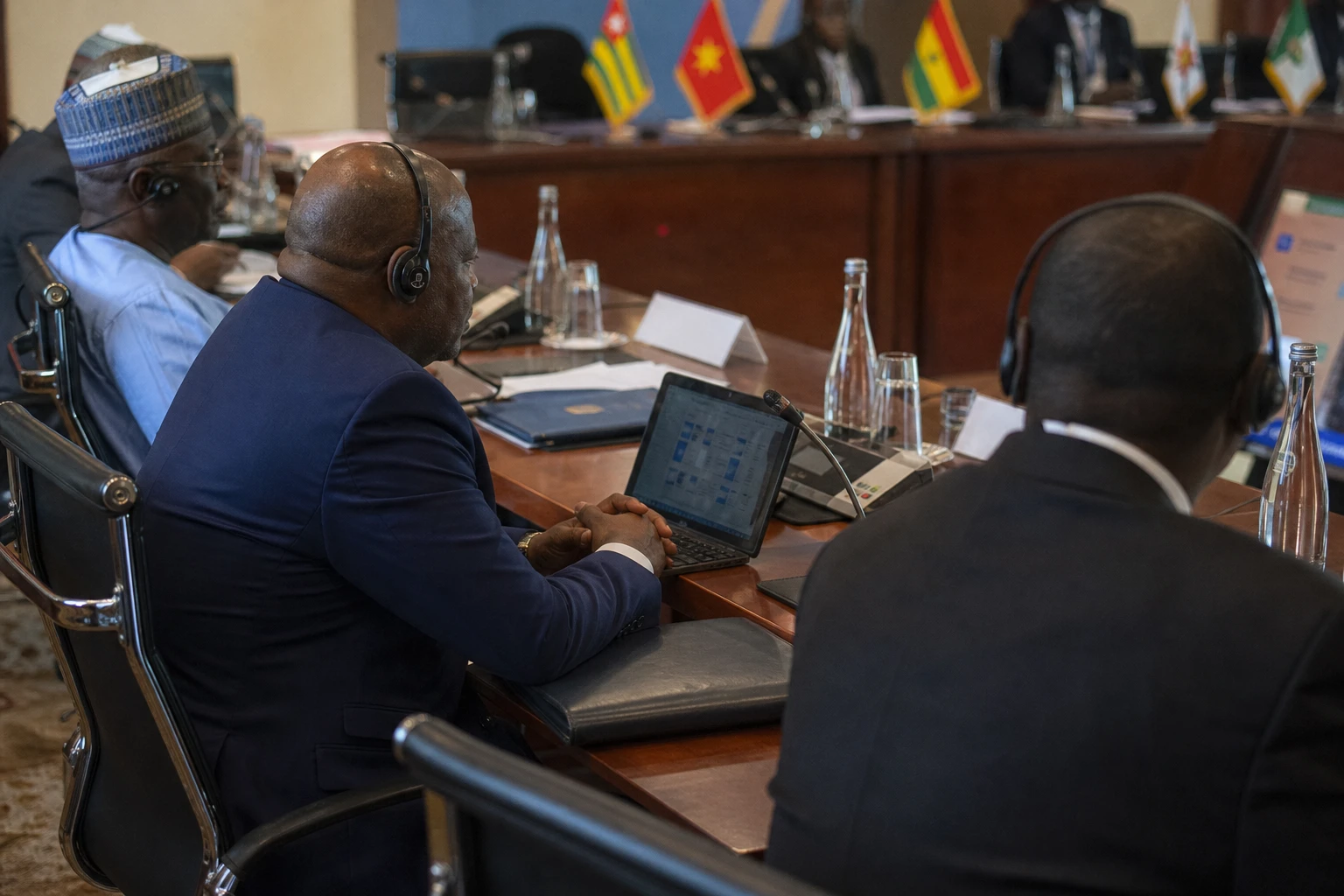
Beyond Burkina Faso, this assessment speaks to the whole Sahel. Burkina Faso, Mali and Niger are seeking to build a common framework for defence and governance, while ECOWAS is still trying to redefine its relations with them. In this context, every territorial gain announced in Ouagadougou also serves as a political message: the state wants to prove it can regain a foothold without relying on an external security model. Upcoming institutional meetings within the AES, and ongoing discussions with West African regional organisations, will show whether this military reconquest can be turned into lasting administrative and economic recovery.
For West Africa, the stakes are clear: territorial security is measured not only on a map, but by a state’s ability to return to citizens’ everyday lives. In Burkina Faso, the front line no longer runs only through bases and detachments. It also runs along roads, through town halls, markets and schools. The months ahead will show whether the claimed 74.53% becomes a lasting reality or merely a political snapshot of the moment.