Algeria
 Egypt
 Libya
 Morocco
 Sudan
 Tunisia
 Benin
 Burkina Faso
 Cabo Verde
 Côte d'Ivoire
 Ghana
 Guinea
 Guinea-Bissau
 Liberia
 Mali
 Mauritania
 Niger
 Senegal
 Sierra Leone
 The Gambia
 Togo
 Cameroon
 Central African Republic
 Chad
 DR Congo
 Equatorial Guinea
 Gabon
 Republic of the Congo
 São Tomé and Príncipe
 Burundi
 Comoros
 Djibouti
 Eritrea
 Ethiopia
 Kenya
 Madagascar
 Malawi
 Mauritius
 Mozambique
 Rwanda
 Seychelles
 Somalia
 South Sudan
 Tanzania
 Uganda
 Angola
 Botswana
 Eswatini
 Lesotho
 Namibia
 South Africa
 Zambia
 Zimbabwe
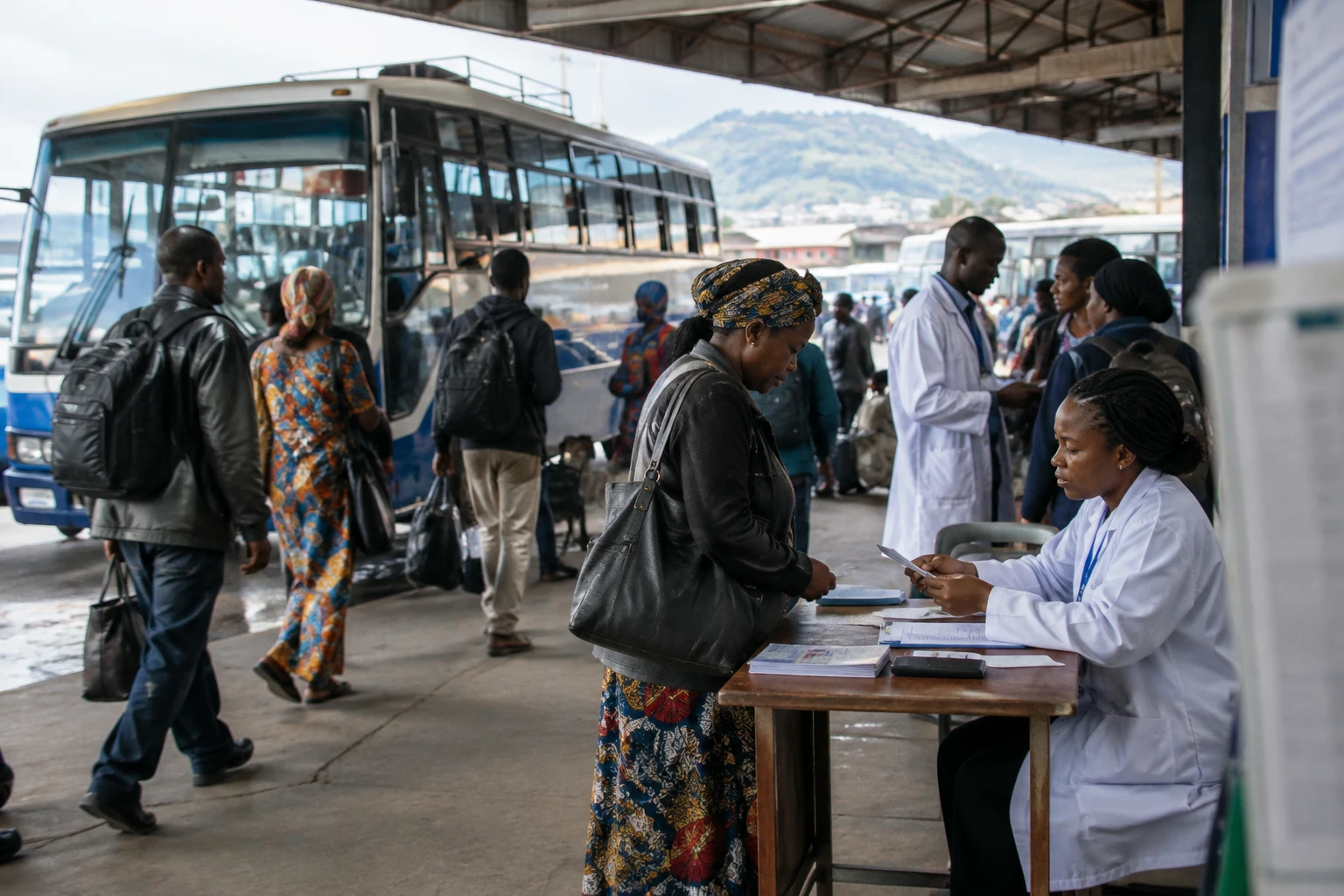
A case detected far from the outbreak’s epicentre can mobilise teams in several countries. This is now one of the challenges posed by the Bundibugyo Ebola virus disease outbreak that began in the east of the Democratic Republic of the Congo (DR Congo): breaking chains of transmission without disrupting trade or further weakening health services.
An outbreak spreading beyond its epicentre
Declared on 15 May 2026 in Ituri, the outbreak is the 17th recorded in DR Congo since the Ebola virus was identified in 1976. The World Health Organization (WHO) has classified it as a public health emergency of international concern, a status that calls for coordination between states. DR Congo is a member of both the East African Community (EAC) and the Southern African Development Community (SADC), two regional blocs linked by the movement of people and health preparedness.
The Bundibugyo virus is a distinct species from the viruses responsible for previous major outbreaks. Unlike some other forms of Ebola, it has no approved vaccine or specific treatment. The WHO nevertheless lists research and trials into prevention and care. The response relies in particular on screening, isolation, supportive care, infection prevention and contact tracing.
Geography complicates these efforts. The outbreak is spreading in eastern DR Congo, where travel, insecurity and unequal access to healthcare can slow detection. Trade routes and cross-border movement link the affected provinces to neighbouring countries, as well as to more distant destinations.
DR Congo at the heart of a regional response
As of 27 October, Congolese authorities reported more than 10,000 confirmed cases and nearly 5,000 deaths, according to figures reported by Associated Press. These figures describe an outbreak of unprecedented scale in the country. They should be read with their reference date: totals change as new cases are confirmed and data is reported. In its latest detailed report available before this announcement, the WHO had already recorded more than 6,700 confirmed cases in DR Congo as of 7 September and reported that the outbreak was expanding geographically.
The consequences extend beyond those infected. Families sometimes have to travel long distances to access care, while health teams must screen, treat and trace contacts at the same time. In areas where access to services is difficult, late detection makes transmission harder to control. The WHO also stresses that needs for water, hygiene and healthcare remain critical in affected communities.
Kenya had confirmed nine cases and two deaths as of 23 October, according to health authorities cited by the US Centers for Disease Control and Prevention. On 27 October, the Africa Centres for Disease Control and Prevention (Africa CDC), the African Union’s public health agency, announced support of about $1.5 million for Kenya, along with the deployment of ten African experts. The assistance is intended to strengthen surveillance, contact tracing and care.
Nigeria case under surveillance
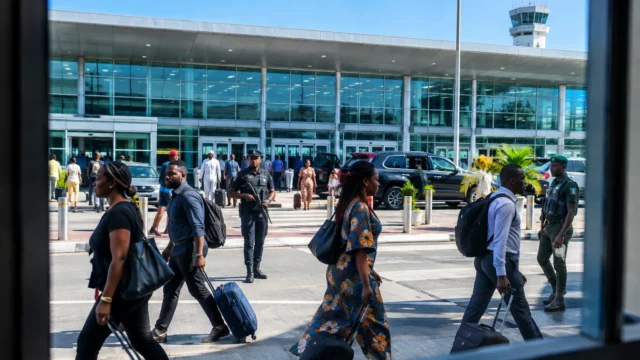
Nigeria confirmed an imported case on 20 October in Abuja. The Nigeria Centre for Disease Control says the patient, a woman who arrived from Uganda via Addis Ababa, developed symptoms on 7 October. She was evacuated to Switzerland on 26 October. As of 29 October, 62 contacts had been identified and were being monitored, with no positive results reported among them in the national update consulted.
The exact route of infection has yet to be established. Authorities are continuing their investigations into the patient’s movements and possible exposures. It is therefore important to distinguish the confirmed fact — a case in Nigeria — from the precise source of infection, which has not yet been publicly established.
The alert revives memories of the 2014 outbreak, which Nigeria contained after the virus was introduced in Lagos. The country says it is drawing on its emergency operations centres and surveillance experience. This precedent shows the importance of a rapid response, without guaranteeing that the conditions of the current outbreak are identical.
In West Africa, Togo has stepped up vigilance at points of entry, according to information provided by national authorities. Such a measure can help identify symptoms and direct travellers to care. It cannot, however, replace surveillance in communities or coordination with neighbouring countries.
Local teams, a decisive link
The fight against an outbreak also depends on community health workers. Working close to residents, they can identify symptoms, explain guidance and direct people to healthcare facilities. Africa CDC estimates that $4.3 billion a year would be needed to build a workforce of two million such workers across the continent by 2030. The target is a reminder that an emergency response depends on trained, paid and protected staff, not just equipment deployed when an alert is raised.
For residents, health guidance must be accompanied by clear information and accessible services. Trust matters: without it, people who have been exposed may delay seeking care or reporting their contacts. Authorities and partners must therefore involve community leaders and local health workers, while avoiding the stigmatisation of patients and travellers.
The next step will be to monitor the contacts under surveillance and countries’ ability to share data quickly. Regional organisations, the African Union and the WHO will need to maintain coordination across national borders. The challenge is not only to contain imported cases, but also to provide lasting support for health services in areas where the outbreak persists.
WHO situation report on the Bundibugyo outbreak in DR Congo · Situation update from the Nigeria Centre for Disease Control · Africa CDC support for Kenya’s response