Algeria
 Egypt
 Libya
 Morocco
 Sudan
 Tunisia
 Benin
 Burkina Faso
 Cabo Verde
 Côte d'Ivoire
 Ghana
 Guinea
 Guinea-Bissau
 Liberia
 Mali
 Mauritania
 Niger
 Nigeria
 Senegal
 Sierra Leone
 The Gambia
 Togo
 Cameroon
 Central African Republic
 Chad
 DR Congo
 Equatorial Guinea
 Gabon
 Republic of the Congo
 São Tomé and Príncipe
 Burundi
 Comoros
 Djibouti
 Eritrea
 Ethiopia
 Kenya
 Madagascar
 Malawi
 Mauritius
 Mozambique
 Rwanda
 Seychelles
 Somalia
 South Sudan
 Tanzania
 Uganda
 Angola
 Botswana
 Eswatini
 Lesotho
 South Africa
 Zambia
 Zimbabwe

In the Walvis Basin, the next step will not yet be a well. It will first take place beneath the sea, in seismic data that make it possible to better map geological structures. BP’s arrival therefore strengthens exploration in Namibia without immediately turning offshore promise into oil production.
A new reshuffling of the deck in the Walvis Basin
Namibia’s Ministry of Industries, Mines and Energy approved on 1st October 2026 the transfer to BP of Eco Atlantic’s 60 % interests in three offshore oil licences. The deal concerns PELs 97, 99 and 100, located in the Walvis Basin off Namibia’s coast.
The decision is the final administrative approval required under Namibia’s Petroleum (Exploration and Production) Act. The two companies must still complete the formalities to close the transaction. Once it is finalised, BP will become the operator of the three licences.
Eco Atlantic will retain 25 % in each block. The remaining interest belongs to NAMCOR, Namibia’s national hydrocarbons company, and its local partners, according to the structure of each licence. Together, the three areas cover nearly 22 893 square kilometres.
In exchange for the stake, BP is to pay Eco Atlantic $2.7 million and take responsibility for the next exploration operations. The amount appears limited given the size of the blocks. Above all, it reflects the risk-sharing logic of deep-water exploration: the heaviest expenditure comes before any commercial discovery.
No immediate drilling, but extensive mapping work
The approved programme does not include drilling at this stage. BP will first have to reassess seismic data already collected on one of the blocks. On the other two, the company will have to acquire at least 3 000 square kilometres of three-dimensional seismic data.
3D seismic surveying uses sound waves to produce a detailed picture of the seabed and subsoil. It does not confirm the presence of an exploitable deposit. However, it helps geologists rank targets and reduce the risk of an expensive well in a poorly documented area.
Namibian environmental documents place some study areas at depths ranging from about 1 500 to more than 3 000 metres. These conditions make operations technically complex and financially demanding. They also explain why companies proceed in stages, from geophysical surveys and environmental approvals to investment decisions.
The timetable could change in 2028. If BP and its partners choose to enter the licences’ second renewal period and commit to drilling, Eco Atlantic would have an option to transfer a further 10 % to BP. In return, BP could cover the exploration costs associated with Eco Atlantic’s remaining stake.
The arrangement sets a cap of $21 million per well and per licence. Across three licences, the potential cost coverage could therefore reach $63 million. This is neither an investment already released nor a guarantee of drilling. It depends on a future decision on licence renewals and on BP making an actual commitment.
Potential still clouded by uncertainty
The Walvis Basin is not an area untouched by exploration. In 2013, two wells drilled under another permit produced mixed results. The Wingat-1 well encountered indications of oil, but at volumes deemed non-commercial. The Murombe-1 well, about 15 kilometres away, did not confirm a discovery.
These precedents underline an essential distinction. The presence of hydrocarbons in a geological formation is not enough to establish that a project is profitable. The size of the reservoir, the quality of the oil, the ability to extract it and the economic viability of development must also be demonstrated.
Namibia has for several years been stepping up offshore exploration. TotalEnergies and Chevron are among the companies that have also assessed the potential of Namibian basins. For Windhoek, the challenge is to attract capital and expertise while retaining a national stake in future projects.
This strategy places NAMCOR at the heart of the arrangement. The state-owned company does not necessarily lead technical operations, but its participation is intended to keep the Namibian state involved in the licences and better able to monitor the development of a potential national oil industry.
What the deal could mean for Namibia
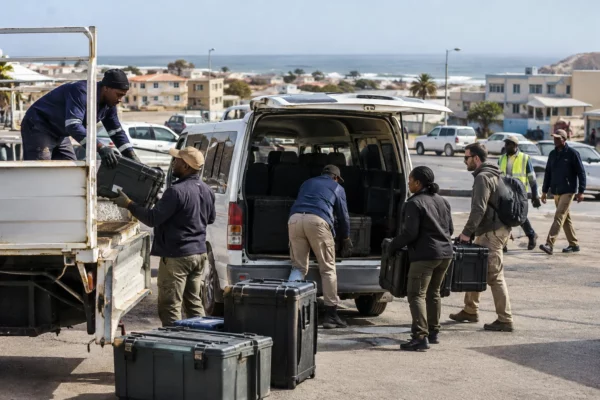
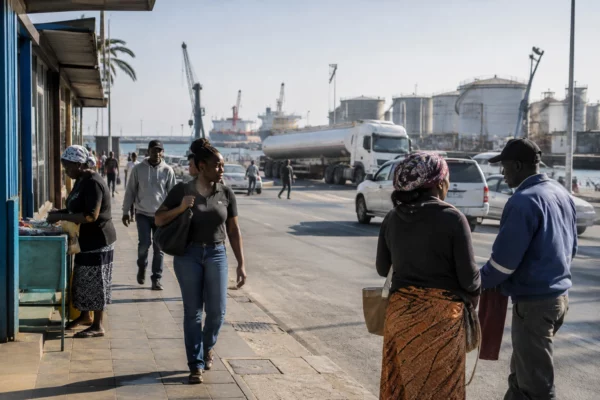
In the short term, the deal will mainly generate activity for geological, maritime, environmental and logistics services. Walvis Bay could see increased demand for specialist vessels, equipment and technical services. The benefits will nevertheless depend on whether Namibian businesses can access the contracts and expertise they need.
No oil revenue can yet be announced for public finances. Until a commercial deposit is confirmed, Namibia remains in a risk-taking phase. Revenue from any future production would then depend on the tax regime, production-sharing agreements, development costs and international oil prices.
There will also be an environmental debate. Seismic surveys and deep-water operations must comply with Namibian approvals and take marine ecosystems into account. The coast is already home to fishing, transport and tourism activities. The expansion of exploration will therefore need to be monitored beyond the interests of oil companies alone.
A case to watch across the SADC region
Namibia is pursuing this policy within the SADC, the Southern African Development Community. The regional organisation does not approve Namibian licences, which fall under Windhoek’s sovereignty. It is nevertheless an important framework for infrastructure, trade, energy and investment in southern Africa.
Progress on the deal will be measured against several concrete milestones: the legal completion of the transfer, the start of seismic work, any renewal decisions in 2028 and, only after that, a possible commitment to drilling.
For now, BP is taking a position on geological potential, not established production. Namibia gains an operator with substantial resources. It still needs to show that this presence can lead to a commercial discovery, local benefits and development compatible with its other maritime activities.