Algeria
 Egypt
 Libya
 Morocco
 Sudan
 Tunisia
 Benin
 Burkina Faso
 Cabo Verde
 Côte d'Ivoire
 Ghana
 Guinea
 Guinea-Bissau
 Liberia
 Mali
 Mauritania
 Niger
 Nigeria
 Senegal
 Sierra Leone
 The Gambia
 Togo
 Central African Republic
 Chad
 DR Congo
 Equatorial Guinea
 Gabon
 Republic of the Congo
 São Tomé and Príncipe
 Burundi
 Comoros
 Djibouti
 Eritrea
 Ethiopia
 Kenya
 Madagascar
 Malawi
 Mauritius
 Mozambique
 Rwanda
 Seychelles
 Somalia
 South Sudan
 Tanzania
 Uganda
 Angola
 Botswana
 Eswatini
 Lesotho
 Namibia
 South Africa
 Zambia
 Zimbabwe
In Yaoundé, a president’s return revives a broader question
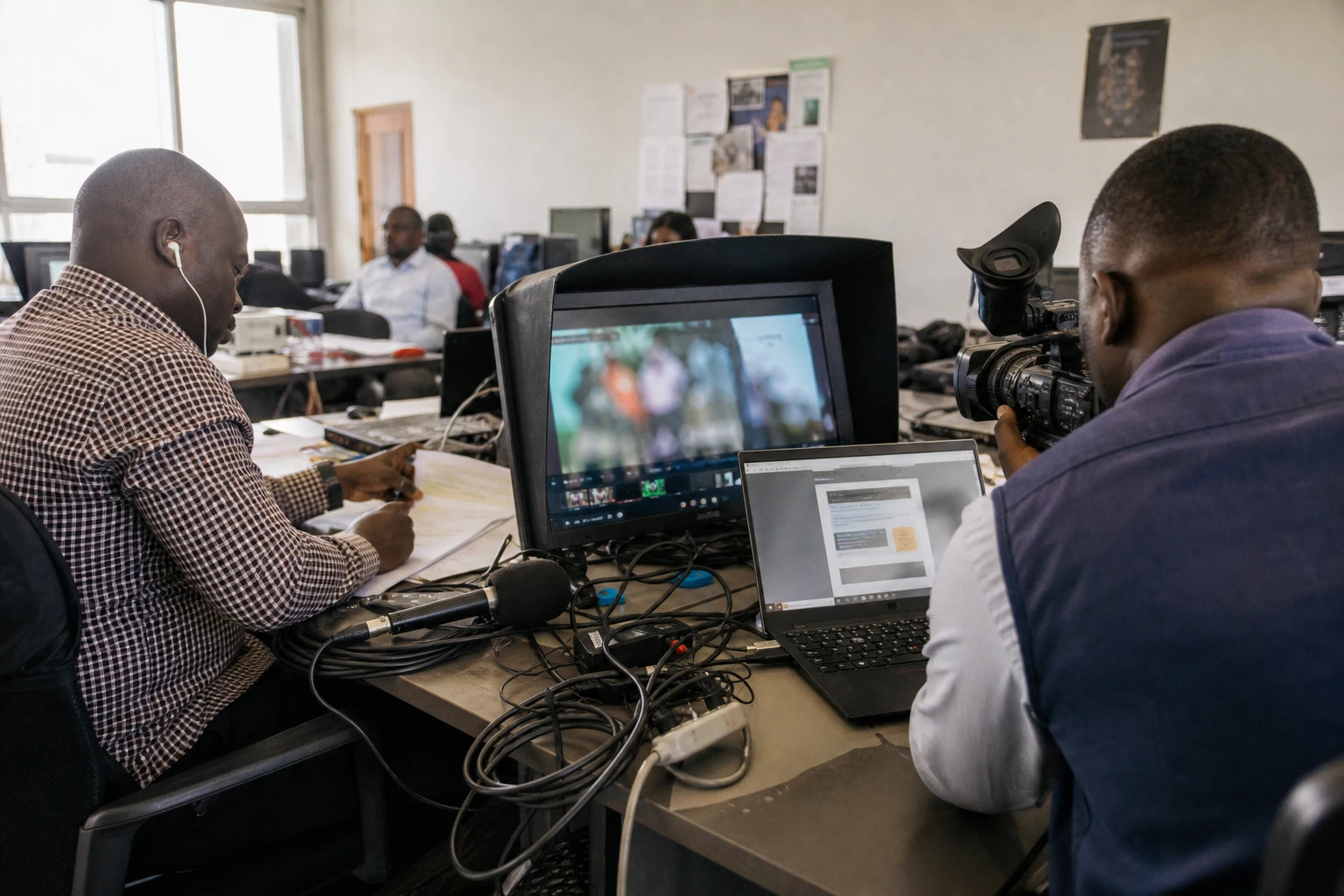
When a head of state spends more than two months outside the country, the debate quickly moves beyond the individual. In Cameroon, it touches on continuity in power, the clarity of executive decision-making and the confidence of a population that closely follows every trip. Paul Biya’s return to Yaoundé after a lengthy stay in Switzerland therefore mattered as much for political life as for the image of a country where the state still rests largely on one central figure.
The regional context reinforces this reading. Cameroon is a pillar of CEMAC, the Central African Economic and Monetary Community, which brings together six countries: Cameroon, Congo, Gabon, Equatorial Guinea, the Central African Republic and Chad. In this bloc, political stability in Yaoundé affects the economic, monetary and security balance of the whole of Central Africa.
A lengthy stay, followed by a keenly awaited landing
Paul Biya returned to Yaoundé on Thursday 20 August 2026, after spending more than 70 days abroad. International media reported his arrival at the airport in the Cameroonian capital following a flight from Geneva. His absence had fuelled speculation about his health and the risk of a power vacuum at the top of the state. The Cameroonian president is 93 and has led the country since 1982.
This episode is not a trivial one. For more than four decades, Cameroon’s institutional life has remained shaped by the president’s longevity and the strength of his political camp. The Cameroonian presidency itself notes that Paul Biya has been in power since 6 November 1982 and has served several terms. In this kind of arrangement, the head of state’s physical absence becomes a political event in its own right.
Criticism has focused on two points. First, transparency about his health. Second, the system’s ability to function normally when the president is outside the country. In practice, this question concerns government departments and economic decision-making, as well as how regional partners assess the country’s stability. In a capital such as Yaoundé, the issue is not merely symbolic. It affects the state’s day-to-day operations.
Cameroon also celebrates another face of the continent
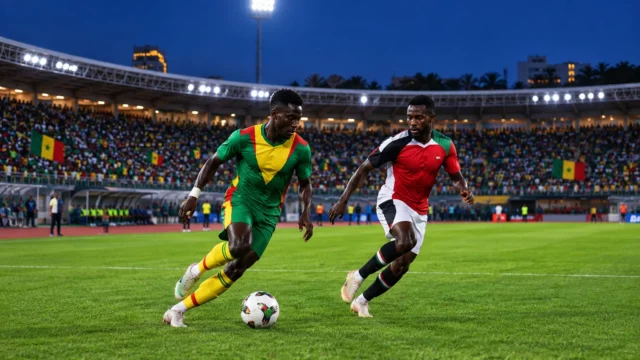
At the same time, the country presented a very different image. The Indomitable Lionesses won the Women’s Africa Cup of Nations final in Rabat, beating Malawi 3-0. The tournament, hosted by Morocco, ended on 16 August 2026 and brought together 16 teams for the first time. The CAF described this edition as the largest in the history of the continental women’s tournament.
For Cameroon, this sporting success means more than a trophy. It underscores the growing place of women’s football in the continent’s sports policies. It also shows that a country often reduced to its political tensions can, at the same time, produce collective performances that bring people together. The final showcased skill, preparation and sporting ambition.
This victory has even wider significance for Central Africa. In a region where public narratives are often dominated by security, institutional crises or economic pressures, women’s sport offers another point of focus. It highlights training pathways, federations, technical teams and players who are making their mark on the continental stage without waiting for external validation.
Africa remains on health alert
The week’s other major issue is unfolding in the Democratic Republic of the Congo. The World Health Organization judged the risk of international spread of the Ebola outbreak to be high, while the organisation’s Africa office reported more than 5,000 confirmed cases and 2,378 deaths as of 16 August 2026. The crisis has been described as one of the fastest-moving ever observed in the country.
The issue also concerns Central Africa more broadly. CEMAC is closely monitoring the situation and has published a report on Ebola virus disease in its member states. This is a reminder of an often-overlooked fact: health crises cross borders quickly, particularly where commercial, family and cross-border travel remains high. In this region, public health is not an isolated issue. It is a matter of regional integration.
The current response relies on familiar but demanding measures: surveillance, targeted vaccination, cross-border coordination and reliable information. The WHO and its partners have announced a stepped-up response, while Congolese authorities continue their work on the ground. The goal is straightforward: contain the outbreak early, before the disease reaches more densely populated and mobile areas.
What this week says about Central Africa and the continent
Taken together, these events tell the story of a Central Africa in motion. On one side is a Cameroonian government still highly personalised, with vulnerabilities around succession, transparency and governance. On the other is a country capable of winning at the top of continental women’s football, even as the sub-region monitors a serious outbreak just across its borders. The contrast is stark, but real.
Across Africa, the stakes go beyond Cameroon alone. Regional institutions such as CEMAC, and continental bodies such as the WHO Africa office and the CAF, are reminders that African states now share common challenges: governance, public health, mobility, international image and the promotion of talent. The week sent a twofold signal. States still matter. But societies are also moving forward through sport, culture and their ability to tell their own stories.
Hollywood star Angélique Kidjo adds another dimension to this picture. The French-Beninese singer has become the first African musician to receive a star on the Hollywood Walk of Fame in Los Angeles, according to the Hollywood Chamber of Commerce. For the continent, this is more than an individual honour. It is a marker of cultural visibility, on a par with a sporting victory or a diplomatic breakthrough. Africa then appears not as a subject to be viewed, but as a place that creates, signs and establishes its own cultural touchstones.