Algeria
 Egypt
 Libya
 Morocco
 Sudan
 Tunisia
 Benin
 Burkina Faso
 Cabo Verde
 Côte d'Ivoire
 Ghana
 Guinea
 Guinea-Bissau
 Liberia
 Mali
 Mauritania
 Niger
 Senegal
 Sierra Leone
 The Gambia
 Togo
 Cameroon
 Central African Republic
 Chad
 DR Congo
 Equatorial Guinea
 Gabon
 Republic of the Congo
 São Tomé and Príncipe
 Burundi
 Comoros
 Djibouti
 Eritrea
 Ethiopia
 Kenya
 Madagascar
 Malawi
 Mauritius
 Mozambique
 Rwanda
 Seychelles
 Somalia
 South Sudan
 Tanzania
 Uganda
 Angola
 Botswana
 Eswatini
 Lesotho
 Namibia
 South Africa
 Zambia
 Zimbabwe
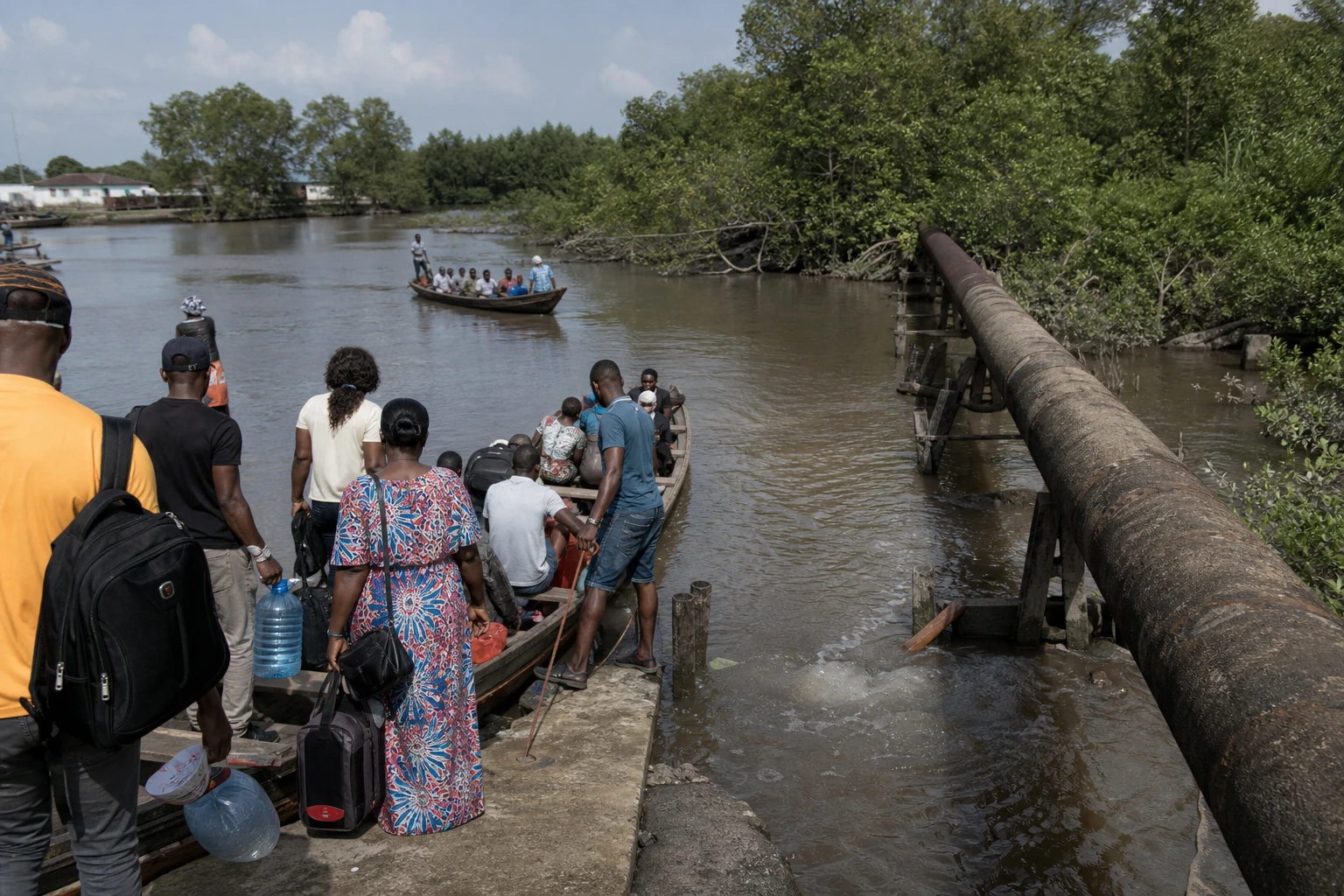
In Bille, in the Niger Delta, the lack of electricity is turning a gas leak into a makeshift solution. Residents are now using an old pipeline to power generators. In this fishing community, the danger is no longer simply something they endure. With no response from the authorities deemed adequate, it is also becoming an improvised resource.
The situation sums up the growing tensions in this riverside village in Rivers State. Since October 2025, gas has been rising through waterways, marshes and some wells. Nearly a year later, residents are still waiting for a lasting response, an organised evacuation and precise information about the source of the emissions.
An isolated community facing a persistent crisis
Bille is in the Degema local government area, in the heart of the Niger Delta. The community is mainly reached by boat from Port Harcourt. Its geography complicates the arrival of emergency services, the transport of equipment and the provision of medical care to residents.
The community has traditionally relied on fishing, gathering products from the mangroves and small-scale trade. Water pollution and the presence of gas in several areas therefore directly undermine household incomes. The consequences are not the same for everyone: fishers lose their livelihoods, traders see business decline, and households with few resources find it harder to leave.
According to an alert published by Amnesty International in March 2026, methane had been rising since October 2025 in rivers, swamps and wells used for drinking water. The organisation also said that the federal authorities had conducted an initial investigation in December 2025, but had not made the findings public to the community.
The federal government later said its initial observations had not established a direct link between the emissions and a leak from oil infrastructure. This scientific caution is important. However, it does not address either the health emergency or the question of securing the area, while residents continue to live close to the emission points.
When waiting fuels anger
In the village, reactions are growing more heated. Residents say they have seen flames coming from pipes or areas near old installations. In May 2026, local witnesses said, residents had to use buckets of water to try to contain a fire around pipelines.
The sight of a generator connected to an abandoned pipeline illustrates this contradiction. Residents know that gas can cause an explosion. But they also live with power cuts and limited access to essential services. For some, stopping this use without offering an alternative would mean losing their only means of lighting and charging devices.
This frustration is particularly acute among young people. Traditional leaders have tried to calm tensions in order to maintain access to Bille and avoid a confrontation with the authorities or company representatives. The protest is therefore not only about pollution. It is also about how decisions are made, the lack of information and the feeling of being kept at a distance from institutions.
The case of Erewarifagha Sokeipiri shows the economic impact of the crisis. The fisher has stopped working in several mangroves she used to visit. Like other residents, she may not have the means to relocate to Port Harcourt or another community. Staying in Bille therefore means facing a risk, while leaving means losing her home, family networks and opportunities to earn a living.
Health concerns intensified further after an explosion severely burned Joy Amos, a 28-year-old resident, on 3 July 2026. Amnesty International Nigeria announced her death on 22 September and said her room had previously shown signs of gas presence. The organisation says the precise link between the explosion and the methane emissions remains to be established, while calling for residents to be protected urgently.
Official promises still hard to assess
Under local pressure, the Rivers State government and federal authorities have made a series of visits and held meetings. Governor Siminalayi Fubara met civil society organisations that had come to protest in Port Harcourt. On 1 July 2026, a federal delegation led by Ekperikpe Ekpo, Minister of State for Petroleum Resources, travelled to Bille with the Nigerian Upstream Petroleum Regulatory Commission, or NUPRC.
The NUPRC reported immediate humanitarian assistance and promises concerning drinking water, healthcare and firefighting equipment. The federal administration also announced that it was seeking a comprehensive solution. On the ground, however, residents are waiting above all for verifiable measures: isolating dangerous areas, testing the air and water, securing old installations and organising an evacuation if the findings warrant one.
The fire engine stationed in Bille illustrates the difficulty. Donated to strengthen local capacity, it is reportedly hard to manoeuvre through the community’s narrow lanes. Equipment can therefore be available without being genuinely operational. The public response must take this material reality into account: in a community accessible by river, resources designed for urban centres are not always sufficient.
A test for Niger Delta governance
Bille is part of a broader history. For decades, communities in the Niger Delta have called for better action to address the damage linked to oil and gas extraction. Companies sometimes cite sabotage or the actions of third parties. Residents, for their part, are first calling for transparency, environmental restoration and effective protection for people.
The issue extends beyond Rivers State. Nigeria remains a major hydrocarbons producer in West Africa. It must therefore reconcile its revenue, energy security and investment-attractiveness goals with the protection of communities living near infrastructure. ECOWAS, the organisation bringing together West African countries, is also watching the regional effects of such crises: internal displacement, pressure on coastal cities and declining trust in institutions.
The next steps in Bille will be decisive. The authorities will have to publish the technical findings of their investigations, clarify any potential responsibility and show that the promised aid is reaching families. As long as residents breathe suspect air, use water under threat and improvise their own lighting from an abandoned pipeline, the crisis will remain as much administrative and social as environmental.