
 Algeria
 Egypt
 Libya
 Morocco
 Sudan
 Tunisia
 Burkina Faso
 Cabo Verde
 Côte d'Ivoire
 Ghana
 Guinea
 Guinea-Bissau
 Liberia
 Mali
 Mauritania
 Niger
 Nigeria
 Senegal
 Sierra Leone
 The Gambia
 Togo
 Cameroon
 Central African Republic
 Chad
 DR Congo
 Equatorial Guinea
 Gabon
 Republic of the Congo
 São Tomé and Príncipe
 Burundi
 Comoros
 Djibouti
 Eritrea
 Ethiopia
 Kenya
 Madagascar
 Malawi
 Mauritius
 Mozambique
 Rwanda
 Seychelles
 Somalia
 South Sudan
 Tanzania
 Uganda
 Angola
 Botswana
 Eswatini
 Lesotho
 Namibia
 South Africa
 Zambia
 Zimbabwe
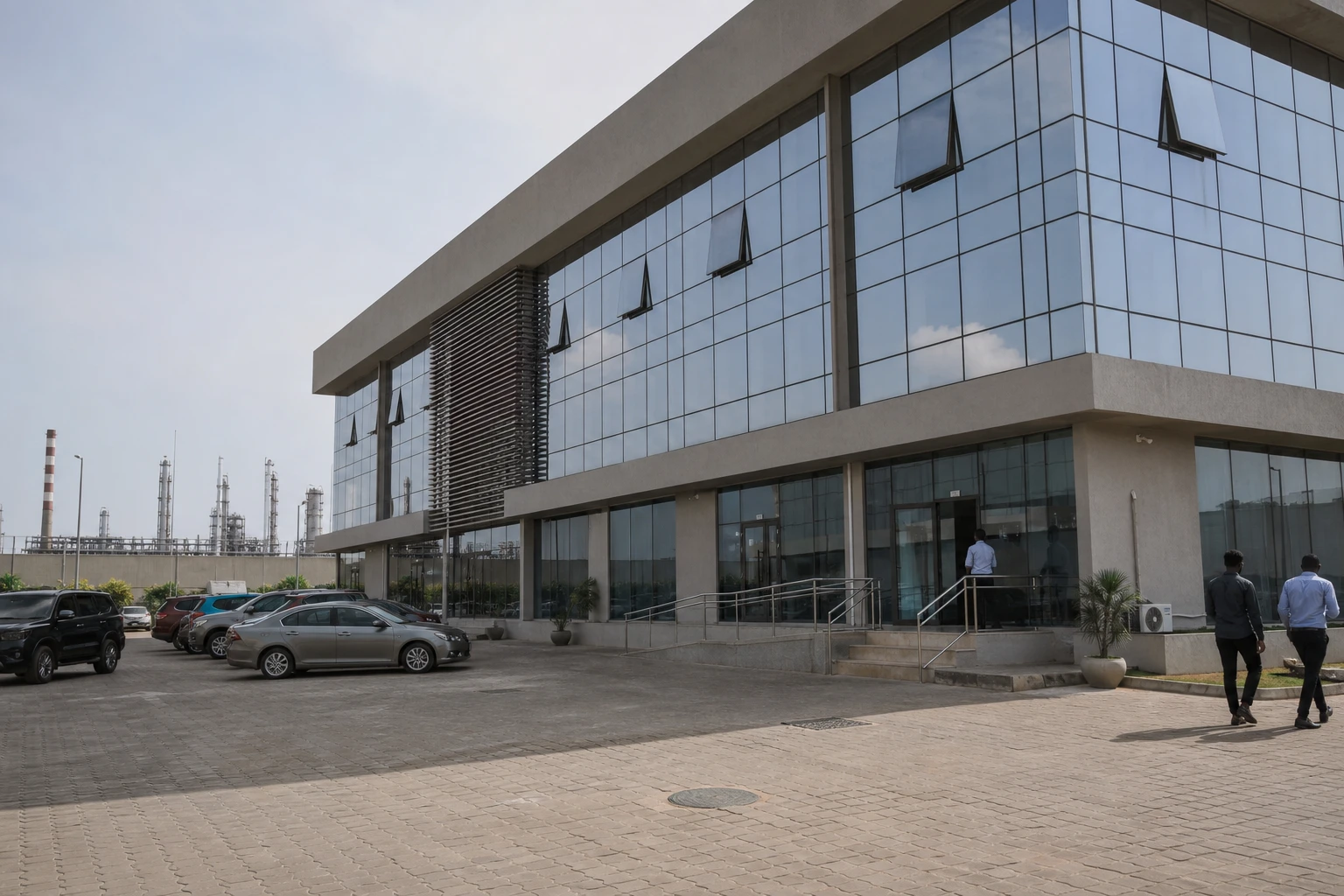
An industrial signal extending beyond Cotonou
In the sub-region, the real question is no longer simply how to produce, but how to process goods locally. That is where added value, jobs and bargaining power with neighbouring markets are at stake. In Benin, the Glo-Djigbé Industrial Zone is gradually establishing itself as a textbook example of this strategy. During a working visit to Cotonou, Nigerian Vice-President Kashim Shettima said he saw it as a useful model for accelerating his country’s industrialisation.
The regional context explains this interest. For several years, West Africa has been seeking to retain more value within its own borders, while raw materials still too often leave the region unprocessed. Ecowas is also pushing to ease border crossings and trade, particularly along the Abidjan-Lagos corridor and at the Sèmè-Kraké border post between Benin and Nigeria. In this setting, an industrial zone that turns cotton, cashew nuts or soya into finished products becomes an economic tool, as well as a diplomatic one.
What the Nigerian delegation came to see
The visit on 24 July 2026 took place in Cotonou, at the Marina Palace and in Glo-Djigbé. The Nigerian delegation was led by Kashim Shettima and included several state governors, as well as Nigeria’s agriculture minister, Abubakar Kyari. According to available reports, discussions focused on strengthening the partnership between Abuja and Cotonou, as well as on border security and agro-industrial processing.
The mission’s main event was a visit to the GDIZ, the Glo-Djigbé Industrial Zone, located about 45 kilometres from Cotonou. The site is presented as an integrated platform dedicated to the local processing of agricultural products, with activities involving cotton, cashew nuts, pineapples, shea and soya. The project is based on a public-private partnership between the Beninese state and ARISE IIP.
At the site, the Nigerian vice-president praised its organisation and said he wanted to draw on it for the agro-industrial zones being developed in Nigeria. Nigerian media have described the mission as a learning exercise, particularly for the textile industry, which remains an important sector in the West African giant’s economy despite factory closures and competition from imports.
The figures cited for the GDIZ show the scale of its ambition. ARISE IIP says the first phase is expected to attract at least $1.4 billion in investment and generate about 30,000 jobs. Other communications from the group cite a broader long-term target of more than 300,000 direct jobs by 2030. These projections remain development targets; they indicate the intended trajectory, not results already achieved.
Why the Beninese model is attracting so much interest
Benin has chosen a method that is easy to understand. It is not relying solely on exports of raw materials. It is seeking to capture more value before goods leave the country. This approach resonates with Nigeria, where several states are also seeking to reduce dependence on imports and revive local processing. It is also a direct social issue: a hectare of cotton generates far more activity once the crop has been spun, woven and made into garments than when a simple shipment of fibre is exported.
For Benin, the stakes are twofold. On the one hand, the GDIZ strengthens the image of a country seeking to become an industrial gateway to West Africa. On the other, it obliges the state to deliver over the long term: energy, logistics, vocational training, security, taxation and infrastructure quality must all keep pace. Without that, the zone’s promise would remain fragile. The jobs announced will mean little unless production chains are actually supplied and Beninese small businesses can find a place in them.
This perspective matters to both Beninese and Nigerians. For Benin, the GDIZ’s expansion could support incomes, urban employment and related services around Cotonou and Glo-Djigbé. For Nigeria, the Beninese example shows that a smaller country can quickly build a visible industrial offering, provided governance, private partnerships and infrastructure are aligned. The contrast is as political as it is economic. It is a reminder that market size alone is not enough; consistent public policy matters just as much.
Useful co-operation in a region under pressure
The visit also comes amid a challenging security environment. Northern Benin remains exposed to the effects of insecurity in the Sahel, while Nigeria is itself grappling with pockets of violence and cross-border criminal networks. In this context, the authorities of both countries have an interest in better co-ordinating border controls, intelligence and surveillance of trade routes. Co-operation is therefore not just a matter of diplomatic rhetoric; it directly affects the movement of goods and people.
The closer ties between Cotonou and Abuja are also part of a broader sequence of events. Benin’s president made a working visit to Nigeria in June 2026, confirming that the two capitals are seeking to revive concrete economic dialogue. This momentum matters for Ecowas. It shows that regional integration in West Africa often advances through tangible projects: a better-equipped border, a smoother corridor, a more efficient industrial zone. That is often where the idea of a common economic area becomes real for businesses, transport operators and workers.
The continental significance is clear. If the GDIZ succeeds in consolidating its production and exporting higher-value goods, Benin will reinforce a message already championed by several African countries: industrialisation is not reserved for large economic blocs. It can also emerge from a well-designed site, connected to its hinterland and backed by coherent partnerships. West African governments are now watching this kind of experience closely, as the African Union and AfCFTA push for more manufacturing on the continent rather than abroad.



