Algeria
 Egypt
 Libya
 Morocco
 Sudan
 Tunisia
 Burkina Faso
 Cabo Verde
 Côte d'Ivoire
 Ghana
 Guinea
 Guinea-Bissau
 Liberia
 Mali
 Mauritania
 Niger
 Nigeria
 Senegal
 Sierra Leone
 The Gambia
 Togo
 Cameroon
 Central African Republic
 Chad
 DR Congo
 Equatorial Guinea
 Gabon
 Republic of the Congo
 São Tomé and Príncipe
 Burundi
 Comoros
 Djibouti
 Eritrea
 Ethiopia
 Kenya
 Madagascar
 Malawi
 Mauritius
 Mozambique
 Rwanda
 Seychelles
 Somalia
 South Sudan
 Tanzania
 Uganda
 Angola
 Botswana
 Eswatini
 Lesotho
 Namibia
 South Africa
 Zambia
 Zimbabwe
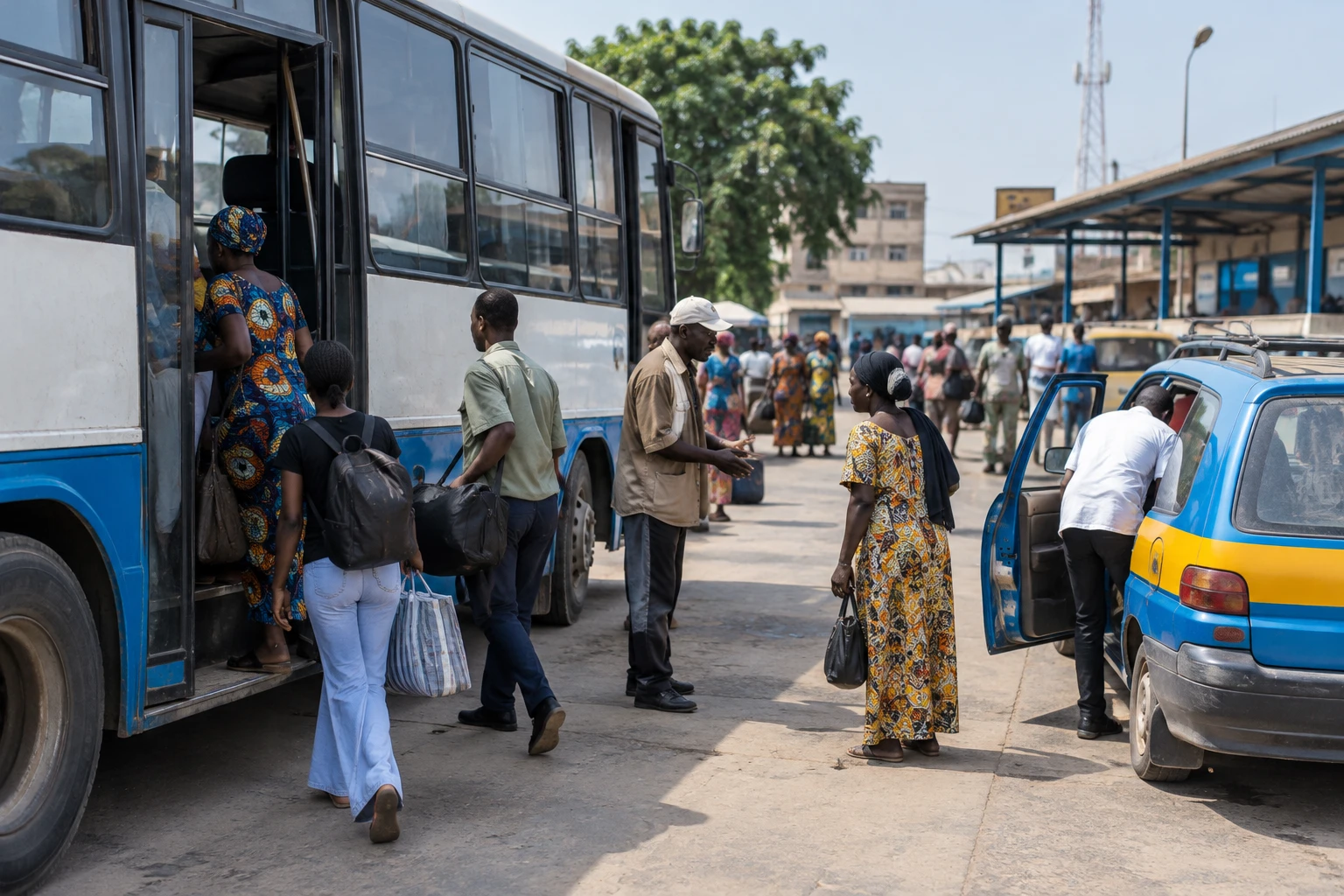
A school, health centre or rural road is often decided at commune level, but also depends on solid funding and technical expertise. In Benin, the sixth phase of FADeC aims to support such investments in all 77 communes, with particular attention to the northern areas.
A national mechanism, two priorities
Launched on 27 October 2026 in Cotonou, FADeC VI forms part of Benin’s system for financing local authorities. The Communes Development Support Fund, operational since 2008, transfers resources to communes to meet local development needs. The National Commission for Local Finance (CONAFIL), a body bringing together the state and communes, administers it. CONAFIL’s overview of the FADeC mechanism
This new phase has two components. The unallocated FADeC supports communal investment across the country. The Sahel Facility, meanwhile, targets the 27 northern communes facing resilience and social cohesion challenges. The Beninese government confirmed this coverage at the launch. The official presentation of FADeC VI
The stated priorities cover essential services: access to water, education, health and rural roads. The two-day launch workshop, organised by the Communal Investment Fund (FIC), is also intended to review the programme’s progress and coordination among its stakeholders. The FIC is expected to strengthen financial and technical support for communes, particularly in preparing and assessing projects.
From funding transfers to project quality
The amount transferred is not, on its own, enough to guarantee useful and lasting infrastructure. A commune must identify needs, design the project, manage public procurement, monitor the works and then plan for maintenance. The authorities therefore stressed the quality of studies and technical expertise, as well as advisory support for local administrations. The challenge is to turn available funding into services that people can actually access.
This requirement affects different areas in different ways. In urban centres, pressure is particularly acute on infrastructure and services for a dense population. In rural areas, distances and road conditions can make it harder to reach schools, healthcare or markets. The northern communes, meanwhile, must factor security and social cohesion into the choice and delivery of investments. The programme promises a tailored response to local needs, but its impact will depend on implementation at local level.
The Sahel Facility aims to involve communities in decisions about projects. This participation can help bring the priorities of neighbourhoods and villages to the fore, provided it does not amount to a merely formal consultation. Project selection, their distribution among communes and the monitoring of works will be crucial if residents are to see the results and hold those responsible to account.
The north: local services and resilience
The northern component is set in a region where security concerns go hand in hand with needs for public services and economic opportunities. The Sahel Facility was announced in 2024 to address the vulnerabilities of communes in the departments of Alibori, Atacora, Borgou and Donga. The current phase extends the programme to 27 communes, according to information shared at the launch and local reports. The first communes covered by the Sahel Facility
Funding infrastructure does not replace security measures. Better-adapted local services can, however, help build trust between residents and institutions. To avoid oversimplification, this development goal must be distinguished from security outcomes: the programme cannot, on its own, measure or resolve the causes of insecurity. Its contribution will instead be judged by whether projects are delivered, how they are used and how communities take part in decisions.
A reform to be measured over time
FADeC VI is part of the 2024-2033 National Policy on Decentralisation and Deconcentration (PONADEC), approved by the Council of Ministers in January 2024. This roadmap aims to strengthen local governance and achieve more balanced territorial development. The communal programme is therefore a practical test: national ambitions must translate into investment and greater capacity for communes to act. The strategic guidelines of PONADEC 2024-2033
This issue also concerns neighbouring countries at regional level. In West Africa, ECOWAS, the Economic Community of West African States, brings together countries facing challenges around territorial cohesion and local services, albeit in different contexts. The Beninese case is a reminder that decentralisation rests on more than the transfer of responsibilities: it requires predictable resources, local government expertise and transparent oversight.
The next steps will be as important as the announcement. It will be necessary to track the decisions made after the workshop, the quality of selected projects, their distribution among the 77 communes and progress on the Sahel Facility. The central question remains simple: what is actually built, for whom, and with what capacity to maintain it? It is at this level that communal funding can strengthen local autonomy and improve the daily lives of Beninese people.