Algeria
 Egypt
 Libya
 Morocco
 Sudan
 Tunisia
 Burkina Faso
 Cabo Verde
 Côte d'Ivoire
 Ghana
 Guinea
 Guinea-Bissau
 Liberia
 Mali
 Mauritania
 Niger
 Nigeria
 Senegal
 Sierra Leone
 The Gambia
 Togo
 Cameroon
 Central African Republic
 Chad
 DR Congo
 Equatorial Guinea
 Gabon
 Republic of the Congo
 São Tomé and Príncipe
 Burundi
 Comoros
 Djibouti
 Eritrea
 Ethiopia
 Kenya
 Madagascar
 Malawi
 Mauritius
 Mozambique
 Rwanda
 Seychelles
 Somalia
 South Sudan
 Tanzania
 Uganda
 Angola
 Botswana
 Eswatini
 Lesotho
 Namibia
 South Africa
 Zambia
 Zimbabwe
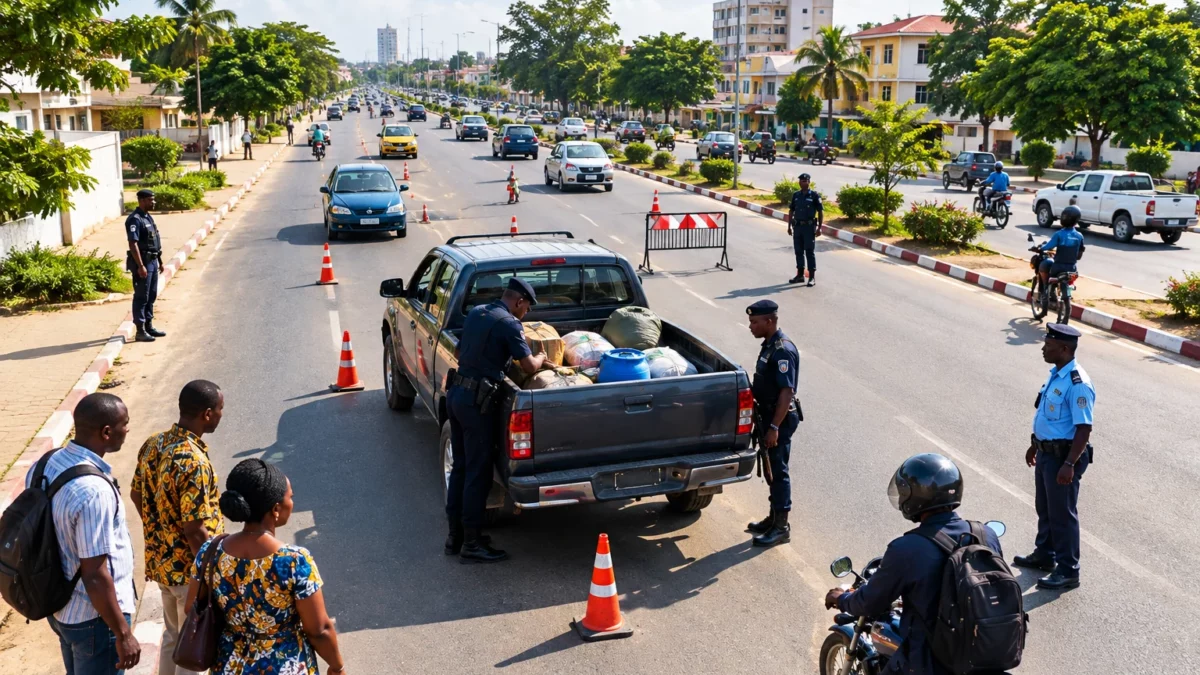
Nearly 20,000 speeding offences reported, tonnes of products seized and more than a thousand arrests: figures presented by Benin’s Republican Police give an indication of the scale of its recent operations. They also raise a practical question: how can one-off seizures be turned into lasting protection, on the roads as well as in sales and transport networks?
Operations spanning road checks and the fight against trafficking
Benin lies on a passage between the Gulf of Guinea and the West African hinterland. Trade moves along routes linking, among others, Ghana, Togo, Benin and Nigeria. This traffic supports economic activity, but can also be exploited by smuggling networks. ECOWAS, which brings together West African countries, is the regional framework in which police cooperation and cross-border movement are important issues.
On Tuesday 24 November in Cotonou, the Republican Police presented figures associated with operations to secure the country. Chief Superintendent Éric Orou Yérima, the institution’s spokesperson, announced the seizure of 8,931 kilograms of counterfeit pharmaceutical products and more than five tonnes of cannabis. These figures were also reported by several Beninese media outlets. They remain figures released by the police, however, rather than an independently audited account.
The figures also include 1,415 people arrested, firearms seized and stolen motorbikes recovered. The authorities have not provided details of the profiles of those arrested or the judicial outcome of each case. An arrest is not a conviction: those concerned remain presumed innocent unless a court ruling establishes their responsibility.
Local media reports describe several specific operations. In Savè, 1,700 kilograms of cannabis were reportedly seized on 11 October after a plantation was destroyed. In Djougou, an operation on 18 October reportedly led to the recovery of 243 kilograms of counterfeit pharmaceutical products. These examples give an idea of the geographical reach of the operations, but are not enough to establish the overall scale of the trafficking.
Figures must be read in light of their reference periods
One point deserves particular attention: the figures presented on 24 November are described as covering the third quarter, but reports also mention operations conducted in October and November. The fifth round of special security operations is said to have begun on 12 November. The periods therefore do not appear to overlap perfectly. Without an official table setting out the start and end dates for each series, it is prudent not to attribute all the figures solely to the July-to-September quarter.
The same caveat applies to the nearly 20,000 speeding offences reported. They point to a frequent offence in the police figures, alongside running red lights, using a phone while driving, overloading and driving without insurance. But the number of tickets issued does not, by itself, show how many checks were carried out, on which routes, or whether the offences resulted in fines actually being paid.
These figures nonetheless shed light on two distinct realities. On the roads, prevention depends on regular checks, clear road signs and predictable enforcement of the rules. In cities, on interurban routes and in rural areas, the resources available and travel conditions are not the same. The response therefore cannot be reduced to the number of penalties alone.
Counterfeit medicines: a health issue as well as a policing one
Counterfeit pharmaceutical products are not merely illicit goods. Their composition or dosage may be uncertain, exposing those who buy them to health risks. At the same time, medicines sold outside authorised channels sometimes thrive where access to healthcare and regulated products is difficult or costly. This reality does not justify trafficking; it is a reminder that enforcement must be accompanied by reliable access to treatment and clear information.
The police spokesperson said some traffickers concealed goods in double-bottomed lorries. Investigators described a route through Ghana and Togo, then Benin, towards Nigeria. This is a police hypothesis reported when the figures were presented: on its own, it does not identify the origin of every seized consignment or establish the responsibility of specific individuals.
A major seizure can interrupt a shipment, but dismantling a network also means tracing its suppliers, financing and distribution channels. Cooperation between the services of neighbouring countries can help track these movements. It must also preserve judicial safeguards and distinguish alleged organisers from people arrested during an operation.
What comes next will depend on transparent follow-up
To assess the impact of these operations, future reports would benefit from specifying the periods covered, the number of road checks and the judicial outcome of cases. Such information would make it possible to compare results over time and better understand whether seizures are reducing trafficking in the long term or simply shifting its routes.
Across West Africa, the issue goes beyond Benin’s borders: trade routes and illicit networks cross several countries. Regional cooperation can strengthen investigations, while road safety, consumer protection and access to medicines also require practical national policies. For Beninese people, effectiveness will be judged less by the volume announced than by everyday safety, the availability of reliable health products and institutions’ ability to report on the outcomes of cases.