Algeria
 Egypt
 Libya
 Morocco
 Sudan
 Tunisia
 Burkina Faso
 Cabo Verde
 Côte d'Ivoire
 Ghana
 Guinea
 Guinea-Bissau
 Liberia
 Mali
 Mauritania
 Niger
 Nigeria
 Senegal
 Sierra Leone
 The Gambia
 Togo
 Cameroon
 Central African Republic
 Chad
 DR Congo
 Equatorial Guinea
 Gabon
 Republic of the Congo
 São Tomé and Príncipe
 Burundi
 Comoros
 Djibouti
 Eritrea
 Ethiopia
 Kenya
 Madagascar
 Malawi
 Mauritius
 Mozambique
 Rwanda
 Seychelles
 Somalia
 South Sudan
 Tanzania
 Uganda
 Angola
 Botswana
 Eswatini
 Lesotho
 Namibia
 South Africa
 Zambia
 Zimbabwe
When the textile industry looks for cotton closer to its factories
In Accra, discussions between Cotonou and the Ghanaian government point to something broader than simple diplomatic courtesy: across West Africa, states are now seeking to secure their value chains rather than settling for exporting raw materials. In textiles, cotton is no longer just an agricultural product. It is becoming a lever for jobs, industrialisation and economic sovereignty.
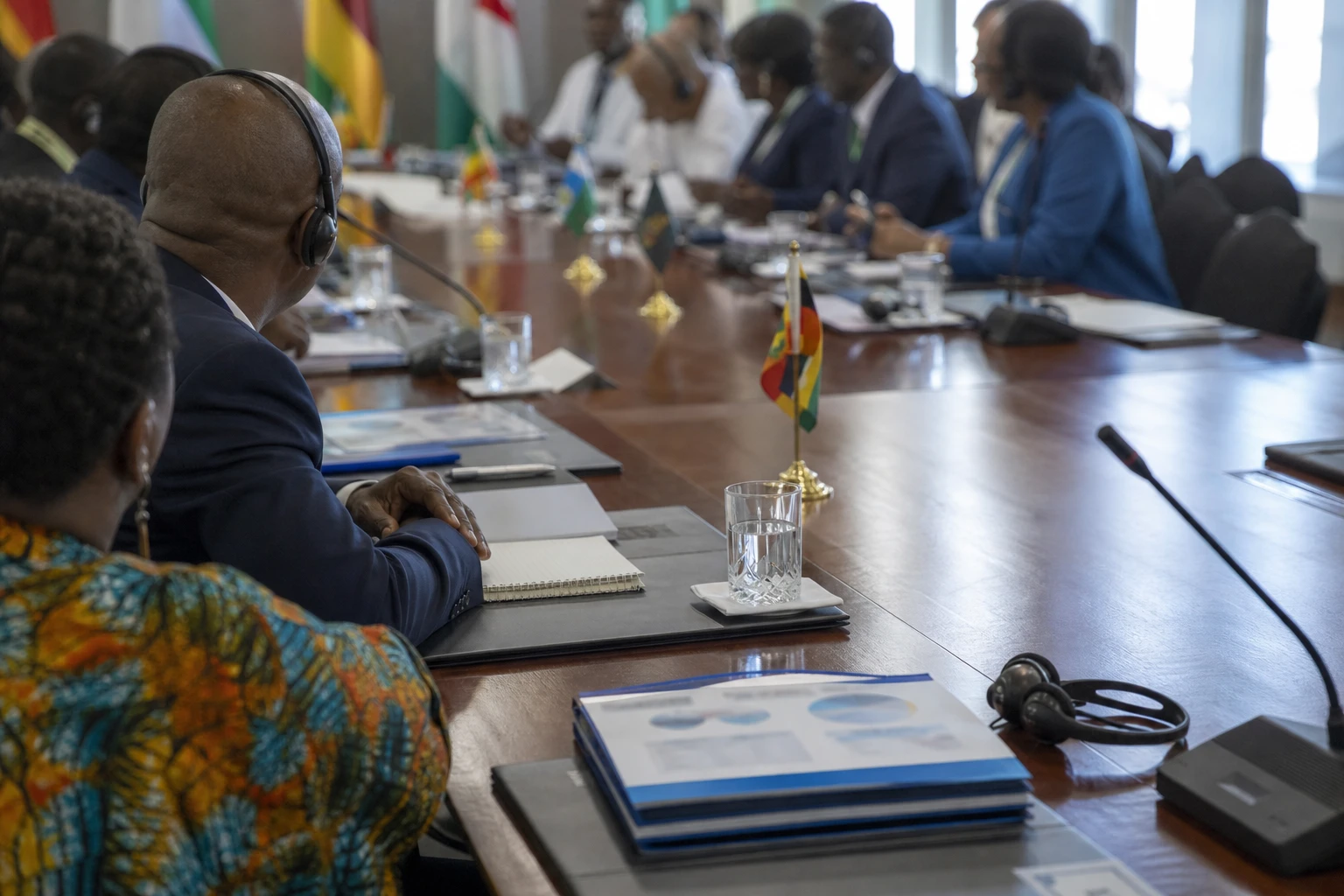
The meeting took place on the sidelines of the African Union’s extraordinary health summit, held in Accra on 21 and 22 July 2026. The AU aims to mobilise sustainable financing, support local medicines production and accelerate the implementation of the continent’s health priorities. Ghana hosted the event at a time when regional cooperation is also being shaped by the real economy, not just by communiqués.
A visit to Accra, and a signal of West African integration
Beninese President Romuald Wadagni held talks with his Ghanaian counterpart John Dramani Mahama on strengthening bilateral relations and issues of common interest. The meeting followed the Beninese leader’s friendship and working visit to Ghana after the continental summit. Both countries belong to ECOWAS, the Economic Community of West African States, but operate within different monetary frameworks: Ghana has its own currency, the cedi, while Benin shares the CFA franc within WAEMU, the West African Economic and Monetary Union.
This difference matters. It can sometimes complicate trade, but does not prevent pragmatic arrangements. In recent months, Benin has stepped up its sub-regional visits, from Dakar to Bamako, from Cotonou to Abidjan, as well as to Togo and Mauritania. The message is clear: the country wants to consolidate practical partnerships, sector by sector, in a region where trade integration remains incomplete but is keenly awaited by businesses and transport operators.
Beninese cotton to support Ghana’s industrial revival
The most tangible issue is industrial. On 16 July 2026, in Juapong, in the Volta Region, John Dramani Mahama announced that Ghana intends to import cotton from Benin to revive Volta Star Textiles Limited, a textile factory that has been idle for years. According to information released at the time, a partnership is to be formalised through a memorandum of understanding to guarantee a regular supply. APA confirmed the announcement and specified that Beninese cotton is first intended to support the resumption of production.
Benin is no accidental choice. It is one of West Africa’s leading cotton producers and, according to its government, aims to restore production to more than 700,000 tonnes, after a decline in recent seasons to around 500,000 tonnes. World trade data also confirm the importance of Beninese cotton in the country’s exports. In other words, the challenge is no longer just to produce, but to process more and sell more effectively.
In Ghana, this textile revival is part of a broader reindustrialisation strategy. Mahama has already put textiles, agro-industry and manufacturing at the heart of his economic agenda. The idea is simple: breathe life back into dormant industrial sites, create jobs and reduce dependence on imports of manufactured goods. In the Volta Region, restarting a factory such as Volta Star Textiles could support an entire local economy, from transport operators and small businesses to technical services and cotton producers.
What this cooperation changes, from Beninese fields to Ghanaian workshops
For Beninese officials, the partnership opens up an opportunity to add value. Cotton, long sold as a raw material, can become a stronger basis for negotiation. The country is seeking to make progress on local processing, particularly in the Glo-Djigbé industrial zone, where textiles are among the priority sectors. The benefits are twofold: capturing more added value and securing more stable regional markets than distant markets alone can offer.
For Ghana, the stakes are different. The country is not just looking for a raw material. It wants to restart machinery and rebuild a local production chain. That requires reliable supplies, logistics agreements and partners able to keep pace. An agreement with Benin could therefore serve as a test: if supplies come through, the industrial revival gains credibility; if they do not, the factory risks joining the long list of ambitions that have remained on paper.
This cooperation also says something about the regional balance of power. West African states are no longer content to wait for imports from Asia or Europe. They are seeking to connect their own agricultural basins with their own processing capacity. This is precisely the spirit of the AfCFTA, the African Continental Free Trade Area, which encourages countries to trade more with one another. In this context, Beninese cotton processed in Ghana could become more than a bilateral contract: it could be an example of a regional value chain.
A bilateral agreement with continental significance
The Accra summit is a reminder that health and industry are not separate worlds. The AU is stressing domestic financing, local manufacturing and resilient systems. The closer ties between Benin and Ghana fit into this broader logic: produce more on the continent, improve trade between neighbours and reduce vulnerability to supply disruptions.
In the short term, two milestones will need to be watched. First, the announced signing of the memorandum of understanding between Accra and Cotonou. Second, Volta Star Textiles’ ability to restart with a regular flow of cotton. If commitments translate into volumes, jobs and exports, the initiative could serve as a model for other ECOWAS countries also seeking to connect agriculture, industry and the regional market. If it stalls, by contrast, it will show how fragile the promise of economic integration remains when it is not underpinned by infrastructure, clear contracts and monitoring mechanisms.