Algeria
 Egypt
 Libya
 Morocco
 Sudan
 Tunisia
 Benin
 Burkina Faso
 Cabo Verde
 Côte d'Ivoire
 Ghana
 Guinea
 Guinea-Bissau
 Liberia
 Mali
 Mauritania
 Niger
 Nigeria
 Senegal
 Sierra Leone
 The Gambia
 Togo
 Central African Republic
 Chad
 DR Congo
 Equatorial Guinea
 Gabon
 Republic of the Congo
 São Tomé and Príncipe
 Burundi
 Comoros
 Djibouti
 Eritrea
 Ethiopia
 Kenya
 Madagascar
 Malawi
 Mauritius
 Mozambique
 Rwanda
 Seychelles
 Somalia
 South Sudan
 Tanzania
 Uganda
 Angola
 Botswana
 Eswatini
 Lesotho
 Namibia
 South Africa
 Zambia
 Zimbabwe
An artisanal mine, a local disaster, a national issue
In the west of the Central African Republic, the gold rush sustains entire families, but it also exposes thousands of people to precarious worksites operating without proper safety measures. At Zamboye, near Baboua and the Cameroonian border, this subsistence economy suddenly turned into a disaster. Initial reports point to a high number of deaths and injuries, while searches are still under way beneath the rubble.
The site is in Nana-Mambéré prefecture, about 50 kilometres from Baboua, according to international news reports, in a border area where artisanal mining remains widespread. In the Central African Republic, gold and diamonds are among the natural resources highlighted by the authorities, but their extraction is often informal, fragmented and difficult to control.
What is known about the toll and rescue efforts
The accident occurred on Tuesday 18 August 2026 at the Zamboye-Zamboï gold-mining site, according to several media outlets and agencies that cross-checked information with witnesses, local officials and rescuers. The Associated Press reported on Wednesday that the death toll had exceeded 100, while other sources cited an even more precise number of bodies recovered over the following hours, showing that the true scale of the disaster was still becoming clear.
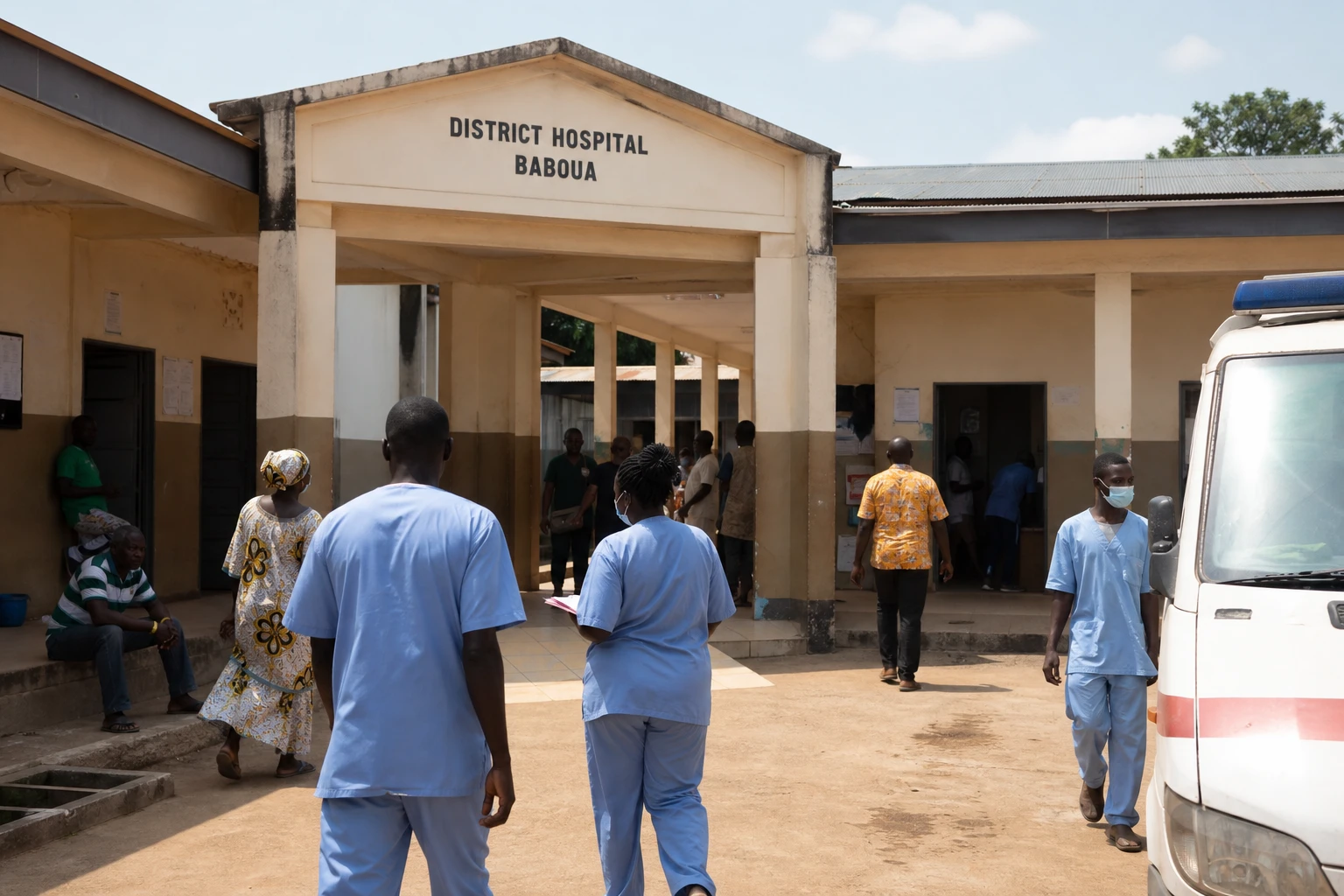
Among the surviving victims, several injured people were taken to Baboua district hospital, and a senior doctor said one patient had died on arrival. Others were treated directly at the site by a mobile team sent there. Accounts gathered at the scene describe bodies covered in mud, fractures, trauma and panic as the mine collapsed.
Rescuers worked with limited resources. This is a central issue. In this type of disaster, speed matters as much as technical experience, yet artisanal sites are rarely prepared for a large-scale emergency response. Residents and miners at the scene initially improvised first aid before medical and administrative teams arrived. This reliance on local resources also explains why death tolls often remain provisional for several days.
Between state oversight and the informal economy
The Central African government has announced an investigation and pledged to refer the case to the courts to identify those responsible. The mines minister also said the site would be closed until further notice. At the same time, the government intends to combine awareness-raising with enforcement, a formula that reflects a familiar difficulty in artisanal mining: the state wants to regulate the sector, but often arrives after operations are already under way.
This sequence highlights a structural problem. The mining sector is strategic in the Central African Republic, but a large share of production still escapes formal channels. The mines ministry nevertheless says it has an office for the evaluation and control of diamonds and gold, as well as a unit to monitor private-sector activities. However, the gap between the institutional framework and the reality at mining sites remains clear on the ground.
In Baboua and surrounding villages, gold is more than a resource. It provides immediate income, sometimes the only alternative to unemployment, poor roads and a lack of stable jobs. In these circumstances, closing a site does not remove the economic pressure. Without support, workers move to other sites, often facing the same risks. The Zamboye disaster therefore highlights a simple reality: the dangers of artisanal mining are not an isolated accident, but the product of a fragile system.
Nana-Mambéré prefecture also lies on an important border route with Cameroon. Exchanges between Baboua, the Garoua-Boulaï area and neighbouring localities shape the daily economy. In such an area, the movement of people, goods and minerals makes site monitoring more difficult. The disaster therefore extends beyond the affected commune: it raises questions about the cross-border management of a shared economic area at the heart of CEMAC, the Economic and Monetary Community of Central Africa.
What this disaster says about the CAR and the region
Across the Central African Republic, the Zamboye accident is a reminder that artisanal mining sites remain a blind spot in public policy. When extraction takes place without safety standards, immediate gains conceal a heavy human cost. This affects workers, but also their families, women working around the sites, transporters, small traders and nearby residents. The social shock is therefore wider than the death toll alone.
The Zamboye disaster is not an isolated precedent in the sub-region. Other Central African countries face the same tensions between artisanal mining, inadequate public oversight and economic pressure. CEMAC emphasises regional integration and the shared management of resources, but on the ground, borders remain porous and mining networks are often disorganised. The Central African disaster is therefore part of a continent-wide challenge: how to make an informal extractive economy safer without depriving people of their main means of making a living.
What happens next will depend on several concrete decisions: the outcome of the judicial investigation, the identification of victims, the treatment of the injured and the state’s ability to maintain a lasting presence at mining sites. In the Central African Republic, where underground resources remain a major economic lever, the real question is not only who will pay for this disaster. It is also how to prevent another site, in Nana-Mambéré or elsewhere, from repeating the same tragedy.