Algeria
 Egypt
 Libya
 Morocco
 Sudan
 Tunisia
 Benin
 Burkina Faso
 Cabo Verde
 Côte d'Ivoire
 Ghana
 Guinea
 Guinea-Bissau
 Liberia
 Mali
 Mauritania
 Niger
 Nigeria
 Senegal
 Sierra Leone
 The Gambia
 Togo
 Cameroon
 Central African Republic
 Chad
 DR Congo
 Equatorial Guinea
 Gabon
 Republic of the Congo
 São Tomé and Príncipe
 Burundi
 Comoros
 Djibouti
 Eritrea
 Kenya
 Madagascar
 Malawi
 Mauritius
 Mozambique
 Rwanda
 Seychelles
 Somalia
 South Sudan
 Tanzania
 Uganda
 Angola
 Botswana
 Eswatini
 Lesotho
 Namibia
 South Africa
 Zambia
 Zimbabwe
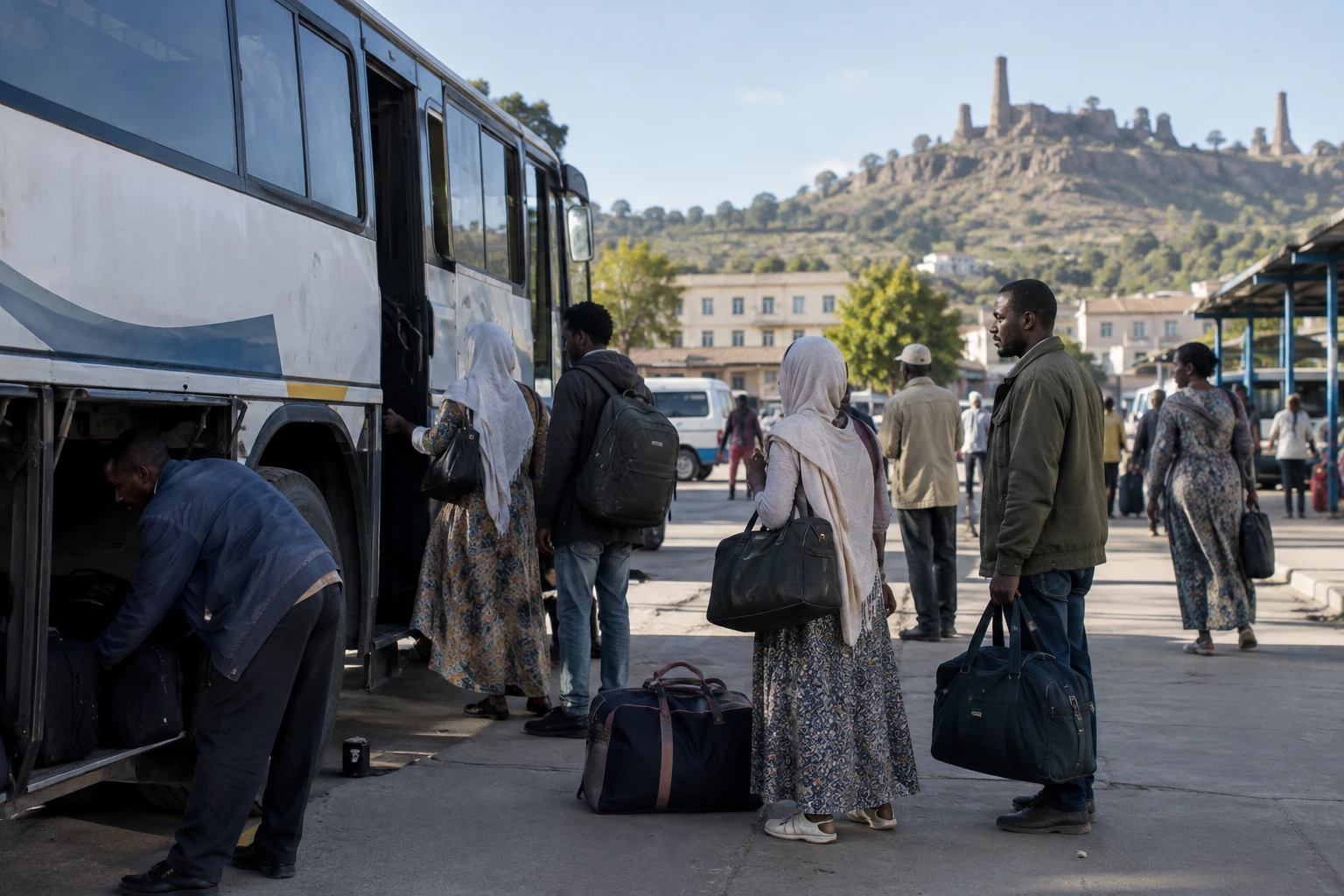
In Aksum, reports of heavy military losses are not enough to establish the scale of the fighting. But they signal renewed tension in northern Ethiopia, where the 2022 peace agreement has not resolved political and territorial disputes.
Losses claimed, with no independent verification
The Tigray People’s Liberation Front (TPLF) says its fighters killed about 500 soldiers and wounded 800 in clashes near Aksum, in the Tigray region. The movement attributes these losses to federal forces and their allies. It also says it captured territory and seized weapons, ammunition, food and medical equipment.
These figures are claims by the TPLF, not a confirmed toll. The federal government had not commented on the losses in the information available. No independent count could be established. Details about the precise locations, course of the fighting and equipment seized therefore remain to be verified. TRT World’s report on the TPLF’s statements also gives these figures, without independently confirming them.
The distinction matters. In a conflict, figures released by one side can be used to demonstrate its strength or delegitimise its opponent. Without safe access to the areas concerned and corroborated testimony, presenting these figures as established facts would imply a degree of certainty that the available evidence does not support.
A peace agreement only partly implemented
Tigray is in northern Ethiopia, whose capital is Addis Ababa. The war between federal forces and the TPLF from 2020 to 2022 ended with the Pretoria Agreement, signed in November 2022 under the auspices of the African Union. The agreement ended large-scale fighting, but its implementation has remained uneven.
Disarmament, the return of public services, stabilisation of the regional administration and settlement of disputed territories are among the sensitive issues. Delays are fuelling tensions and complicating the return to civilian life. The Rift Valley Institute notes that the agreement halted the war without resolving its root causes. A civilian protection analysis published in 2025 also describes ongoing displacement and a fragile post-conflict transition.
The TPLF, which ruled Tigray for a long time and dominated federal politics before Abiy Ahmed came to power, remains a central actor. But the regional landscape has changed: political divisions and the emergence of rival armed groups are complicating relations between the regional authorities, the federal government and local forces. The confrontation is therefore not limited to two clearly unified armies.
Consequences beyond the front line
For residents of affected areas, renewed clashes could hinder travel, access to healthcare and the delivery of essential goods. Fighting could also force families to flee once again. The consequences vary by location: a town near military routes, an isolated rural community and an administrative centre are not exposed in the same way.
The federal authorities, for their part, must manage both the country’s security and the cohesion of a federal state marked by several conflicts. For Tigrayan leaders, the dispute also concerns the sharing of power, the status of contested territories and political representation. Presenting these issues as a simple territorial battle would obscure the governance questions that remain at the heart of the crisis.
The region also matters to the balance of power in the Horn of Africa. Ethiopia is a member of IGAD, the Intergovernmental Authority on Development, which brings together several countries in the region. Eritrea’s proximity and tensions between Addis Ababa and Asmara make any escalation particularly sensitive. Allegations of possible external support for armed groups should, however, remain attributed unless corroborated.
The next test: preventing the crisis from spreading
The immediate question is whether the fighting near Aksum will remain localised or signal a broader resumption of hostilities. Statements from the federal authorities, independent information from the ground and the ability of African mediators to preserve the Pretoria framework will also need to be monitored.
For the African Union and IGAD, the situation is a reminder that a ceasefire is not enough when political, security and territorial commitments are moving at different speeds. For Ethiopia, stability in Tigray directly affects the restoration of services and trust between the federal centre and the regions. At this stage, the figure put forward by the TPLF remains unverified; the renewed clashes are the signal to watch.