Algeria
 Egypt
 Libya
 Morocco
 Sudan
 Tunisia
 Benin
 Burkina Faso
 Cabo Verde
 Côte d'Ivoire
 Ghana
 Guinea
 Guinea-Bissau
 Liberia
 Mali
 Mauritania
 Niger
 Nigeria
 Senegal
 Sierra Leone
 The Gambia
 Togo
 Cameroon
 Central African Republic
 Chad
 DR Congo
 Equatorial Guinea
 Gabon
 Republic of the Congo
 São Tomé and Príncipe
 Burundi
 Comoros
 Djibouti
 Eritrea
 Ethiopia
 Kenya
 Madagascar
 Malawi
 Mauritius
 Mozambique
 Rwanda
 Seychelles
 Somalia
 South Sudan
 Tanzania
 Uganda
 Angola
 Botswana
 Eswatini
 Lesotho
 Namibia
 Zambia
 Zimbabwe
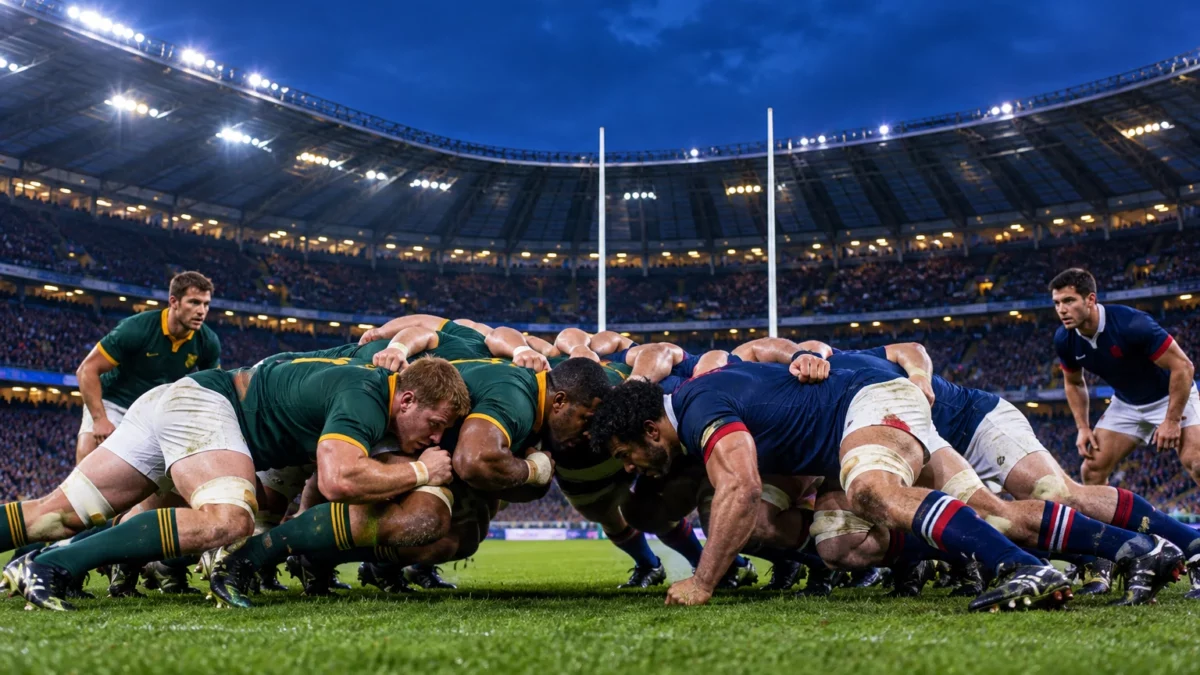
The final at Twickenham will not be decided by power alone. France will look to build on their win at Saint-Denis, while South Africa will seek to impose themselves up front. The clash offers an early measure of the balance of power less than a year before the 2027 World Cup.
A new competition, an already decisive showdown
The Nations Championship brings together 12 leading teams, divided between the northern and southern hemispheres. After matches in July and November, the teams meet in London from 27 to 29 November for a finals weekend. The match between the group winners, South Africa and France, brings the inaugural edition to a close at Twickenham on Sunday 29 November. The official Nations Championship schedule confirms the fixture and its scheduled kick-off time.
France qualified by finishing top of the northern group. They beat Argentina 45-17 on 21 November at the Stade de France, securing the bonus point they needed. South Africa finished top of the southern group despite a 20-17 defeat by Ireland in Dublin. The Springboks earned a losing bonus point, which allowed them to finish ahead of New Zealand. The South African Rugby Union confirmed their qualification and the meeting with Les Bleus.
Two teams, two contrasting trajectories
The first meeting went France’s way. On 13 November, they beat the South African world champions 21-19 at Saint-Denis. The close score did not mask the Springboks’ dominance in the scrum: France conceded eight penalties in that area, according to the match report. But France made better use of their chances and held on to the end. The result was also confirmed by the Six Nations website.
Since then, their paths have diverged. France recorded a convincing win over Argentina. South Africa suffered a second consecutive defeat, following their loss in Dublin. For the Springboks, this unusual run does not diminish either their strength at the set-piece or their ability to raise the tempo. South African scrum-half Grant Williams acknowledged that the defeat by Ireland had been difficult to take, while looking ahead to the final.
South Africa head coach Rassie Erasmus will not be in the dugout. World Rugby suspended him for six matches after his comments on the refereeing of the match against France. The sanction followed his public accusations, which the governing body described as an attack on the credibility of match officials. It puts the South African coaching staff in a particular position, but does not change the sporting challenge: finding an answer to France’s game without giving up the power for which the team is renowned.
France’s gamble: hold firm up front, play behind
Fabien Galthié has kept Antoine Dupont at scrum-half and Matthieu Jalibert at fly-half. Thomas Ramos returns at full-back after two months out injured. Together, the three form a creative and kicking axis that the French coaching staff had already paired during the Six Nations. Their understanding could offer solutions if Les Bleus can exit their set-piece phases cleanly.
The most discussed selection is the front row, made up entirely of Union Bordeaux-Bègles players: Jefferson Poirot, Maxime Lamothe and Sipili Falatea. Galthié is banking on their cohesion to hold firm against a renowned South African scrum. The challenge is clear: avoid conceding penalties that would allow the Springboks to establish themselves in French territory and leave less time for the backline.
France’s campaign has also been marked by absences and changes to the side. The win over Argentina nevertheless showed that the team could play attacking rugby despite a disrupted build-up. The final will test that depth in a more demanding setting. South Africa’s challenge will be to turn their power into chances, after two defeats in which control of the physical contest was not enough to secure the result.
A signal ahead of the 2027 World Cup
The final alone will not determine the favourite for the next World Cup. It will, however, bring two contenders face to face and offer lessons on the scrum, discipline and the ability to adapt during a match. The World Cup will be held in Australia in 2027: both teams still have time to address their weaknesses and broaden their options.
For South Africa, the fixture is also of interest to southern African rugby, where the Springboks remain a major sporting reference point. For France, it is a chance to turn a group-stage win into a title, without mistaking a one-off result for lasting superiority. Sunday’s kick-off will show above all which team has responded better to the other: the forwards will need to win their contest, but the result could hinge on the quality of the decisions that follow.