Algeria
 Egypt
 Libya
 Morocco
 Sudan
 Tunisia
 Benin
 Burkina Faso
 Cabo Verde
 Côte d'Ivoire
 Ghana
 Guinea
 Guinea-Bissau
 Liberia
 Mali
 Mauritania
 Niger
 Nigeria
 Senegal
 Sierra Leone
 The Gambia
 Togo
 Cameroon
 Central African Republic
 Chad
 DR Congo
 Equatorial Guinea
 Gabon
 Republic of the Congo
 São Tomé and Príncipe
 Burundi
 Comoros
 Djibouti
 Eritrea
 Ethiopia
 Kenya
 Madagascar
 Malawi
 Mauritius
 Mozambique
 Rwanda
 Seychelles
 Somalia
 South Sudan
 Tanzania
 Uganda
 Angola
 Botswana
 Eswatini
 Lesotho
 Namibia
 Zambia
 Zimbabwe
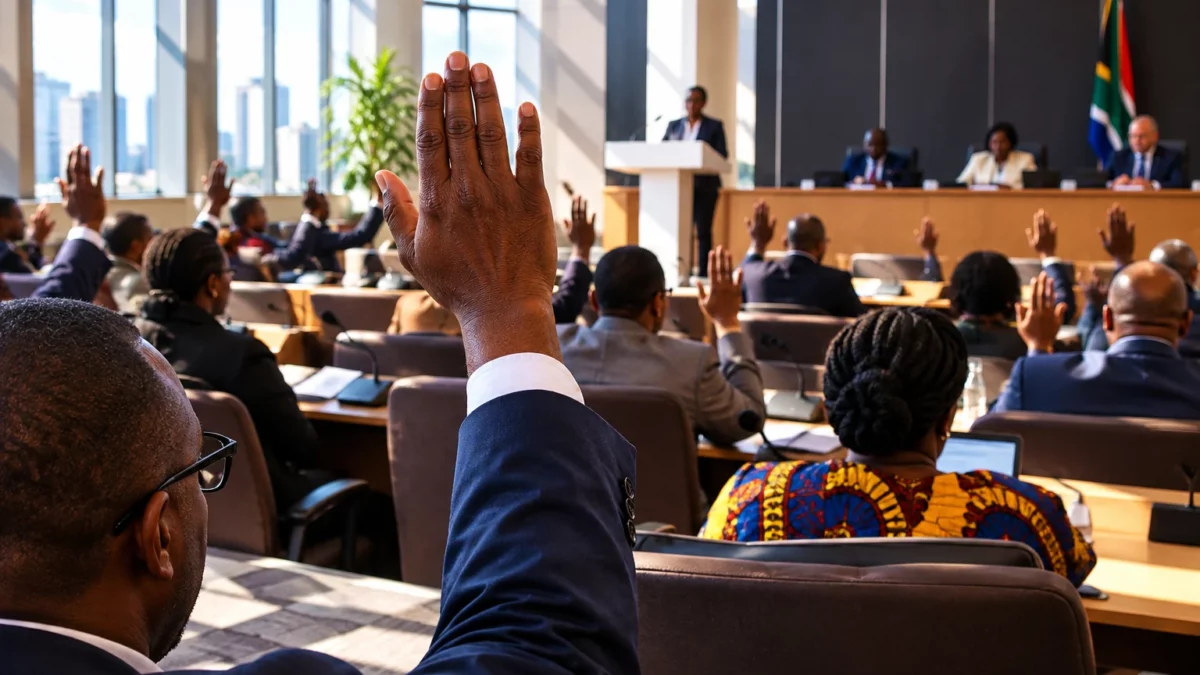
In Johannesburg, the choice of mayor is not decided only at the ballot box. It is also negotiated between parties that must then keep the municipal services of a metropolis of several million people running. On 27 November 2026, the city council elected Herman Mashaba as its leader, in a vote that reveals both the weight of coalitions and the ANC’s retreat in South Africa’s major cities.
A mayoralty born of a compromise between rivals
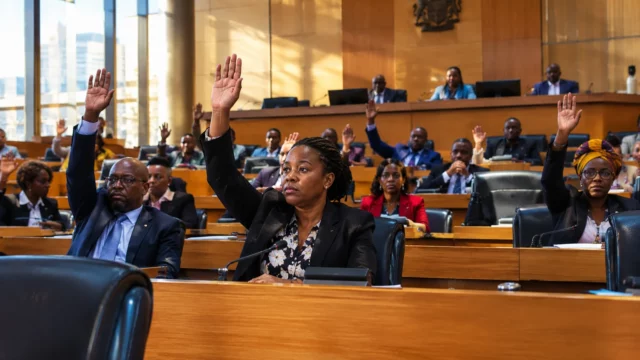
Mashaba, leader of ActionSA, received 170 votes against 97 for Helen Zille, the Democratic Alliance (DA) candidate. These figures, reported by several South African media outlets, represent about 64% of the votes cast between the two candidates. The council vote should not be confused with a direct election of the mayor by all residents: municipal councillors choose the executive.
The new mayor benefited from an agreement bringing together ActionSA and the African National Congress (ANC), with the support of the Economic Freedom Fighters (EFF) and the uMkhonto weSizwe (MK) party. Accounts of the coalition and the vote report support from these parties, although the precise terms of their participation in the agreement are not always described in the same way. The DA, which received the most votes in the November municipal elections, is now in opposition.
The make-up of this majority is politically notable. Mashaba led Johannesburg from 2016 to 2019 under the DA banner, before leaving the party and founding ActionSA. He is therefore returning to the mayor’s office with the support of parties that were then his opponents. The precedent of 2019 also highlights the fragility of municipal alliances: he resigned after announcing his departure from the DA.
The ANC’s retreat opens a new chapter
The local elections on 4 November confirmed that the political landscape has become more fragmented. In Johannesburg, the DA came first, ahead of the ANC and ActionSA, but no party won an outright majority on the council. Negotiations became unavoidable. Nationally, the ANC remains the leading political force, but its share of the vote fell by about 14 points compared with the 2021 municipal elections, according to the results published after the vote.
This change follows a trajectory already visible since the 2024 general election, when the ANC lost its parliamentary majority and formed a coalition government with the DA and other parties. This national realignment is not automatically replicated in municipalities. In Johannesburg, the mayoral agreement brings together the ANC and parties that compete with the DA, illustrating the range of possible arrangements depending on local balances of power.
Johannesburg is the country’s largest city and a major economic centre. The municipality is responsible for very practical services: water distribution, sanitation, waste collection, roads and electricity services provided by the city. Residents in central neighbourhoods, suburbs and less well-served areas do not always face the same difficulties. A coalition will therefore have to turn its political compromises into budget decisions and visible services, beyond the allocation of council posts.
The majority must hold beyond the vote
Mashaba’s victory does not, by itself, guarantee a stable executive. A coalition depends on its partners’ ability to agree on budgets, appointments and management priorities. The parties that helped elect him retain their own objectives and electorates. The mayor will therefore have to reconcile allies who do not share the same political history or necessarily the same approach to municipal policy.
For the ANC, the agreement allows it to remain at the heart of local power in a city where it did not come first. For ActionSA, it gives its leader the chance to return to the mayor’s office and show that the party can govern beyond its electoral strongholds. The EFF and MK, parties born out of splits with the ANC, gain influence in a strategic metropolis. As for the DA, its lead in the ballot box did not translate into control of the mayor’s office: it will now have to defend its proposals from opposition.
The contrast between the election results and the make-up of the executive highlights a feature of South Africa’s institutions: in councils without an outright majority, governing requires enough votes to be assembled after the election. This is not unique to Johannesburg. Several major municipalities have seen complex negotiations, while coalition instability has already led to changes of mayor and votes of no confidence in recent years.
A test for South African urban governance
Mashaba’s return will be judged less on the symbolic significance of his election than on the continuity of services and the management of municipal finances. The issues are not the same for everyone: businesses expect reliable networks, while households first assess regular access to water, street safety and the quality of local amenities. Residents who rely more heavily on public services feel any interruption or deterioration directly.
Regionally, attention will focus on how southern Africa’s largest economy manages its major cities and political alliances. South Africa is a member of the Southern African Development Community (SADC), a regional cooperation organisation. Johannesburg’s mayor does not determine South African foreign policy, but the ability of major cities to function matters for economic activity, employment and trade across the region.
The next step will therefore be to implement the municipal agreement: allocate responsibilities, adopt budgets and maintain the majority through council decisions. The vote on 27 November chose a mayor. It remains to be seen whether the partners can govern together and meet the day-to-day expectations of Johannesburg’s residents.