Algeria
 Egypt
 Libya
 Morocco
 Sudan
 Tunisia
 Benin
 Burkina Faso
 Cabo Verde
 Côte d'Ivoire
 Ghana
 Guinea
 Guinea-Bissau
 Liberia
 Mali
 Mauritania
 Niger
 Nigeria
 Senegal
 Sierra Leone
 The Gambia
 Togo
 Cameroon
 Central African Republic
 Chad
 DR Congo
 Equatorial Guinea
 Gabon
 Republic of the Congo
 São Tomé and Príncipe
 Burundi
 Comoros
 Djibouti
 Eritrea
 Ethiopia
 Kenya
 Madagascar
 Malawi
 Mauritius
 Mozambique
 Rwanda
 Seychelles
 Somalia
 South Sudan
 Tanzania
 Uganda
 Angola
 Botswana
 Eswatini
 Lesotho
 Namibia
 Zambia
 Zimbabwe
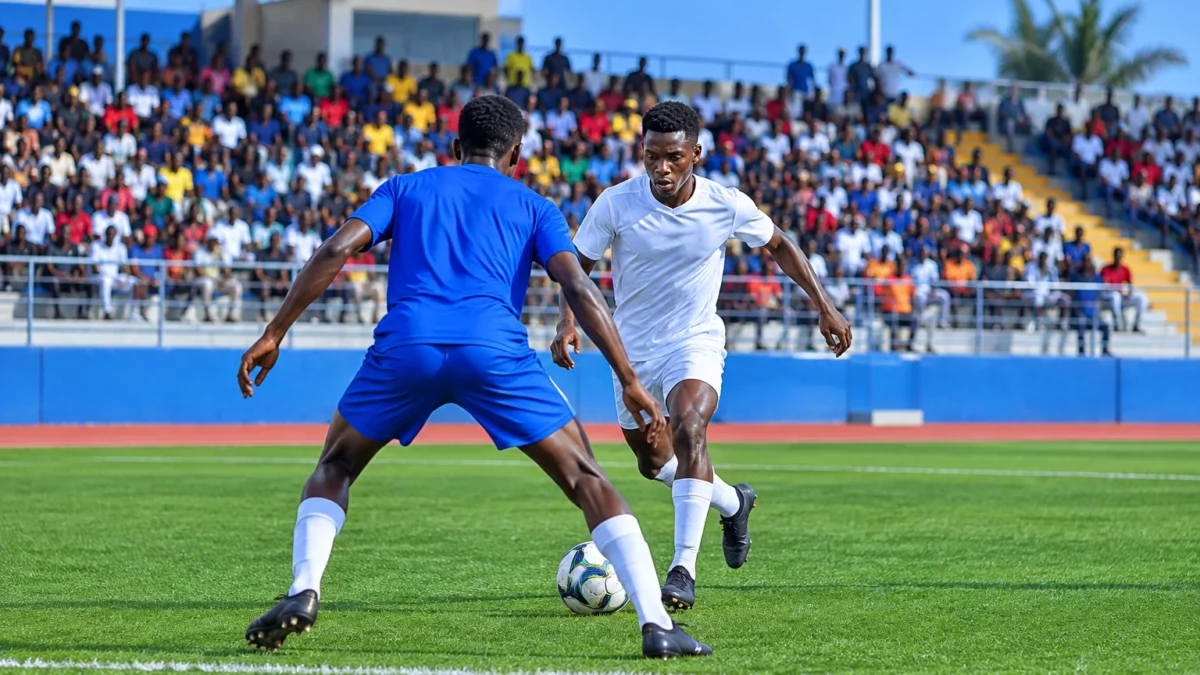
Can an Angolan club open up a new path in the continent’s most prestigious club competition? Mamelodi Sundowns’ elimination by Wiliete SC has already upended expectations. From 27 November, 16 teams begin the group stage of the 2026-2027 CAF Champions League, without the defending champions from South Africa or Al Ahly, the competition’s record winners.
A refreshed line-up, but not without favourites
The competition brings together clubs from 11 countries, from Morocco to Angola, including Tanzania, Egypt and Mauritania. The format is straightforward: four groups of four teams, with each club playing six matches. The top two in each group will advance to the quarter-finals.
This edition is not defined solely by the absentees. Espérance de Tunis, four-time African champions, bring considerable continental experience. But the draw has placed them in a group that also includes Petro Atlético de Luanda, Wiliete SC and FC Nouadhibou, Mauritania’s champions. The Tunisians will therefore have to contend with different opponents and away trips from the opening rounds.
The line-up also reflects the competition’s depth. In Group B, Cairo’s Zamalek face MC Alger, Club Africain of Tunis and Young Africans, the Dar es Salaam club from Tanzania. Group C brings together RS Berkane, Simba SC, Orlando Pirates and Colombe Sportive. Finally, Pyramids FC, Al Hilal Omdurman, Horoya AC and MAS de Fès are in Group D.
Wiliete, a symbol of qualification that reshuffles the field
The most striking result of the qualifying rounds came from Angola. Wiliete SC eliminated Mamelodi Sundowns, the South African club established at the summit of continental football and the defending champions. The two legs ended 1-1 on aggregate; the Benguela club secured qualification under the away-goals rule.
The result sends Wiliete into its first group stage. It also highlights the importance of the qualifying rounds: even a club with considerable experience and resources is not guaranteed a place in the final line-up. For Angolan football, qualification gives the club a platform alongside Petro Atlético, a regular in African competitions.
Al Ahly’s absence marks another change. The Cairo club, 12-time winners of the competition, will play in the CAF Confederation Cup this season. However, absence from the Champions League should not be confused with withdrawal from continental football: the Egyptians remain involved in another CAF competition. Their campaign could still affect the hierarchy of clubs in the country, particularly in relation to Pyramids and Zamalek.
Ambitions spread across several centres
Espérance, based in Tunis, have a track record few rivals can match. Their last triumph came in 2019, and the club has regularly reached the latter stages in recent years. That history makes them credible contenders, but does not guarantee an easy campaign in a group featuring two Angolan teams and the Mauritanian representatives.
Pyramids FC, based in Cairo, are also expected to challenge. Winners of the Champions League in 2025, according to data provided by CAF, the club has quickly joined the ranks of contenders. Their group, featuring Al Hilal Omdurman, Horoya and MAS de Fès, has no clear favourite. The Cairo side can target qualification, but will have to prove they can handle matches away from home.
RS Berkane offer a different trajectory. The Moroccan club have won the Confederation Cup, CAF’s second-tier competition, three times before establishing themselves among the regular contenders in the Champions League. In Group C, they will face Simba, Orlando Pirates and Colombe. For the Cameroonian club, the group stage will be a first experience of the format.
Zamalek, five-time African champions, will be looking to return to the continental summit. But Group B promises close contests: Young Africans and Club Africain have strong roots in their domestic leagues, while MC Alger represents another historic centre of North African football.
National realities extend to away trips
The competition is shaped by factors beyond the pitch. Al Hilal Omdurman, the Sudanese club from the city of Omdurman, continue their continental campaign as the war that broke out in Sudan in 2023 has transformed living and working conditions in the country. The club must compete in a context of sporting exile. This constraint does not diminish its recent results, but complicates preparations and deprives local supporters of regular home matches.
By contrast, Colombe Sportive’s presence highlights the progress of a Cameroonian club still little known outside the country. Horoya, from Conakry, return to the group stage after several seasons away. These campaigns are a reminder that the competition is not limited to the big Egyptian, Tunisian or Moroccan names: domestic leagues also contribute to the changing line-up.
Fixture schedules and hosting conditions will also weigh on clubs in regions where travel is costly or difficult. Ticket revenue, available infrastructure and the ability to maintain a competitive squad can vary significantly from one club to another. The group stage will put these disparities to the test over several months; historic status alone will not erase them.
Key dates to watch
The first round of matches takes place from 27 to 29 November 2026. The second is scheduled for 4 to 6 December, and the final group-stage round will be held from 22 to 24 January 2027. This run of fixtures will show whether Wiliete can extend its surprise campaign, whether Espérance can turn experience into results and whether North African clubs will confirm their influence in the competition.
At continental level, representation is also at stake. CAF, the Confederation of African Football, organises these interclub competitions in a landscape where clubs must balance domestic schedules, cross-border travel and commercial ambitions. The elimination of favourites does more than reshuffle the title race: it opens up visibility for teams such as Wiliete and Colombe, whose performances will be watched well beyond their domestic leagues.