Algeria
 Egypt
 Libya
 Morocco
 Sudan
 Tunisia
 Burkina Faso
 Cabo Verde
 Côte d'Ivoire
 Ghana
 Guinea
 Guinea-Bissau
 Liberia
 Mali
 Mauritania
 Niger
 Nigeria
 Senegal
 Sierra Leone
 The Gambia
 Togo
 Cameroon
 Central African Republic
 Chad
 DR Congo
 Equatorial Guinea
 Gabon
 Republic of the Congo
 São Tomé and Príncipe
 Burundi
 Comoros
 Djibouti
 Eritrea
 Ethiopia
 Kenya
 Madagascar
 Malawi
 Mauritius
 Mozambique
 Rwanda
 Seychelles
 Somalia
 South Sudan
 Tanzania
 Uganda
 Angola
 Botswana
 Eswatini
 Lesotho
 Namibia
 South Africa
 Zambia
 Zimbabwe
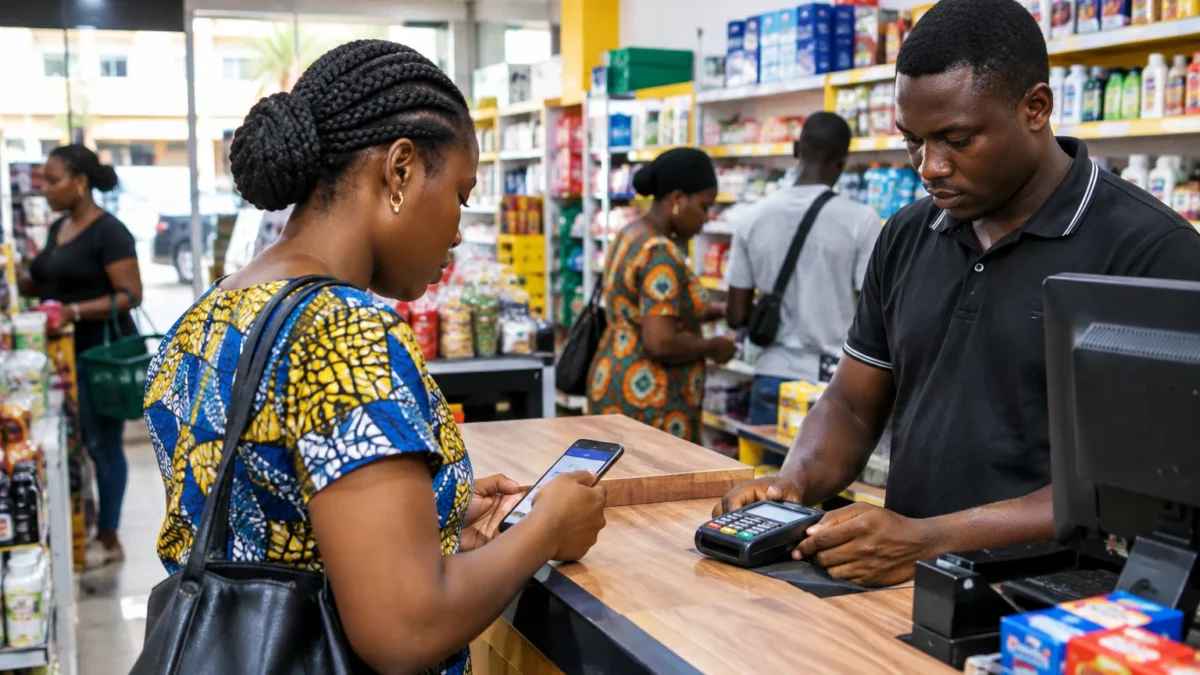
For Beninese people who already pay for their expenses with a mobile wallet, paying for a subscription or a purchase on a foreign website can still require a traditional bank card. A new virtual card aims to bridge this gap: it connects mobile money to online payments, but its usefulness will depend on its actual cost and the uses it enables.
From mobile wallet to online payment
On 26 November 2026, MTN Mobile Money, Orabank Benin and Mastercard presented the commercial phase of the MoMo Mastercard virtual prepaid card in Cotonou. The launch announcement was also reported by two Beninese media outlets. It follows a pilot period during which the service was already available to MoMo subscribers.
The principle is simple: users create a digital card from their MoMo wallet, top it up with the available balance, then use its details with merchants that accept Mastercard. It is not a line of credit. Payments remain limited to the money loaded into the wallet.
The three partners share the functions. MTN Mobile Money distributes the service to its customers. Orabank Benin acts as the issuing bank. Mastercard provides access to its payment network. This arrangement brings together an electronic money operator, a local bank and an international network.
A pilot phase is not the same as regular use
Serge Soglo, chief executive of MTN Mobile Money Benin, said that more than 200,000 cards had been issued during the pilot phase. He also said Benin had the largest number of monthly card users among the markets where it is offered. These figures come from his statements at the launch; they do not specify the number of payments made or the value of transactions.
This distinction matters. Creating a card does not necessarily mean using it regularly. Monitoring transactions, their frequency and the fees actually paid will make it possible to measure uptake beyond the announced issuance figure.
The stated fee for creating the card is 500 CFA francs. However, this entry price is not enough to measure the total cost: top-up or payment fees, terms of use and any conversion costs must also be known and understood by users.
A market already shaped by mobile money
Mobile payments are not starting from scratch in Benin. They are part of a financial landscape in which banks, microfinance institutions and electronic money issuers coexist. According to the 2025 dashboard of the Central Bank of West African States (BCEAO), published in October 2026, the overall rate of use of financial services in Benin stood at 92.81%. This indicator aggregates several types of services: on its own, it does not measure access to online payments.
Regionally, Benin belongs to the West African Economic and Monetary Union (WAEMU), whose common monetary policy and payments framework is overseen by the BCEAO. In 2025, the central bank launched PI-SPI, a platform designed to facilitate instant transfers between banks, microfinance institutions and electronic money providers. The Mastercard card operates through a different channel: it targets payments at merchants connected to this network, including online.
This offering therefore complements domestic transfers and payments rather than replacing them. It could appeal to people who buy digital services, pay for subscriptions or make payments to online sellers. But access also depends on very practical factors: an internet connection, digital skills, account security and whether the merchant accepts the card.
The challenge: access, but also transparency
For users without a traditional bank card, the solution could reduce an access barrier. It does not, however, remove other obstacles. High transaction costs, declined payments or unclear dispute procedures could limit the service’s appeal, particularly for small purchases or recurring subscriptions.
The partners’ responsibilities will therefore be closely scrutinised. Issuance by a local bank places the product within a banking framework, while MTN provides the link to the mobile wallet. Customers will need to be able to identify clearly whom to contact in the event of a disputed transaction, a blocked card or a refund problem. The full terms, including the fees applied to transactions, are also essential for comparing this card with other payment methods.
The strategy extends beyond Benin. MTN offers MoMo services in several African markets, while regional players are seeking to make digital payments more interconnected. However, rules and infrastructure vary from one country to another: a service available in several markets does not automatically amount to a uniform offering across the continent.
In the coming months, the decisive indicator will therefore not be the number of cards issued alone. Payment frequency, the fees actually incurred and the ability to resolve problems will show whether this bridge between mobile money and online commerce meets the needs of Beninese people over the long term.