Algeria
 Egypt
 Libya
 Morocco
 Sudan
 Tunisia
 Benin
 Burkina Faso
 Cabo Verde
 Côte d'Ivoire
 Ghana
 Guinea
 Guinea-Bissau
 Liberia
 Mali
 Mauritania
 Niger
 Nigeria
 Senegal
 Sierra Leone
 The Gambia
 Togo
 Cameroon
 Central African Republic
 Chad
 DR Congo
 Equatorial Guinea
 Gabon
 Republic of the Congo
 São Tomé and Príncipe
 Burundi
 Comoros
 Djibouti
 Eritrea
 Ethiopia
 Kenya
 Madagascar
 Malawi
 Mauritius
 Mozambique
 Rwanda
 Seychelles
 Somalia
 South Sudan
 Tanzania
 Uganda
 Angola
 Botswana
 Eswatini
 Lesotho
 Namibia
 Zambia
 Zimbabwe
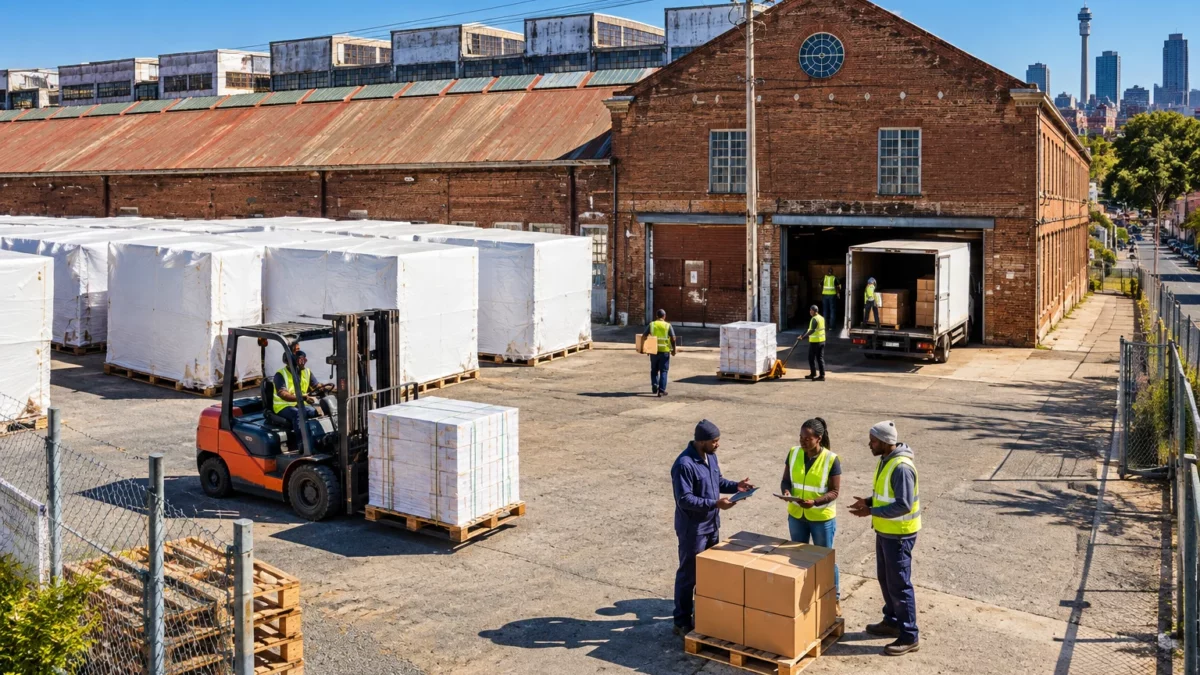
For a South African company, securing its electricity supply no longer depends solely on public power stations. Direct contracts with private producers are playing an increasingly important role. This shift is opening a new market for solar developers, but also raising questions about access to the grid and how benefits are shared.
An electricity market opening up to private contracts
Electricity generation in South Africa is gradually changing. The Electricity Regulation Amendment Act, signed in 2024, paves the way for greater competition among producers. It is helping to drive the development of power purchase agreements between companies and independent producers. The public REIPPPP programme, meanwhile, runs tenders to buy electricity from these producers and supply it to the grid.
The two routes are not interchangeable. In a public tender, the state selects projects according to its criteria and organises their integration into the electricity system. Under a long-term private contract, a company commits to buying electricity from a producer. When the two parties are far apart, power can be transmitted via the grid through “wheeling”, a mechanism comparable to using shared transmission lines.
The reform therefore does not remove the role of the public authorities or that of Eskom, the national power utility. Rather, it expands the number of players able to finance and generate electricity. The grid’s ability to carry this output remains critical, as do the rules governing access and the associated costs.
Noko moves to construction, Mercury changes course
On 26 November 2026, Lyra Energy completed financing for the Noko solar power plant and Scatec began construction. The project is set to generate 126 megawatts. Lyra is a joint venture equally owned by Norwegian group Scatec and STANLIB Infrastructure Investments.
According to Scatec, the company will contribute about $13 million in equity. Standard Bank will provide project debt with no recourse to shareholders: repayment will therefore rely on the plant’s revenues and assets, rather than on its owners’ other assets. Scatec also expects construction revenue of about $100 million. The plant’s total cost has not been disclosed. Commercial operations are expected to begin in the first half of 2028.
At the same time, Scatec plans to transfer the 288-megawatt Mercury solar project to Lyra. The project was selected for the public renewable energy procurement programme in December 2024. Its contracted capacity had, however, been stated as 240 megawatts. The group says the change reflects demand from commercial and industrial customers. Lyra is targeting the start of construction in the first half of 2027.
These figures describe different stages: Mercury’s announced project capacity, its contracted capacity under the public programme and the total capacity envisaged in Lyra’s portfolio should not be confused. Nor does the announced transfer mean that electricity is already being generated or sold. The power purchase agreements, construction work and grid connection still need to be completed.
Corporate contracts, but unequal access
Noko is part of a strategy in which Lyra is developing power plants to supply private customers under multi-year contracts. With the 255-megawatt Thakadu project, whose first construction phase began in March 2026, Lyra says it has 381 megawatts under construction. Mercury, at 288 megawatts, is its project in preparation.
The model can meet the needs of manufacturers, mines and other companies seeking a predictable supply. For these buyers, a long-term contract can help secure costs and the electricity needed for their operations. For developers, it provides an identifiable route to market, an important factor in persuading banks to finance a power plant.
But large buyers do not represent the whole population. Households, small businesses and communities do not automatically benefit from these contracts. The wider effects will also depend on jobs created, local procurement, public revenues and tangible improvements in supply. Moreover, a solar power plant alone cannot guarantee a constant supply: the grid, storage capacity and the balance between generation and demand remain essential.
A regional signal to watch with caution
BloombergNEF estimates that private buyers could support 73% of the 2.3 gigawatts of new large-scale solar and wind capacity expected in South Africa in 2026. If this forecast is borne out, corporate contracts would exceed new capacity from public tenders for the first time. This is a projection for the year, not a definitive generation total.
The trend also affects southern Africa, where electricity trading and cross-border infrastructure matter for regional energy security. The growth of private projects in South Africa does not, however, guarantee that they will supply neighbouring countries. That will depend on contracts, interconnections and the capacity available on the regional grid.
For Pretoria and other decision-making centres, the challenge is to make private financing, public planning and equitable access to infrastructure work alongside one another. What happens next with Noko and Mercury will show whether announcements translate into connected power plants and executed contracts. It will also be important to track how market rules and investment in the grid develop: without them, a growing number of projects will not be enough to transform the electricity available to South African businesses and households.
Sources for verification: Scatec announcement on Noko and Mercury, Engineering News report, analysis of the South African market and BloombergNEF forecasts, official overview of the 2024 electricity reform, official announcement of projects selected for the public programme in December 2024.