Algeria
 Egypt
 Libya
 Morocco
 Sudan
 Tunisia
 Benin
 Burkina Faso
 Cabo Verde
 Côte d'Ivoire
 Ghana
 Guinea
 Guinea-Bissau
 Liberia
 Mali
 Mauritania
 Niger
 Nigeria
 Senegal
 Sierra Leone
 The Gambia
 Cameroon
 Central African Republic
 Chad
 DR Congo
 Equatorial Guinea
 Gabon
 Republic of the Congo
 São Tomé and Príncipe
 Burundi
 Comoros
 Djibouti
 Eritrea
 Ethiopia
 Kenya
 Madagascar
 Malawi
 Mauritius
 Mozambique
 Rwanda
 Seychelles
 Somalia
 South Sudan
 Tanzania
 Uganda
 Angola
 Botswana
 Eswatini
 Lesotho
 Namibia
 South Africa
 Zambia
 Zimbabwe
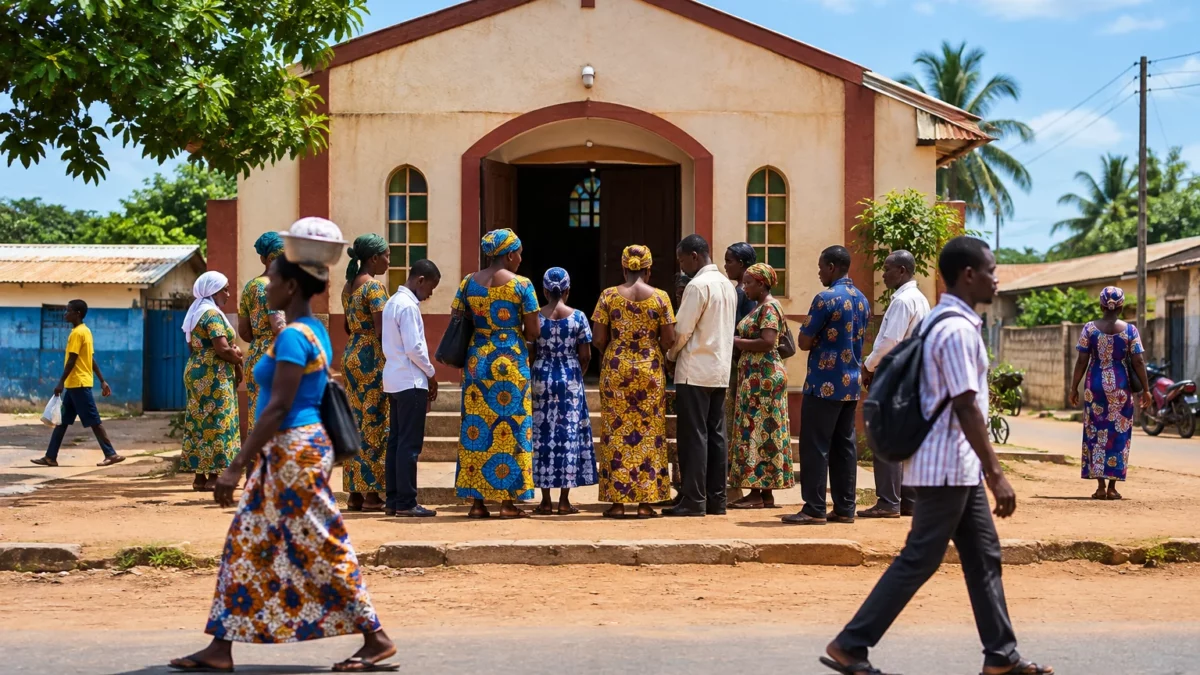
In Kara, a priest’s absence raises an immediate question: what is actually known about his disappearance, and what remains to be verified? Since 24 November 2026, Father Éric Ébélaki’s relatives and community have been awaiting news, while the circumstances remain unclear.
Disappearance reported in Kara
Father Éric Ébélaki, a vicar at the Bon Pasteur parish in Tchaloudé, in the Diocese of Kara, has not been seen since the evening of Tuesday 24 November, according to a missing-person notice circulated locally. The Bishop of Kara, Mgr Jacques Danka Longa, confirmed that the priest’s absence was noticed the following day.
In a statement reported by several Togolese media outlets, the bishop said the relevant authorities had been notified. He called on the faithful to pray and expressed hope that the priest would return alive. These details confirm that his disappearance has been reported, but do not specify where Ébélaki was last seen or what may have happened afterwards.
Reports circulating in Kara refer to a room in disarray and a door that was allegedly forced open. However, these details are based on anonymous accounts repeated by some media outlets. They have not been confirmed in the bishop’s public statements or in any communication from the authorities reviewed so far. It would therefore be premature to present the theory of a kidnapping as an established fact.
The Diocese of Kara is one of the Catholic Church’s jurisdictions in Togo. Kara, a major city in the north of the country, lies several hundred kilometres from Lomé. In a situation like this, relatives, the parish and security services are the first points of contact for gathering verifiable information and passing it on to investigators.
Reported previous incidents, with no established link
Accounts published in Togo claim that the priest’s room was set on fire between May and June 2026 by unidentified people. At this stage, the available information does not allow the circumstances of the incident to be independently confirmed, or any link to the current disappearance to be established. The timing of the two alleged events warrants verification, but is not enough to demonstrate continuity or motive.
Local accounts also describe Father Ébélaki as a priest whose sermons addressed social injustices. Here again, this description does not allow a conclusion that his public statements were connected to his disappearance. The investigation will have to establish the facts without favouring any line of inquiry solely on the basis of rumours or his religious role.
The case also highlights the need to distinguish confirmed information from accounts that spread rapidly on social media. A disappearance reported by the Church and a call for the authorities to act are reportable facts. By contrast, a kidnapping, an assault or a political motive requires additional evidence and clear attribution.
A local concern, with regional implications
For the community of Tchaloudé and the faithful in Kara, the immediate concern is concrete: to know where their vicar is and whether he is safe. For his family and colleagues, the priority is to receive reliable information. The authorities, for their part, must establish the circumstances of his absence and report on their efforts without compromising any search operation.
The regional context gives the case particular resonance, but does not allow a cause to be assigned to it. In northern Togo, the authorities face security challenges, including armed violence affecting some areas along the Sahel’s borders. However, no public information reviewed establishes a connection between this violence and the priest’s disappearance in Kara. The city’s location is not, on its own, proof of a link.
Across West Africa, ECOWAS — the region’s political and economic cooperation organisation — focuses mainly on issues of stability and cross-border security. This disappearance is primarily a matter for the Togolese authorities and local institutions. Its regional significance will depend on the facts established and the course of the investigation, not on the speculation surrounding it.
The next significant developments would be a possible statement from the authorities, further details from the diocese or confirmation that Father Ébélaki has been found. Until then, the circumstances remain unknown. The only point established by church announcements and corroborated Togolese media reports is that his absence was reported after 24 November and that the authorities have been notified.