Algeria
 Egypt
 Libya
 Morocco
 Sudan
 Tunisia
 Benin
 Burkina Faso
 Cabo Verde
 Côte d'Ivoire
 Ghana
 Guinea
 Guinea-Bissau
 Liberia
 Mali
 Mauritania
 Niger
 Senegal
 Sierra Leone
 The Gambia
 Togo
 Cameroon
 Central African Republic
 Chad
 DR Congo
 Equatorial Guinea
 Gabon
 Republic of the Congo
 São Tomé and Príncipe
 Burundi
 Comoros
 Djibouti
 Eritrea
 Ethiopia
 Kenya
 Madagascar
 Malawi
 Mauritius
 Mozambique
 Rwanda
 Seychelles
 Somalia
 South Sudan
 Tanzania
 Uganda
 Angola
 Botswana
 Eswatini
 Lesotho
 Namibia
 South Africa
 Zambia
 Zimbabwe
A 1.5-tonne seizure is not enough to measure the scale of an illicit market. But when a facility equipped for large-scale production is discovered in south-eastern Nigeria, the question goes beyond the shipment itself: has the country also become a manufacturing site for transnational networks?
An operation planned over several months
On 11 November 2026, agents from Nigeria’s National Drug Law Enforcement Agency (NDLEA) raided an industrial complex in Enugu, in the south-east of the country. The agency announced the operation on 25 November in Abuja, the federal capital.
Five Mexican nationals and a Nigerian businessman, Chuks Enoch Ezeike, were arrested. The authorities suspect them of having taken part in setting up and operating a methamphetamine laboratory. The charges will have to be examined by the courts; an arrest is not a conviction.
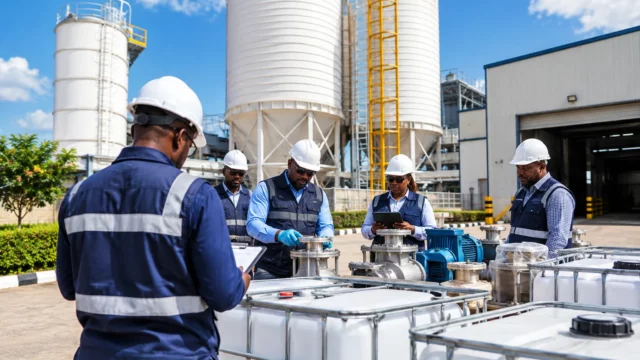
According to the NDLEA, investigators seized 1,512 kilograms of methamphetamine, either as finished product or in the process of being manufactured. The agency puts their value at $226.8 million, or about 303.9 billion naira according to its assessment. It also reports seizing 6.68 tonnes of precursor chemicals and industrial equipment.
The NDLEA says it began investigating in April. According to its account, the five Mexicans were first turned back in Abuja on 28 August, then entered Nigeria from Benin in September using false documents. Agents say they followed them to Enugu before moving in. These details are based on the agency’s official account, also reported separately by Nigerian media outlet Premium Times.
From transit to production: a challenge for law enforcement
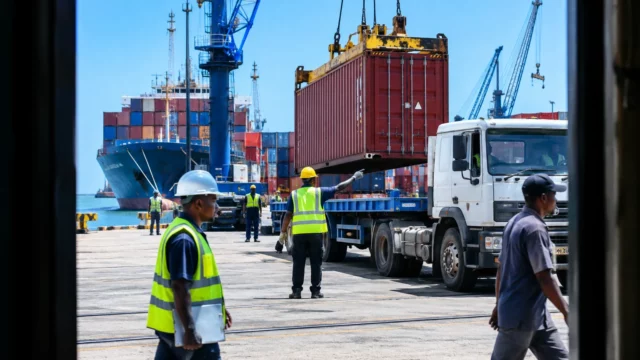
Nigeria occupies a central position in West African trade. Its ports, land borders and the size of its economy make it a major focus for illicit networks and the agencies tasked with combating them. The Enugu operation highlights a possible shift: beyond transit, some production could be taking place locally.
This does not mean that Nigeria has become a major methamphetamine producer. Rather, it indicates that networks may be able to draw on specialist skills, infrastructure and local connections there. A study by the African organisation Global Initiative Against Transnational Organized Crime notes that the country has previously had large-capacity laboratories and that manufacturing know-how circulates in the region.
The NDLEA describes a three-tier network: recruiters and financiers in Mexico, a Nigerian organiser responsible for providing the site and the products, and foreign technicians assigned to production. This structure is the one presented by the agency; it has not yet been established by a court ruling. It nevertheless highlights an essential point: transnational networks need local partners, and migration controls alone cannot dismantle them.
The authorities’ decision to let the suspects enter after their initial expulsion, in order to monitor their movements and trace the laboratory, also raises an operational question. Such a strategy can help identify an entire network. However, it carries risks if surveillance fails or products are distributed before the operation. In this case, the NDLEA says it struck before the group left the country.
Effects that extend beyond borders
For Enugu residents, the immediate concern is the presence of a production site in the middle of an industrial area and the risks associated with storing chemical substances. The wider effects will depend on the investigation’s findings: the origin of the precursors, financial channels, intended markets and any accomplices. The authorities have not publicly established where the drugs were to be sold.
The NDLEA’s chairman, Mohamed Buba Marwa, believes the quantity seized was intended for markets beyond Nigeria. This remains an assertion by the agency. It is consistent with the alleged transnational nature of the network, but the precise route the products were to take and their customers have not been publicly confirmed.
The regional dimension is tangible: according to the official account, the suspects’ journey involved Benin, Nigeria’s neighbour, before they arrived in Enugu State. Cooperation between Nigerian and Beninese agencies, as well as intelligence-sharing with other countries, will be crucial to tracking the movement of people, equipment and chemicals. ECOWAS, the West African regional integration organisation, is also a framework for regional cooperation, although the investigation announced here is primarily a matter for Nigerian authorities.
The NDLEA describes the seizure as its fifth recent operation targeting clandestine laboratories. It says ten Mexican specialists have been arrested in Nigeria over four months and that five people detained in previous operations are in custody awaiting trial. These figures come from the agency, but the earlier discoveries indicate that the Enugu case is not an isolated incident.
The next step will be judicial: the charges, physical evidence and any links between the cases will have to be established in court. For Abuja, the challenge is also to turn a successful operation into lasting capacity to investigate, control precursors and cooperate regionally. That is what will determine whether this becomes a spectacular seizure or the genuine dismantling of a network.