Algeria
 Egypt
 Libya
 Morocco
 Sudan
 Tunisia
 Burkina Faso
 Cabo Verde
 Côte d'Ivoire
 Ghana
 Guinea
 Guinea-Bissau
 Liberia
 Mali
 Mauritania
 Niger
 Nigeria
 Senegal
 Sierra Leone
 The Gambia
 Togo
 Cameroon
 Central African Republic
 Chad
 DR Congo
 Equatorial Guinea
 Gabon
 Republic of the Congo
 São Tomé and Príncipe
 Burundi
 Comoros
 Djibouti
 Eritrea
 Ethiopia
 Kenya
 Madagascar
 Malawi
 Mauritius
 Mozambique
 Rwanda
 Seychelles
 Somalia
 South Sudan
 Tanzania
 Uganda
 Angola
 Botswana
 Eswatini
 Lesotho
 Namibia
 South Africa
 Zambia
 Zimbabwe
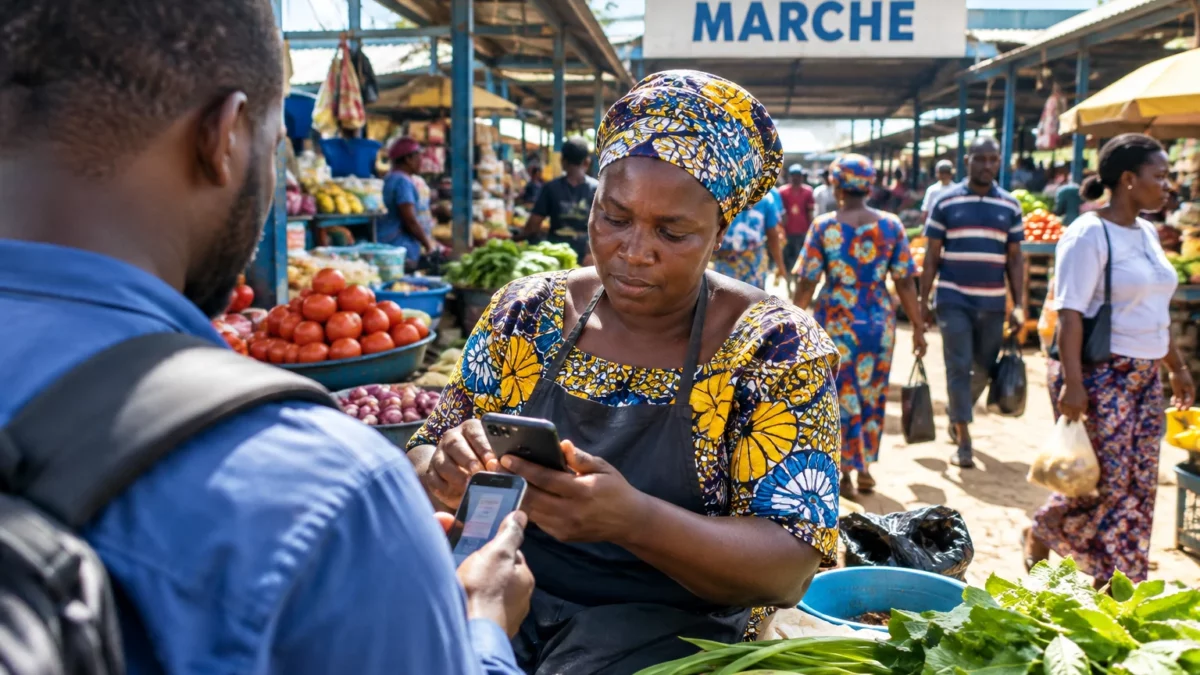
A digital payment can travel through a phone in seconds. But building strong businesses and services accessible across several countries around these uses takes much longer. This is the next step that West African digital finance players have put at the centre of their discussions in Cotonou.
From mobile payments to a regional industry
The eighth edition of the Next Fintech Forum is being held in Benin on 26 and 27 November 2026. Organised by the WAEMU Fintech Alliance, the event brings together finance and technology players around one challenge: turning the adoption of digital services into sustainable economic value for the West African Economic and Monetary Union (WAEMU), which comprises eight countries that share, among other things, a currency and common financial rules. The programme and dates have been confirmed by the organiser and reported by a regional financial news outlet. Official presentation of the Next Fintech Forum 2026 · Financial Afrik announcement of the event.
Cotonou’s selection places the debate in an economy where digital financial services are advancing, but businesses still need to consolidate their revenues, skills and ability to scale up. For small businesses, traders and people far from bank branches, these tools can make payments and transfers simpler. But they must work across different networks, remain affordable and inspire trust.
Data from the Central Bank of West African States (BCEAO) show both the scale of this shift and its limits. In 2024, the overall financial inclusion rate in WAEMU reached 73.6%, up from 72.3% in 2023. E-money accounted for 57.2% of this rate. Yet physical access did not improve at the same pace: the region had 193 service points per 10,000 adults in 2024, compared with 204 the previous year. BCEAO report on digital financial services · Report on financial inclusion in WAEMU.
Licences granted, but markets unevenly equipped
The presence of numerous initiatives is not enough to create an integrated sector. As of 31 August 2026, the BCEAO listed 34 licensed payment institutions in the Union. Four are based in Benin, compared with 11 in Senegal and 10 in Côte d’Ivoire. The other three member countries have between one and three each. These figures describe authorised institutions, not all the businesses developing financial technologies. BCEAO list of licensed payment institutions.
This uneven distribution is a reminder that businesses do not operate in the same conditions from one country to another. Extending a service beyond one market requires compliance with the applicable rules, partnerships and the ability to manage risks. Authorities, for their part, must regulate new services without closing the door to innovation, while protecting customers and transaction security.
The BCEAO has identified obstacles that go beyond licensing: interoperability, meaning the ability of different systems to exchange information, the pooling of infrastructure, and the need for financial and digital literacy. More detailed data are also needed to guide public policy. These challenges have very practical consequences: a solution that cannot communicate with others can make life harder for users and limit a start-up’s market opportunities.
Regional infrastructure put to the test by usage
The central bank has launched initiatives to facilitate testing and exchanges. Since April 2025, its Financial Innovation Lab has allowed technology companies and licensed institutions to test products under supervision, within an appropriate regulatory framework. On 30 September of the same year, it officially launched the Interoperable Instant Payment System Platform (PI-SPI), designed to enable transfers between different types of financial service providers. Presentation of the Financial Innovation Lab · Official launch of PI-SPI · Report by the Senegalese Press Agency.
These tools provide a framework, but their reach will depend on how they are used in practice. For a trader, the promise is more useful if a customer can pay for a purchase from another institution without obstacles or excessive fees. For a fintech, interconnection can expand the potential market. For authorities, it makes system reliability, data protection and fraud prevention all the more important.
The effects will not be uniform. Banks and established businesses have greater resources to adapt their systems. Young companies must fund compliance and find partners. Formal small businesses may gain payment or management tools, while traders in the informal economy will also depend on ease of access, transaction costs and network quality outside major urban centres.
An issue that goes beyond Benin
The Cotonou meeting is part of financial integration across WAEMU, overseen by the BCEAO. It therefore concerns more than the players present in Benin: regional standards, infrastructure and partnerships can influence the services available in all eight countries. This momentum is linked to a broader challenge for West Africa: developing digital exchanges that cross borders without forcing users through complicated processes.
Success will not be measured solely by the number of applications or licensed businesses. It will depend on services’ ability to work together, remain economically viable and meet the needs of households and businesses. For Benin, host of the 2026 edition, as for its neighbours in the Union, the next stage to watch is the real-world adoption of this infrastructure and its everyday benefits.