Algeria
 Egypt
 Libya
 Morocco
 Sudan
 Tunisia
 Benin
 Burkina Faso
 Cabo Verde
 Côte d'Ivoire
 Ghana
 Guinea
 Guinea-Bissau
 Liberia
 Mali
 Mauritania
 Niger
 Nigeria
 Senegal
 Sierra Leone
 The Gambia
 Togo
 Cameroon
 Central African Republic
 Chad
 DR Congo
 Equatorial Guinea
 Gabon
 Republic of the Congo
 São Tomé and Príncipe
 Burundi
 Comoros
 Djibouti
 Eritrea
 Ethiopia
 Kenya
 Madagascar
 Mauritius
 Mozambique
 Rwanda
 Seychelles
 Somalia
 South Sudan
 Tanzania
 Uganda
 Angola
 Botswana
 Eswatini
 Lesotho
 Namibia
 South Africa
 Zambia
 Zimbabwe
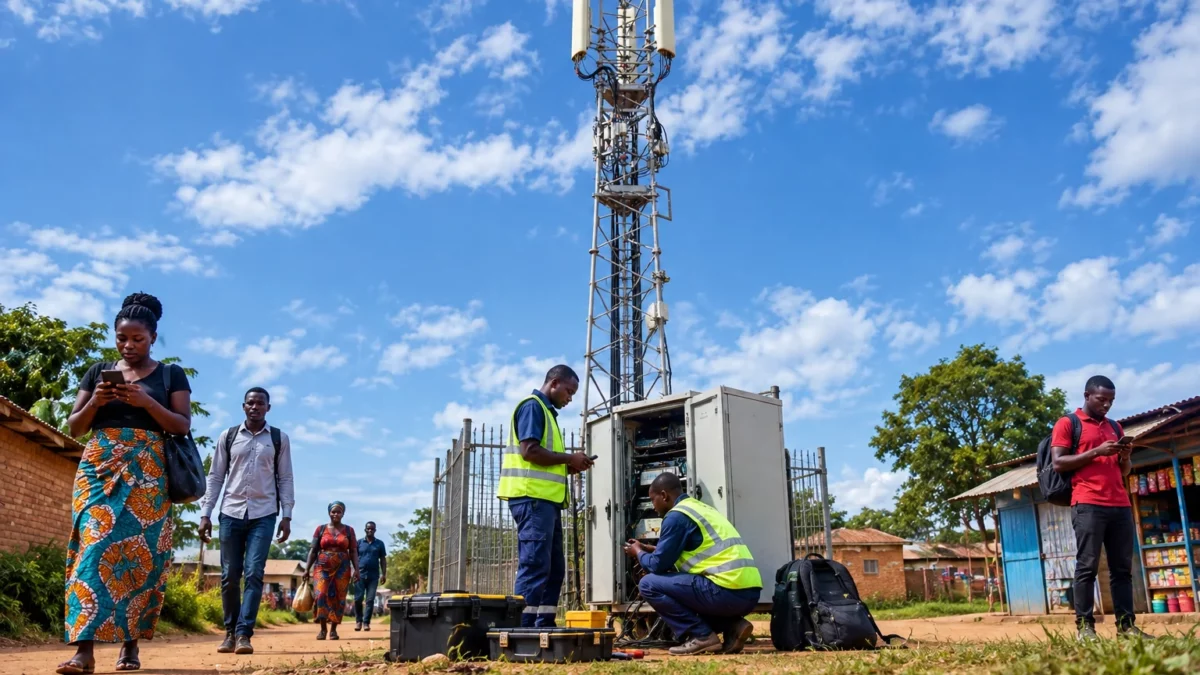
For households and small businesses in Malawi, a reliable mobile connection has become an everyday tool. But adding a name to the list of operators is not enough: a network must be financed, equipment secured and underserved areas reached.
Opening announced, but not yet under way
Malawi’s mobile market is dominated by Airtel Malawi and Telekom Networks Malawi (TNM). On 26 November 2026, Information and Communications Technology Minister Shadric Namalomba discussed with regulator MACRA the possibility of attracting a new operator. The government is looking for a player able to bring investment, innovation and new offers. No timetable for awarding a licence or investor was announced at the time. The account of the meeting with MACRA also says an investor workshop is planned for early 2027.
The project follows a succession of attempts that have yet to establish a lasting national competitor. Nyasa Mobile obtained a licence in December 2020 but did not launch mobile services. Malcel, another operator project, postponed its launch, partly because of difficulties securing foreign currency to buy equipment. These precedents mean the authorities must distinguish between granting a licence and actually building a network. Malawi’s Government Gazette confirms the licence granted to Nyasa Mobile.
Complaints fuel hopes of greater competition
The prospect of a new entrant comes as tariffs and service quality are being publicly debated. In June 2026, MACRA approved average tariff increases of 22.2% for Airtel and 26% for TNM. In July, the regulator ordered operators to credit affected customers’ accounts after finding that the new tariffs had been applied without observing the statutory seven-day notice period. Reported details on tariffs and customer credits shed light on tensions between operators’ financial viability and subscriber protection.
Concerns are not limited to prices. In September, MACRA opened an investigation into reports that data bundles were being used up quickly on Airtel and TNM. The Consumers Association of Malawi (CAMA), a consumer advocacy group, has also raised concerns with the regulator about dropped calls, slow internet and delays in mobile money transactions. These complaints describe problems reported by users; on their own, they do not prove a systematic failure. MACRA’s investigation into data billing is to examine metering systems and usage records in particular.
More competition could prompt the two incumbent operators to review their prices, investment and customer service. But that outcome is not automatic. A new player will have to build coverage broad enough to offer a genuine alternative, rather than services in just a few districts of major cities. Urban customers, businesses and mobile money users could feel changes quickly; in rural areas, the main issue is often network availability and continuity.
Network costs are the main test for investors
The obstacle is also material and financial. MACRA estimates that a national mobile network could require about 350 billion kwachas, or nearly $202 million, according to figures it has provided. In January 2026, Airtel Malawi said limited access to foreign currency was delaying imports of equipment needed to upgrade its network. The company cited substantial investment needs amid power cuts and infrastructure damage. Airtel’s reported equipment supply difficulties show that the challenge extends beyond the entry of a new operator.
To reduce the cost of setting up a network, MACRA wants to discuss infrastructure sharing and national roaming. Sharing allows several operators to use certain towers or fibre networks; roaming enables a customer to access another operator’s network temporarily where their own is unavailable. These arrangements can limit upfront investment, but their implementation will depend on access rules, wholesale prices and agreements between companies. The planned investor meeting in early 2027 is to address these issues, as well as radio spectrum management.
The authorities will also have to learn from licences that did not lead to network deployments. In July, the minister said some licence holders had obtained frequencies without rolling out a network, and that procedures to revoke them were being challenged in court. Any future call for investors will therefore need to make coverage obligations, deadlines and penalties sufficiently clear, while avoiding unrealistic conditions in an environment where access to capital and foreign currency remains difficult.
A Malawian issue within SADC priorities
Malawi is a member of the Southern African Development Community (SADC), which brings neighbouring states together for regional co-operation. Better connectivity can facilitate trade, payments and digital services across borders. But the issue will first be decided nationally: the question is whether an investor can finance a viable network and whether the regulator can ensure competition that benefits consumers, from Lilongwe to remote districts. Malawi’s profile on the SADC website places the country in this regional context.
The next concrete step will therefore be less the announcement of a new operator than the definition of entry conditions and the effective participation of investors in the meeting planned for 2027. The outcome will affect prices and service quality, as well as rural access and small businesses’ ability to rely on dependable digital tools. For now, the promise of competition has yet to be turned into a network, coverage and genuine choice for Malawians.