Algeria
 Egypt
 Libya
 Morocco
 Sudan
 Tunisia
 Benin
 Burkina Faso
 Cabo Verde
 Côte d'Ivoire
 Ghana
 Guinea
 Guinea-Bissau
 Liberia
 Mali
 Mauritania
 Niger
 Nigeria
 Senegal
 Sierra Leone
 The Gambia
 Togo
 Cameroon
 Central African Republic
 Chad
 DR Congo
 Equatorial Guinea
 Gabon
 Republic of the Congo
 São Tomé and Príncipe
 Burundi
 Comoros
 Djibouti
 Eritrea
 Kenya
 Madagascar
 Malawi
 Mauritius
 Mozambique
 Rwanda
 Seychelles
 Somalia
 South Sudan
 Tanzania
 Uganda
 Angola
 Botswana
 Eswatini
 Lesotho
 Namibia
 South Africa
 Zambia
 Zimbabwe
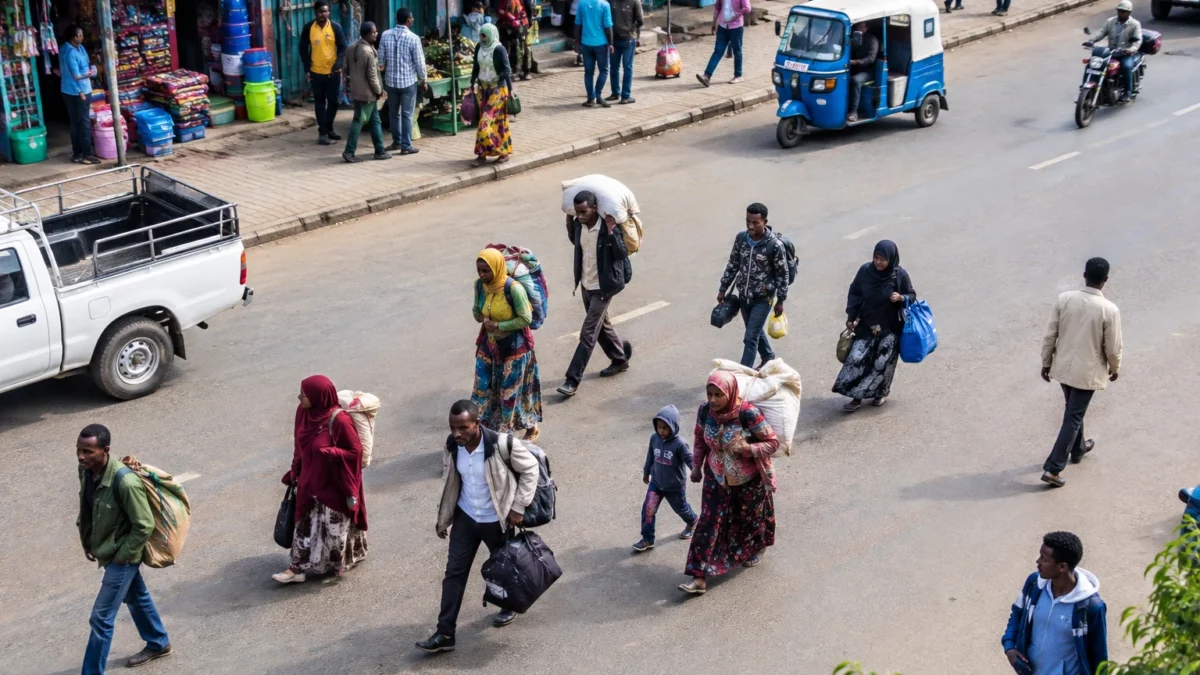
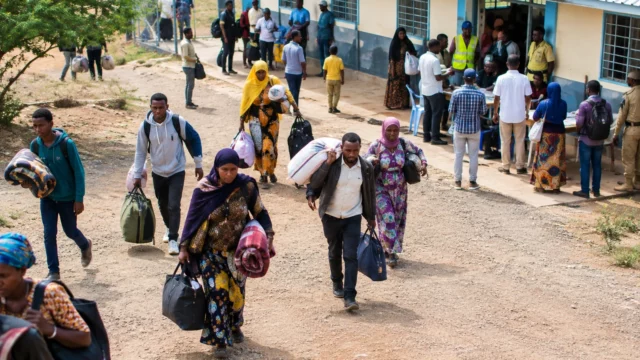
In Moyale, the border town between Ethiopia and Kenya, violence has displaced families far beyond the places where the clashes began. Available figures describe a major crisis, but they do not all measure the same thing: displacement within Ethiopia and cross-border movements must be distinguished.
A disputed border, communities caught in the crossfire
Fighting pits forces linked to the regional administrations of Oromia and the Somali Region against each other in southern Ethiopia. It broke out around Moyale, a trading hub shared with Kenya, and then spread to several districts. Both regions are federated entities within the Ethiopian state, but their boundaries and control of some border areas have fuelled longstanding tensions.
The dispute is not simply a confrontation between two populations. It involves the administration of territory, local security and access to land and roads. Previous violence and displacement along the Oromia-Somali border are a reminder that political arrangements have not always resolved underlying disputes.
The crisis is unfolding as Ethiopia faces several areas of insecurity. In the north, tensions in Tigray have flared again after the 2020-2022 war and the November 2022 Pretoria Agreement. This overlap complicates the federal response: the authorities must contain separate crises, while civilians bear the consequences.
Nearly 700,000 displaced: a figure to treat with caution
On 19 November, the humanitarian organisation Islamic Relief estimated that nearly 700,000 people had been displaced by violence in the south. Its count attributes about 329,000 displacements to the Dawa zone in the Somali Region, and nearly 360,000 to eight districts in southern Oromia. The organisation says access to the affected areas remains difficult.
This total has not been independently confirmed by the public information reviewed. It should therefore remain attributed to Islamic Relief, rather than being presented as a figure established by the United Nations. Figures for Kenya provide a separate point of reference: on 28 October, the UN refugee agency (UNHCR) reported that up to 50,000 people had crossed the border, according to local authorities. The agency said registration and verification were continuing.
The two figures are not necessarily contradictory: Islamic Relief’s estimate covers displacement in several parts of Ethiopia, while UNHCR’s concerns people who have arrived in Kenya. But the counting methods, dates and population categories differ. Figures may therefore change as humanitarian teams gain access to localities.
Islamic Relief also reports homes, shops and petrol stations destroyed or burnt, as well as disruption to health, water and sanitation services. The organisation says about 160 schools have closed, including 84 in Moyale. These figures, too, are from its assessment and should be read as such.
Daily life and access to services under pressure
For families displaced within the country, leaving home often means losing access to land, work and support networks. Households that rely on small businesses or informal work can lose their income as soon as markets close or roads become dangerous. School closures deprive children of lessons and make it harder to protect pupils.
In Kenya, people arriving in Moyale are joining the communities hosting them. UNHCR says some families are staying with relatives, while others are in temporary locations, including schools and churches. This local solidarity meets an urgent need, but also puts greater pressure on water, accommodation and available services.
The federal authorities have a central role: they must protect civilians, facilitate aid and encourage de-escalation between regional administrations. A lasting response, however, depends on more than deploying forces. It also requires mechanisms for dialogue and resolving territorial disputes, with the participation of the communities concerned.
Tigray, another measure of insecurity affecting civilians
The situation facing Tigrayan students highlights another dimension of the national crisis. The information provided says that more than 5,000 students have asked Ethiopia’s education ministry to place them at other universities, for fear of being forcibly recruited. This number and the stated reason have not been corroborated here by a second independent source: they should therefore be treated as reported, not verified.
The concern comes amid a context in which Human Rights Watch reported allegations in July 2026 of forced recruitment of civilians by Tigrayan authorities. The organisation says the practices are alleged to have begun at least in April. Its investigation does not, however, independently confirm the request by the 5,000 students to be reassigned. The distinction matters: documented reports of recruitment do not automatically validate every figure or testimony associated with it.
For young people, families and universities, continuity of education is also a question of safety and prospects. A transfer may allow students to continue their studies, but it means leaving their region, finding accommodation and adapting to a new institution. The relevant authorities are responsible for protecting students and their freedom of choice.
A concern for the Horn of Africa
The spread of displacement into Kenya gives the clashes a regional dimension. The border is crossed by trade and family ties; a prolonged crisis could therefore affect livelihoods on both sides. IGAD, the regional organisation for the Horn of Africa, and co-operation mechanisms between Addis Ababa and Nairobi can help co-ordinate the humanitarian response and prevent further cross-border escalation.
The next challenge is twofold: establish the scale of displacement through accessible, independent assessments, and secure a lasting reduction in violence. As long as teams cannot verify needs on the ground, figures will remain provisional. And until local disputes are addressed politically, the return of families to their homes and the reopening of schools will remain uncertain.