Algeria
 Egypt
 Libya
 Morocco
 Sudan
 Tunisia
 Benin
 Burkina Faso
 Cabo Verde
 Côte d'Ivoire
 Ghana
 Guinea
 Guinea-Bissau
 Liberia
 Mali
 Mauritania
 Niger
 Nigeria
 Senegal
 The Gambia
 Togo
 Cameroon
 Central African Republic
 Chad
 DR Congo
 Equatorial Guinea
 Gabon
 Republic of the Congo
 São Tomé and Príncipe
 Burundi
 Comoros
 Djibouti
 Eritrea
 Ethiopia
 Kenya
 Madagascar
 Malawi
 Mauritius
 Mozambique
 Rwanda
 Seychelles
 Somalia
 South Sudan
 Tanzania
 Uganda
 Angola
 Botswana
 Eswatini
 Lesotho
 Namibia
 South Africa
 Zambia
 Zimbabwe
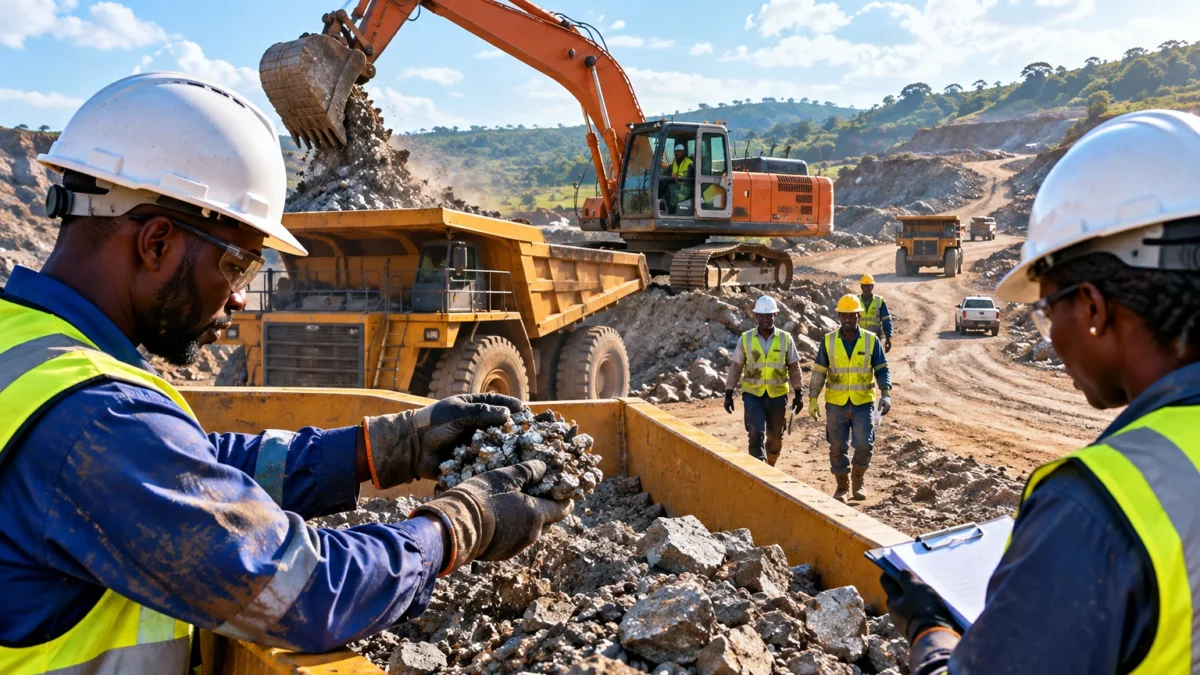
For Sierra Leone, exporting minerals depends on more than deposits. Cargoes must also be transported to ships and then carried at a competitive cost. The Banana Island project promises to link these stages, but its financing and delivery remain to be established.
A port planned alongside rail and logistics
On 17 November 2026, Sierra Leone’s Gento group, the Dangote group and the African Export-Import Bank, Afreximbank, signed a memorandum of understanding on the project. The signing took place at the West Africa Integration and Investment Summit, held in Lungi. It opens a new phase of discussions, but does not amount to a final investment decision or the start of construction.
The project combines a deep-water port at Banana Island, a logistics terminal at Kent and a railway link to mining areas. The planned depth of about 22 metres could allow large vessels to call. This figure describes a planned feature of the project: it does not prove that the facilities have been built or that they will be able to operate on the proposed timetable.
The idea is not new. In July 2024, Sierra Leone’s parliament ratified a concession agreement between the state and Gento for a port at Banana Island and a terminal at Kent. The new agreement broadens the circle of prospective partners, but the information reviewed does not specify the total cost or how financial commitments will be divided among the three signatories.
A national priority in a competitive region
Sierra Leone is seeking to better connect its resources with its commercial markets. Freetown, the capital, concentrates much of the country’s administrative and port activity. A link to mining areas could change transport routes, provided the railway, port and existing networks are effectively co-ordinated.
The country is a member of ECOWAS, the Economic Community of West African States, which brings together neighbouring states committed to regional integration. Within this area, ports compete for cargo and logistics services. A new terminal alone therefore cannot guarantee that customers will come: costs, delivery times, the reliability of connections and customs rules will also influence operators’ choices.
For mining companies, a more direct transport chain could reduce cargo handling and make exports more predictable. For the state, the challenge is to capture more value from transport, beyond extraction alone. But these gains will depend on contracts, tariffs, connecting infrastructure and the benefits that are actually retained in Sierra Leone’s economy.
The promise of a more complete maritime chain
The port is part of a broader shift in the national maritime sector. On 19 October 2026, President Julius Maada Bio inaugurated the Sierra Leone Ocean Shipping Company, or SLOSCO, established in partnership between the national maritime agency and China’s Zhejiang Xiehai group. Sierra Leone’s Ministry of Information announced a 70% stake for Xiehai and a 30% stake for the public agency.
The company plans to develop a fleet of 50 vessels, with an announced first phase of 30 ships. The two projects address different links in the chain: one concerns maritime transport, the other port, logistics and railway infrastructure. They could complement one another, but nothing in the available announcements confirms that they will be operated as an integrated system.
The effects would not be the same for everyone. Exporters and large operators could benefit from more direct access to shipping routes. Workers, small transport businesses and communities near construction sites, meanwhile, would depend on the jobs created, the opportunities available to local businesses and social and environmental safeguards. These benefits remain to be documented as studies and implementation decisions progress.
Next steps beyond the memorandum
The 2024 parliamentary ratification and the memorandum signed in November 2026 mark distinct steps: the first establishes a concession framework with Gento, while the second brings Dangote and Afreximbank into the project’s next phase. Neither is enough to show that financing is in place or that construction is about to begin.
The issues to watch are now concrete: publication of the financing plan, the division of responsibilities among partners, technical and environmental studies, land acquisition arrangements and a construction timetable. It will also be necessary to establish how the railway would link production sites to the port, and what infrastructure will be available before it enters service.
For Sierra Leone and its ECOWAS neighbours, Banana Island raises a question that goes beyond building a quay: who will control the different links in the transport of raw materials, and where will the economic benefits be created? The answer will depend less on announcements than on contracts, financing secured and the ability to connect the infrastructure to the country’s needs.