Algeria
 Egypt
 Libya
 Morocco
 Sudan
 Tunisia
 Benin
 Burkina Faso
 Cabo Verde
 Côte d'Ivoire
 Ghana
 Guinea
 Guinea-Bissau
 Liberia
 Mali
 Mauritania
 Niger
 Nigeria
 Senegal
 Sierra Leone
 The Gambia
 Togo
 Cameroon
 Central African Republic
 Chad
 DR Congo
 Equatorial Guinea
 Gabon
 Republic of the Congo
 São Tomé and Príncipe
 Burundi
 Comoros
 Djibouti
 Eritrea
 Ethiopia
 Madagascar
 Malawi
 Mauritius
 Mozambique
 Rwanda
 Seychelles
 Somalia
 South Sudan
 Tanzania
 Uganda
 Angola
 Botswana
 Eswatini
 Lesotho
 Namibia
 South Africa
 Zambia
 Zimbabwe

At Mrima Hill, the next step will not be decided solely underground. It will also depend on rules governing access to land, protection of a sacred site and the role given to Kwale residents in mining decisions.
On 19 November 2026, the Kenyan government named the US consortium Frontier Minerals as its preferred bidder for the Mrima Hill niobium and rare earths exploration project. But the announcement is neither an exploration permit nor authorisation to mine. The distinction is essential, as farmers and community representatives say they lack information about the project.
A decision still at an early stage
Kenya’s Ministry of Mining published a notice of intention to award the contract after evaluating the bids. The consortium comprises Frontier Minerals LLC, Bunker Hill Mining, ReElement Technologies and American Resources Corporation, according to information from the ministry reported by the Kenya News Agency and the Associated Press.
The notification opens the way for further steps. The group will have to engage with communities and obtain the required consent before applying for a prospecting licence. Its selection therefore does not authorise it to begin mining work on the ground.
Rare earths are a group of metals used in several technologies, including electric motors and electronic equipment. Niobium is used mainly to produce strong alloys, including for the aerospace industry. Their strategic importance attracts investors, but the presence of resources guarantees neither profitability nor extraction.
Kwale, between mining potential and local rights
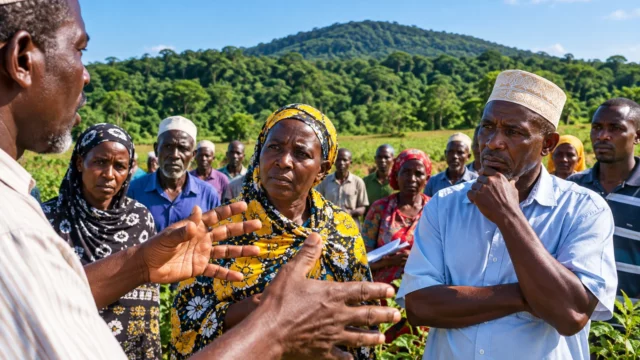
Mrima Hill is in Kwale County, on Kenya’s coast, south-east of Nairobi. The area is both a forest and a place of cultural importance to members of the Digo community. Local farmers are also concerned about possible effects on their land and livelihoods.
Residents interviewed by the Associated Press say they have not received enough information to form a view on the project’s details. The ministry, for its part, maintains that consultations took place before the call for bids and says formal dialogue with communities must continue with the successful bidder. These positions do not settle the central question: what information will be made public, and when will those affected be able to influence the decision?
A legal challenge has also been brought before the High Court in Kwale County. The Centre for Litigation Trust, a Kenyan civil society organisation, is seeking to suspend a proposed agreement between Nairobi and Washington on Mrima Hill minerals until residents have been consulted. The attorney-general disputes the court’s jurisdiction. The case is separate from the call for bids, but could affect the next steps in the process.
The site also carries the memory of an earlier mining dispute. In 2013, a licence granted to Cortec Mining Kenya for niobium and rare earths was revoked after the environmental authority rejected the project assessment, according to court documents and available reports. The dispute led to court proceedings and international arbitration. This precedent is a reminder that awarding a mining right does not exempt the state from checking environmental permits and compliance with Kenyan law.
An economic promise to be tested
Spectacular estimates of the value of reserves should be treated with caution. A theoretical value assigned to ore underground is not expected revenue: it does not necessarily account for extraction and processing costs, infrastructure, future prices or environmental constraints. The sources consulted do not allow independent confirmation of the $62bn figure cited in some presentations of the project.
For the government, attracting an investor could pave the way for public revenue, jobs and industrial activity. But these benefits will depend on the terms of the licence, taxation, revenue-sharing and the ability to process some of the minerals in Kenya. Without verifiable commitments, a discovery may remain a commercial promise rather than a tangible benefit for residents.
The impact would not be the same for everyone. Farmers could be directly affected by access to land and changes in land use. Businesses and national authorities, by contrast, could benefit from new investment and revenue. The effects on services, local employment and the environment will depend on arrangements that have not yet been set.
Kenya in a regional contest
The choice of a US consortium comes amid international competition to secure supplies of strategic minerals, particularly given China’s prominent role in their processing. However, presenting the case as a simple victory for one power over another would overlook the role of the Kenyan state: Nairobi sets the rules, runs the call for bids and must ensure they are enforced.
For East Africa, the stakes extend beyond Kwale. The East African Community (EAC), a regional organisation that includes Kenya and its neighbours, is seeking to strengthen trade and value chains among its members. If the project moves forward, the question will be whether the ore is simply extracted and exported, or whether processing activities and expertise can also develop in the region.
The next steps will therefore be decisive: publication of detailed terms, meaningful consultations, review of environmental permits and any court rulings. At Mrima Hill, the project’s value will be measured as much by the strength of these safeguards as by the resources said to lie underground.