Algeria
 Egypt
 Libya
 Morocco
 Sudan
 Tunisia
 Benin
 Burkina Faso
 Cabo Verde
 Côte d'Ivoire
 Ghana
 Guinea
 Guinea-Bissau
 Liberia
 Mali
 Mauritania
 Niger
 Senegal
 Sierra Leone
 The Gambia
 Togo
 Cameroon
 Central African Republic
 Chad
 DR Congo
 Equatorial Guinea
 Gabon
 Republic of the Congo
 São Tomé and Príncipe
 Burundi
 Comoros
 Djibouti
 Eritrea
 Ethiopia
 Kenya
 Madagascar
 Malawi
 Mauritius
 Mozambique
 Rwanda
 Seychelles
 Somalia
 South Sudan
 Tanzania
 Uganda
 Angola
 Botswana
 Eswatini
 Lesotho
 Namibia
 South Africa
 Zambia
 Zimbabwe
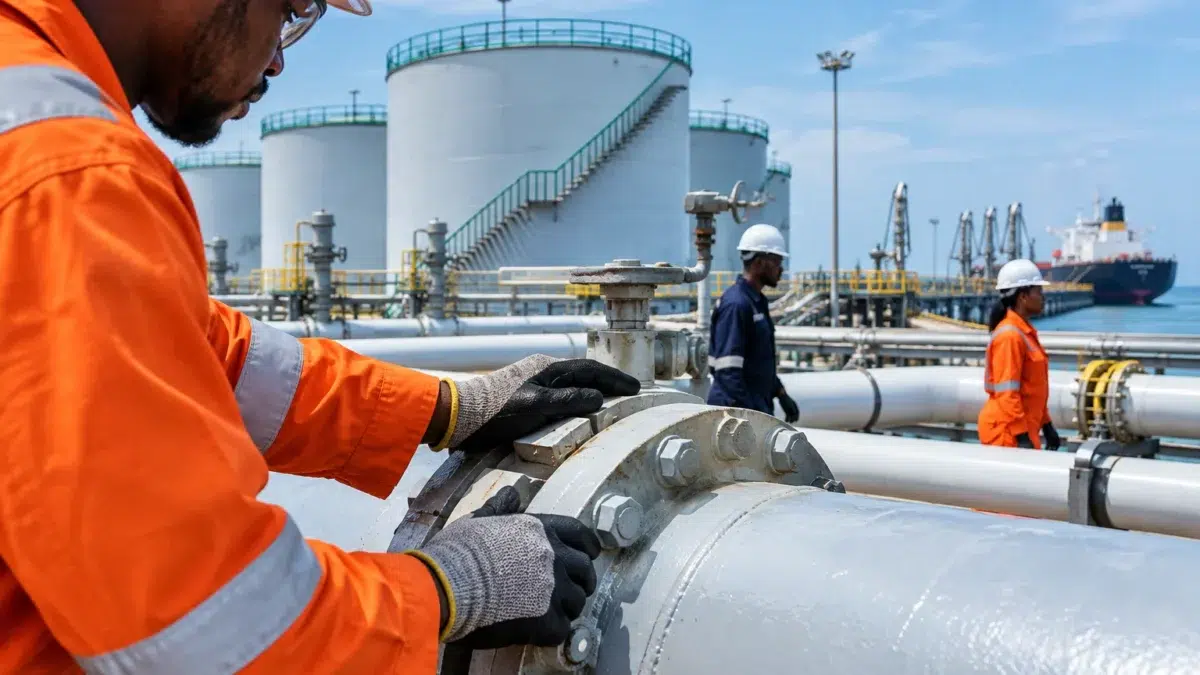
For Nigeria, every dollar earned from oil matters both to public finances and to the foreign-exchange market. But better tracking of revenues is not enough: flows must also become more predictable, and investors must be persuaded to finance energy infrastructure.
That is the aim of an agreement signed in Abuja on 18 November 2026 between the Central Bank of Nigeria (CBN) and the Nigerian National Petroleum Company (NNPC), the state-owned oil company. The memorandum formalises cooperation already under way; it does not in itself announce new investment or guarantee higher revenues.
Oil flows at the heart of Nigeria’s finances
Oil and gas generate public revenue and provide foreign exchange for Nigeria. Some export earnings are expected to go into the Federation Account, which pools resources for distribution to the different levels of government. The CBN manages foreign-currency accounts linked to NNPC operations and helps transfer funds to the relevant public accounts.
Oversight of these revenues is not a new issue. In February 2024, NNPC and the CBN had already announced an agreement on revenue management and banking services for the company. The move followed discussions about transferring a substantial share of dollar revenues to the central bank. Initial announcements prompted questions about the division of responsibilities and the company’s operational autonomy, as reported by TheCable, a Nigerian media outlet.
The monetary context also matters. In 2023, Bola Tinubu’s government launched foreign-exchange market reforms in a country facing strong demand for foreign currency and pressure on the naira. In 2024, the CBN also changed the rules on the repatriation of export earnings by some international oil companies. These measures reflect the authorities’ aim of improving the circulation of foreign currency in the domestic economy, but they do not all concern the same actors or flows.
A shared framework, rather than a new takeover
According to information provided at the signing and reported by Punch and Premium Times, the memorandum is intended to clarify coordination on accounts, fund transfers and liquidity support. It also provides for automating some payments and speeding up operational approvals. Joint committees are to monitor progress against indicators and deadlines set by the two institutions.
The agreement also provides for cooperation on regulatory compliance, risk management and cybersecurity. These issues matter to operational continuity: an interruption to payment systems or poor coordination can delay transfers, complicate settlements and undermine visibility over expected revenues.
CBN Governor Olayemi Cardoso has presented greater predictability in export revenues as a potential support for financial stability. That is an objective, not an assured outcome. The revenues actually available will also depend on production, sales, costs, commercial agreements and payment schedules. The memorandum organises work between institutions; it cannot by itself resolve these factors.
NNPC, for its part, is seeking to diversify its sources of finance. Its chief executive, Bayo Ojulari, said the company wanted to make greater use of its assets and balance sheet rather than rely solely on conventional borrowing. Management aims to improve access to capital for energy projects, particularly in the gas sector. The CBN could help connect the company with financial partners, but the available reports do not detail the specific financing arrangements.
The challenge of transparency and investment
This cooperation comes as NNPC, now a limited liability company, must reconcile its corporate objectives with its role in managing public resources. A more formal framework could make responsibilities clearer. It remains to be seen how the committees will publish their findings and how transfers will be tracked. Transparency will depend on practices and available data, not just the signing of a memorandum.
The company has also raised the possibility of a listing on the Nigerian Exchange as a way to improve governance and transparency. This is a prospect, not a listing decision announced as part of the agreement. It raises a central question: how can the company open itself further to investor requirements without blurring its duty to account to public institutions and the Nigerian people?
The stakes differ for each group. For the federal government and state governments, better-documented transfers could make it easier to forecast revenues for distribution. For investors, clearer procedures may reduce some financial uncertainty. For workers, local businesses and producing communities, however, the agreement guarantees neither new projects nor direct benefits. These will depend in particular on investment decisions, jobs created and the management of local impacts.
A signal for West Africa, yet to be borne out
Nigeria carries significant weight in West Africa’s economic balance. A member of ECOWAS, the Economic Community of West African States, it is seeking to secure revenues while financing energy production. Clearer management of foreign currency could matter for regional trade, but the agreement is not an ECOWAS mechanism: it links two Nigerian institutions.
The next test will be practical: will transfers become faster and more traceable, and will gas projects actually attract capital? Financial announcements will also need to be distinguished from measurable results, such as revenues actually paid into public accounts and financing agreements concluded. For now, the memorandum formalises an existing relationship. Its impact will depend on implementation and public oversight of the flows.