Algeria
 Egypt
 Libya
 Morocco
 Sudan
 Tunisia
 Benin
 Burkina Faso
 Cabo Verde
 Côte d'Ivoire
 Ghana
 Guinea
 Guinea-Bissau
 Liberia
 Mali
 Mauritania
 Niger
 Nigeria
 Senegal
 Sierra Leone
 Togo
 Cameroon
 Central African Republic
 Chad
 DR Congo
 Equatorial Guinea
 Gabon
 Republic of the Congo
 São Tomé and Príncipe
 Burundi
 Comoros
 Djibouti
 Eritrea
 Ethiopia
 Kenya
 Madagascar
 Malawi
 Mauritius
 Mozambique
 Rwanda
 Seychelles
 Somalia
 South Sudan
 Tanzania
 Uganda
 Angola
 Botswana
 Eswatini
 Lesotho
 Namibia
 South Africa
 Zambia
 Zimbabwe
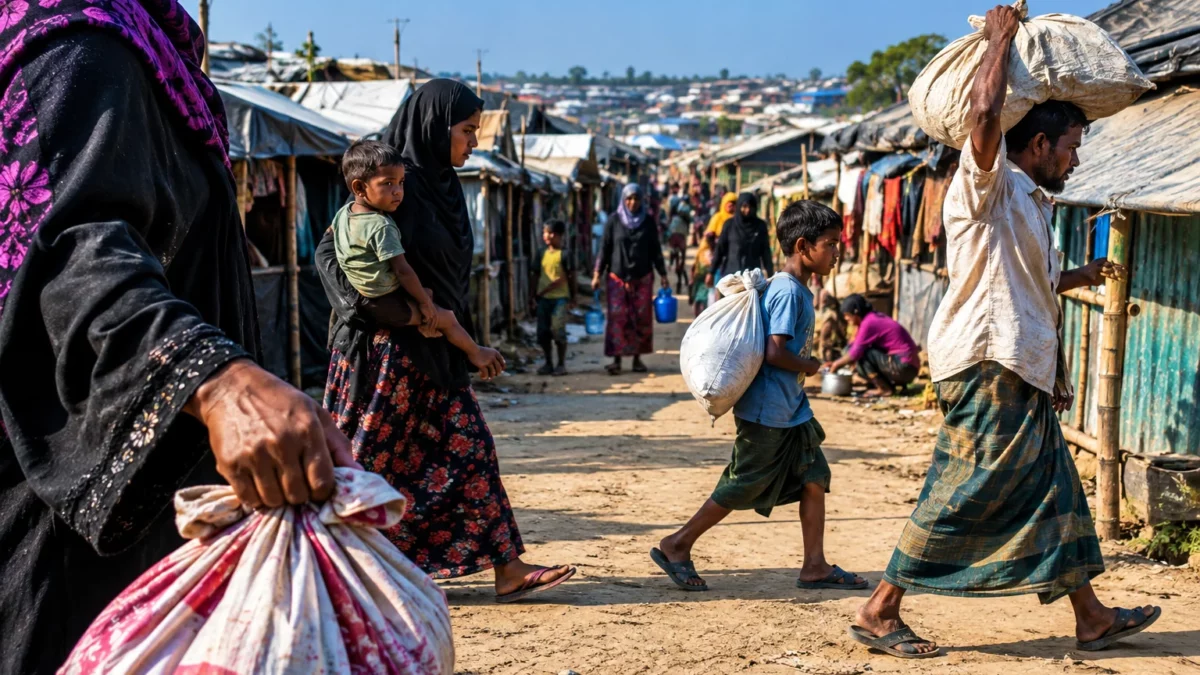
The ruling handed down in The Hague gives judicial weight to years of Rohingya testimony. It also tests the ability of a small West African state to secure concrete action from a government thousands of miles away.
From Banjul to The Hague, proceedings brought by The Gambia
On 19 November 2026, the International Court of Justice (ICJ), the United Nations’ principal judicial body for disputes between states, concluded that Myanmar had committed genocide against the Rohingya in Rakhine State during the 2017 military operations. The judges found an intent to destroy a substantial part of this group. The ruling concerns the state’s responsibility under the 1948 Genocide Convention.
The Gambia brought the case before the Court in November 2019. Its initiative is based on the principle that any state party to the Convention may seek compliance with obligations owed to all signatories. Banjul is therefore not claiming to act on behalf of its own citizens alone: the proceedings aim to uphold the treaty and secure reparations for the Rohingya.
The Gambian justice minister, Dawda Jallow, welcomed the ruling in The Hague and paid tribute to the survivors who came to testify. “This victory belongs to the Rohingya. They survived, they testified, and today they were believed,” he said. The Gambian government also hailed the ruling as a decisive step, while calling for it to be implemented.
The ICJ had already ordered provisional measures in January 2020, including steps to prevent acts covered by the Convention and preserve evidence. In 2022, it rejected Myanmar’s preliminary objections and confirmed that it could hear the case. Hearings on the merits took place in January 2026, with several states intervening in the proceedings.
A ruling that clarifies Myanmar’s obligations
The decision goes beyond the legal characterisation of the acts. The Court orders Myanmar to take measures to enable displaced Rohingya to return home safely and with dignity. It also recognises the principle of reparations. Their amount and terms will be considered at a later stage, after a report that Myanmar must submit to the Court within two years of the ruling.
The judges also call for measures concerning people suspected of committing acts of genocide. Myanmar is responsible for investigating and, where the evidence warrants it, prosecuting and punishing those responsible. The Court also found a breach of earlier obligations relating to the preservation of evidence.
The ruling is legally binding on the parties, but its implementation will not happen automatically. The ICJ has no police force capable of directly enforcing its decisions. Implementation will therefore depend on Myanmar’s actions and, in the event of non-compliance, on possible diplomatic and international steps.
Return remains dependent on practical conditions
For the Rohingya, many of whom have been living in camps in Bangladesh since 2017, judicial recognition does not guarantee an immediate return. This requires conditions of security, freedom of movement and protection from further persecution. The ruling establishes a legal obligation; it does not, on its own, resolve the political and security situation on the ground.
This distinction matters particularly for displaced families. An organised return without genuine guarantees could expose them to further danger. Conversely, reparations limited to financial compensation would not address other harms raised in the proceedings, such as the loss of homes, family separation or the inability to live freely in their region of origin.
For Banjul, the ruling confirms that a modestly sized country can bring a case before an international court under a multilateral treaty. The initiative was launched under the Gambian government formed after the 2017 change of power, following the end of Yahya Jammeh’s rule. It forms part of a national trajectory shaped by debates on accountability and justice, although the case before the ICJ does not concern acts committed in The Gambia.
A signal for West Africa and international law
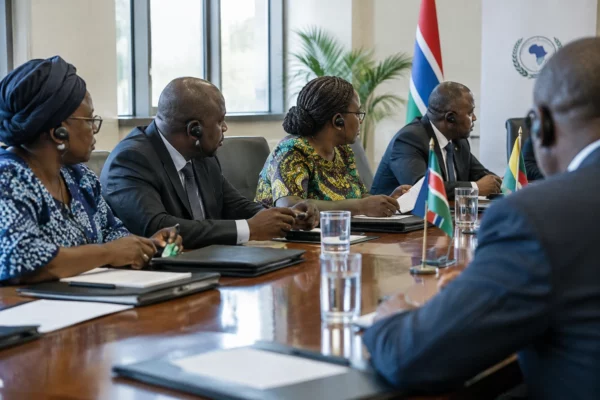
The Gambia is a member of ECOWAS, the economic community that brings together West African countries. The proceedings were not conducted by the regional organisation, but they illustrate a path open to African states in international institutions. They also show that access to international justice does not depend solely on a country’s military or economic weight.
The ruling’s significance extends beyond the region, however. It is the first time the ICJ has concluded that a state committed genocide. The ruling comes as other cases related to the Convention are being considered by the Court. It does not prejudge their outcome: each case rests on its own evidence and legal examination.
The next stage will be less symbolic and more practical. The report expected from Myanmar, discussions on reparations and measures that would make a return genuinely safe will all need to be followed closely. The recognition secured by The Gambia and the survivors opens a new phase; it does not relieve the authorities concerned or the international community of the need to address these questions.
The Gambia’s official statement on the ICJ ruling · The Gambia v Myanmar case file at the ICJ · Summary of the 19 November 2026 judgment · Report by Bangladesh’s BSS news agency · Associated Press report