Algeria
 Egypt
 Libya
 Morocco
 Sudan
 Tunisia
 Benin
 Burkina Faso
 Cabo Verde
 Côte d'Ivoire
 Ghana
 Guinea
 Guinea-Bissau
 Liberia
 Mali
 Mauritania
 Niger
 Senegal
 Sierra Leone
 The Gambia
 Togo
 Cameroon
 Central African Republic
 Chad
 DR Congo
 Equatorial Guinea
 Gabon
 Republic of the Congo
 São Tomé and Príncipe
 Burundi
 Comoros
 Djibouti
 Eritrea
 Ethiopia
 Kenya
 Madagascar
 Malawi
 Mauritius
 Mozambique
 Rwanda
 Seychelles
 Somalia
 South Sudan
 Tanzania
 Uganda
 Angola
 Botswana
 Eswatini
 Lesotho
 Namibia
 South Africa
 Zambia
 Zimbabwe
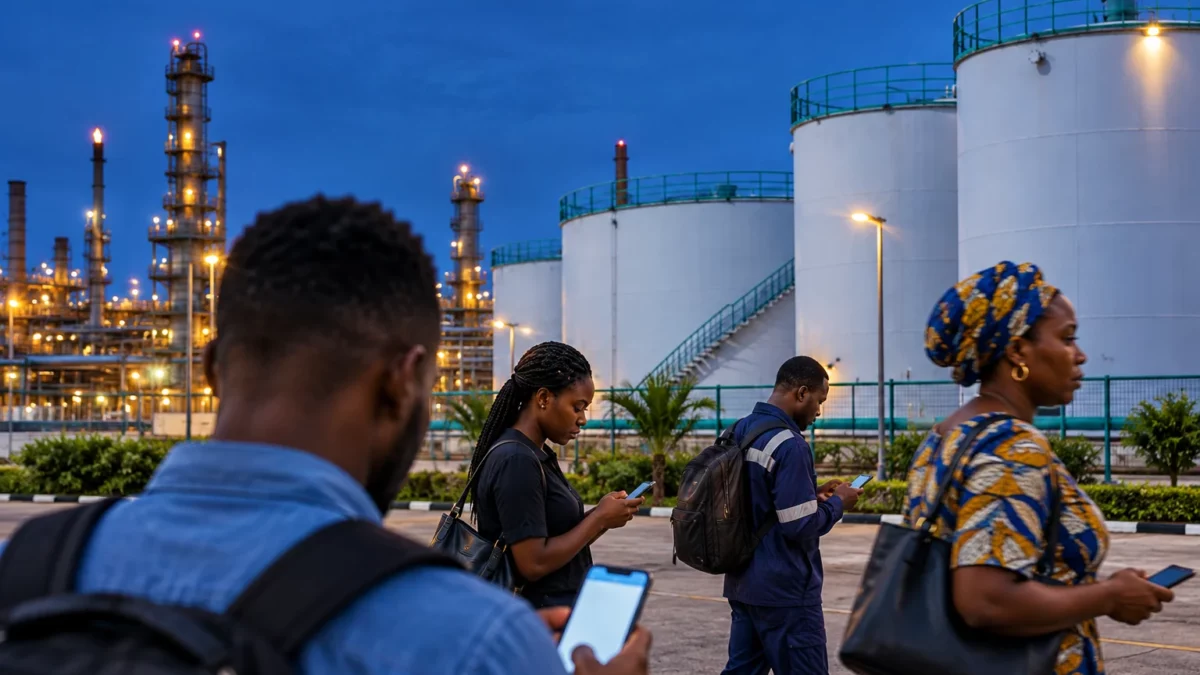
Millions of Nigerians applied for shares in the Dangote refinery. But strong demand does not guarantee everyone a place in its ownership: everything now depends on the allocation rules and the regulator’s approval.
An offer under heavy pressure
The initial public offering was launched on 14 September 2026. The company offered 4.1 billion ordinary shares at 525 naira each, targeting a raise of about 2,152.5 billion naira, or $1.6 billion, according to the prospectus.
The subscription period, initially scheduled to run until 13 October, was extended by two weeks and ended on 27 October. On 10 November, Nigerian outlet Nairametrics reported that 11.15 billion shares had been requested, with a total value of 5,850 billion naira. Nearly 3.8 million applicants are said to have taken part.
These figures describe applications, not money already raised. They represent about 2.7 times the number of shares initially offered. The amount actually raised will depend on the shares allocated and regulatory decisions.
The prospectus provides for an option to increase the base offer. Information published by Nairametrics points to an increase of up to 30%, which would bring the amount raised to about $2.1 billion. This possibility does not mean the increase is guaranteed: the final allocation remains to be confirmed.
The number of investors does not tell the whole story
The participation of individual investors is one of the operation’s defining features. The figure of nearly 3.8 million is, however, below the target of 10 million investors announced by Aliko Dangote. More importantly, the number of applications alone does not reveal who will receive shares or what proportion of the capital will go to small investors.
Data reported by Nairametrics indicate that three applicants may have accounted for nearly 46.72% of the value of applications. In other words, very broad popular participation can coexist with a strong concentration of the sums committed. There may be many individual investors, while a few large investors account for a substantial share of the total value.
The Securities and Exchange Commission (SEC), Nigeria’s financial markets regulator, must review the proposed allocation basis. Nigerian outlet Business Verge reported on 17 November that the regulator was examining the allocation and that protecting individual investors was among the issues at stake. The Independent Shareholders Association of Nigeria has also called for small investors’ access to be protected. Final arrangements had not yet been published in the information reviewed.
A strategic industrial asset, but a financial bet
The refinery, located in Lekki, Lagos State, is already at the centre of debates about Nigeria’s energy supply. It began production in 2024 and currently has a nameplate capacity of 650,000 barrels a day. Its owner is targeting an expansion to 1.4 million barrels a day. This project still has to be delivered and financed: announced capacity is not the same as production already available.
The group presents the sale of shares as a way to finance its industrial ambitions and broaden investor participation. For applicants, the offer provides exposure to a major Nigerian energy infrastructure asset, but it also carries risks specific to the company, the oil sector and financial markets. High demand offers no indication of the stock’s future performance or how it will fare after listing.
The stakes also go beyond the company’s balance sheet. Increased local production could help reduce reliance on imported petroleum products and supply neighbouring markets. But the effects will depend, among other things, on actual output, crude supply, prices and distribution. Benefits do not automatically flow from the refinery to households: consumers, transport operators, manufacturers and traders may be affected differently depending on prices and product availability.
Regional reach, a test for Nigeria’s market
The offer was also opened to investors in other African countries, with participation and trading arrangements planned on some markets across the continent. It reflects an attempt to mobilise savings across national borders around an asset based in Nigeria. This pan-African dimension does not, however, relieve the relevant authorities of the need to clarify investors’ rights and settlement mechanisms in each jurisdiction.
For Nigeria, the immediate issue is confidence in the capital market. Clear allocation, the handling of refunds and the publication of final results will matter as much as the announced amount. If small applicants receive a share deemed fair, the offer could sustainably broaden their presence on the stock exchange. Conversely, a significant gap between the rhetoric of openness and actual allocations could fuel distrust.
The next step is therefore regulatory: the SEC must rule on the allocation arrangements, after which the final results must specify the number of shares allocated and the sums actually raised. The date on which the shares begin trading will depend on the approval and settlement timetable. In Abuja and Lagos, attention is now focused less on the volume of applications than on how they will be handled.