Algeria
 Egypt
 Libya
 Morocco
 Sudan
 Tunisia
 Benin
 Burkina Faso
 Cabo Verde
 Côte d'Ivoire
 Ghana
 Guinea
 Guinea-Bissau
 Liberia
 Mali
 Mauritania
 Niger
 Nigeria
 Senegal
 Sierra Leone
 The Gambia
 Togo
 Cameroon
 Central African Republic
 Chad
 DR Congo
 Equatorial Guinea
 Gabon
 Republic of the Congo
 São Tomé and Príncipe
 Burundi
 Comoros
 Djibouti
 Eritrea
 Ethiopia
 Madagascar
 Malawi
 Mauritius
 Mozambique
 Rwanda
 Seychelles
 Somalia
 South Sudan
 Tanzania
 Uganda
 Angola
 Botswana
 Eswatini
 Lesotho
 Namibia
 South Africa
 Zambia
 Zimbabwe
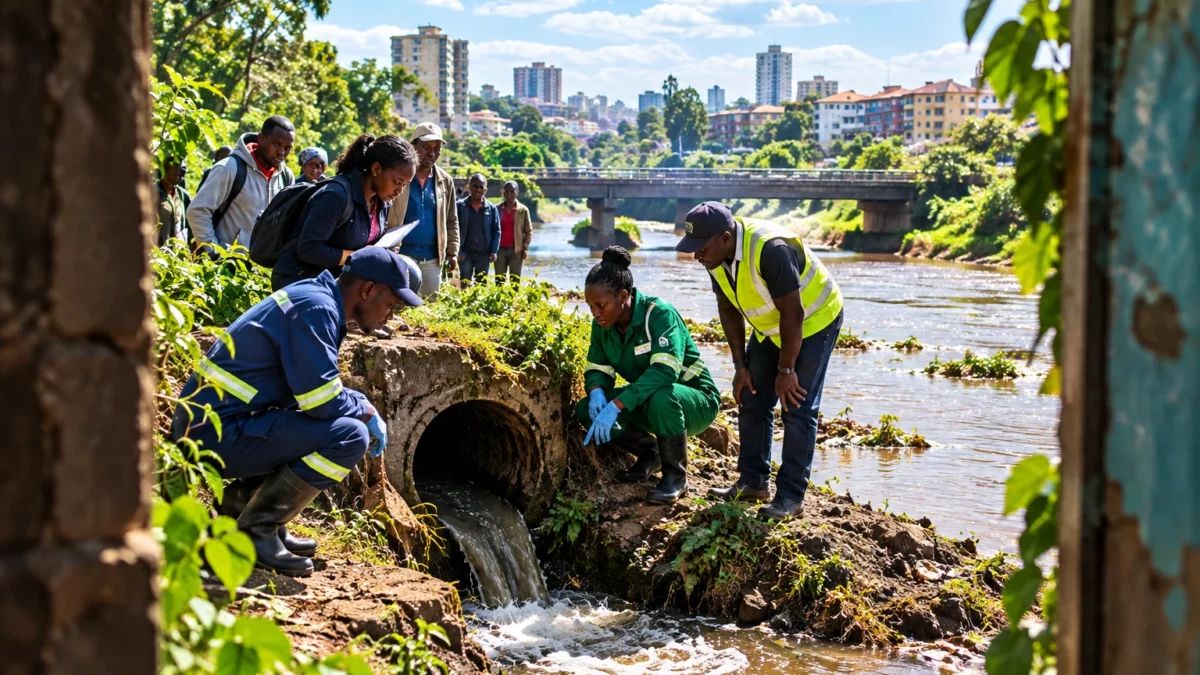
In Kenyan cities, access to water is measured not only by the number of connections. It also depends on the regularity of supply, the cost to households and the capacity to treat wastewater. A new national programme aims to address both of these areas in 21 cities.
A programme built around county governments
Kenya has been divided into 47 counties since the 2010 constitutional reform. County governments are responsible for local water and sanitation services. The central government coordinates national policy and investment, often with specialised agencies and development partners. This division makes cooperation between institutions crucial to turning funding into services that are genuinely available.
At regional level, Kenya is a member of the East African Community (EAC), which brings several neighbouring countries together around economic integration goals. Urban networks, however, continue to be managed within national and local frameworks. Improving them has a direct impact on health, economic activity and river protection.
The National Urban Water Supply and Sanitation Programme (NUWSSP) is funded with support from the African Development Bank (AfDB). Unveiled in April 2026, it is expected to cover 21 cities in 16 counties. The AfDB estimates that about 1.4 million people will benefit from improved access to water and that sanitation services will be improved for 500,000 people. The African Development Bank’s presentation of the programme sets out these goals.
These figures refer to intended beneficiaries, not results already achieved. The programme still needs to translate into construction work, functioning facilities and reliable services in each city. Implementation will depend in particular on the bodies responsible for the projects and coordination with local authorities.
Sanitation remains the weakest link
Disparities in access are clearly reflected in national data. The 2025-2026 Kenya Demographic and Health Survey states that 73.4% of the population has access to at least basic drinking water services, compared with 44.8% for basic sanitation. In urban areas, the figures are 95.2% and 50.8% respectively. In other words, access to an improved water source does not guarantee access to adequate toilets or safe waste management. These findings were published by the Kenya National Bureau of Statistics (KNBS). The indicators in the 2025-2026 Kenya survey distinguish between urban, rural and national figures.
Nairobi illustrates the challenge. The second phase of the Nairobi Rivers Basin Rehabilitation Project, NaRSIP II, aims to increase sewer network coverage from 48% to 60%. More than 400,000 residents could benefit. The project also plans to collect and treat 80,000 cubic metres of wastewater per day, in order to limit polluted discharges into the Nairobi River and its tributaries. The AfDB sets out these goals in its project documents. NaRSIP II’s sanitation objectives in Nairobi.
The national programme also follows on from previous investment. The Kenya Towns Sustainable Water Supply and Sanitation Programme is due to end in December 2026, according to Kenya’s Ministry of Water. Timing matters: the new works need to build on capacity already in place, without leaving infrastructure unfinished or difficult to maintain.
Results will depend on day-to-day service
For households, improvement is not simply a matter of building a pipeline or a treatment plant. It requires reliable water supplies, affordable tariffs and well-maintained facilities. In neighbourhoods where the public network does not reach every home, unconnected sanitation solutions will also need to be considered.
The benefits and costs may vary between neighbourhoods. Centrally located areas connected to the networks do not necessarily face the same constraints as expanding outskirts. Low-income households, small businesses and informal-economy vendors are particularly vulnerable to interruptions, connection fees or the cost of buying water from alternative suppliers. The location of the works and the terms of access will therefore determine who actually benefits from the investment.
The division of responsibilities between Nairobi and the counties also makes accountability essential. Counties provide local services, while the national government leads sector coordination. Implementing agencies must link these levels. Kenya’s Ministry of Water describes this institutional division. For residents, the practical measure will be continuity of service, not just the amount committed or the number of announced construction projects.
An urban and regional challenge
Pressure on urban services affects many cities in East Africa, but responses cannot simply be replicated. In Kenya, the programme will have to work with the country’s decentralised institutions and the specific needs of each city. A national approach can pool funding and standards, but its effectiveness will depend on adapting projects to local realities.
The next step, then, will be implementation: the actual start of construction, the precise allocation of interventions and the monitoring of results in all 21 cities. In Nairobi, progress on NaRSIP II will also indicate the capacity to reduce wastewater discharges into the urban basin. For Kenya, the challenge is to turn coverage targets into sustainable services that can be measured in residents’ daily lives.