Algeria
 Egypt
 Libya
 Morocco
 Sudan
 Tunisia
 Benin
 Burkina Faso
 Cabo Verde
 Côte d'Ivoire
 Ghana
 Guinea
 Guinea-Bissau
 Liberia
 Mali
 Mauritania
 Niger
 Nigeria
 Senegal
 Sierra Leone
 The Gambia
 Togo
 Cameroon
 Central African Republic
 Chad
 DR Congo
 Equatorial Guinea
 Gabon
 Republic of the Congo
 São Tomé and Príncipe
 Burundi
 Comoros
 Djibouti
 Eritrea
 Kenya
 Madagascar
 Malawi
 Mauritius
 Mozambique
 Rwanda
 Seychelles
 Somalia
 South Sudan
 Tanzania
 Uganda
 Angola
 Botswana
 Eswatini
 Lesotho
 Namibia
 South Africa
 Zambia
 Zimbabwe
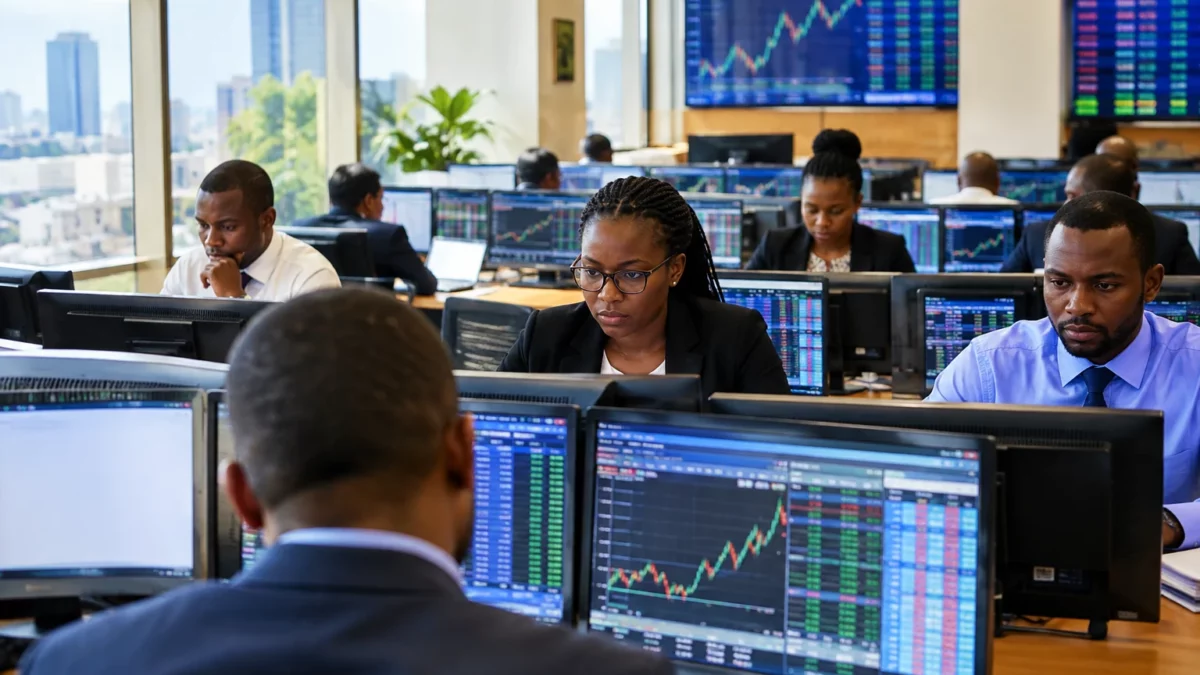
A 10% stake in a stock exchange does not, by itself, provide access to capital across an entire continent. But a Nigerian operator’s entry into the Nairobi exchange shines a light on a practical question: can African markets better connect their companies and investors across national borders?
On 16 November 2026, Nigerian Exchange Group (NGX Group) announced that it had acquired a 10% stake in the Nairobi Securities Exchange (NSE), Kenya’s stock exchange. The Nigerian holding company, which controls the Lagos exchange, is thus expanding its presence in East Africa after taking a stake in the Ethiopian Securities Exchange in 2024.
A deal between two African financial centres
The transaction links two markets with different sizes and trajectories. The NSE is based in Nairobi, Kenya’s capital, and plays an important role in financing the country’s businesses. NGX Group, meanwhile, is a financial infrastructure group that emerged from the reorganisation of Nigeria’s market. This is not an acquisition of the Kenyan exchange, but a minority stake in its capital.
NGX Group has not disclosed the value of the deal. Kenyan media outlet Business Daily Africa reports an estimate of 900 million Kenyan shillings, however. The newspaper places the transfer in a block trade carried out on 26 October. In the absence of public confirmation of the price from either company, the estimate should remain attributed to the media outlet.
NGX Group describes the investment as a step in its strategy to expand across the continent. Its chief executive, Temi Popoola, said the stake was intended to diversify the group’s activities and give it exposure to the Kenyan market’s growth potential. These aims are part of the company’s announced strategy; they guarantee neither an increase in trading nor returns for shareholders.
An East African foothold established in Ethiopia
This is not the group’s first move into East Africa. In April 2024, NGX Group announced an investment in the Ethiopian Securities Exchange, which was then being established. The Nigerian company also said it wanted to help develop the exchange’s operational capabilities. NGX Group’s official announcement of its investment in Ethiopia confirms this first step.
Kenya and Ethiopia belong to different regional groupings. Kenya is a member of the East African Community (EAC), which brings together several countries in the region around economic integration goals. Ethiopia is not a member. NGX Group’s strategy therefore points less to a single regional integration project than to a network of stakes linking financial centres across the continent.
This distinction matters. Listing rules, currencies, settlement systems and investor access requirements do not become common simply because a group owns stakes in several stock exchanges. Cross-shareholdings can make it easier for operators to work together. They do not remove the regulatory and practical obstacles faced by companies or investors seeking to cross borders.
Connections are emerging, but remain partial
The move comes as links between the Kenyan and Nigerian markets begin to take shape. Business Daily Africa reports that global depositary receipts (GDRs) have enabled Kenyan investors to access Dangote Petroleum’s public offering in Nigeria, with the securities tradable in Nairobi. These instruments represent underlying shares and can make a foreign transaction accessible on a local market.
This kind of arrangement shows why better connectivity could benefit investors. It can broaden investment choices without requiring everyone to master another country’s procedures directly. For companies, smoother capital flows could also create new financing options. But effective access depends on rules, intermediaries, costs and confidence in settlement mechanisms.
The effects will not be the same for everyone. Large companies and institutional investors generally have more resources to engage intermediaries and assess cross-border investments. Individual investors, particularly those outside major urban centres, may remain excluded if products are complex or costly. NGX Group’s stake alone says nothing about a possible reduction in fees or whether new groups of people will gain access to the exchange.
The Kenyan exchange is also operating in a context of strong activity. According to figures reported by Business Daily Africa, its net profit rose in the first half of 2026, driven in part by transaction-related income. This context helps explain the potential commercial appeal of the stake, but does not allow conclusions to be drawn about future returns for NGX Group.
The real test will be how the links are used
For the Kenyan market, the arrival of a foreign institutional shareholder could strengthen ties with a major West African exchange. It does not mean that a Nigerian group is taking control of the NSE, nor that a merger of the markets is under way. The publicly available details of the deal and subsequent measures will help clarify the extent of this presence in the exchange’s capital.
At continental level, the challenge goes beyond this transaction: it is to turn declarations of financial integration into mechanisms that companies and savers can use. Progress will depend on tangible initiatives: operational partnerships, products available in several countries, compatible rules and clear information for investors. NGX Group’s path between Lagos, Addis Ababa and Nairobi is worth watching, but only the evolution of trading will show whether these stakes are genuinely bringing African markets closer together.