Algeria
 Egypt
 Libya
 Morocco
 Sudan
 Tunisia
 Benin
 Burkina Faso
 Cabo Verde
 Côte d'Ivoire
 Ghana
 Guinea
 Guinea-Bissau
 Liberia
 Mauritania
 Niger
 Nigeria
 Senegal
 Sierra Leone
 The Gambia
 Togo
 Cameroon
 Central African Republic
 Chad
 DR Congo
 Equatorial Guinea
 Gabon
 Republic of the Congo
 São Tomé and Príncipe
 Burundi
 Comoros
 Djibouti
 Eritrea
 Ethiopia
 Kenya
 Madagascar
 Malawi
 Mauritius
 Mozambique
 Rwanda
 Seychelles
 Somalia
 South Sudan
 Tanzania
 Uganda
 Angola
 Botswana
 Eswatini
 Lesotho
 Namibia
 South Africa
 Zambia
 Zimbabwe
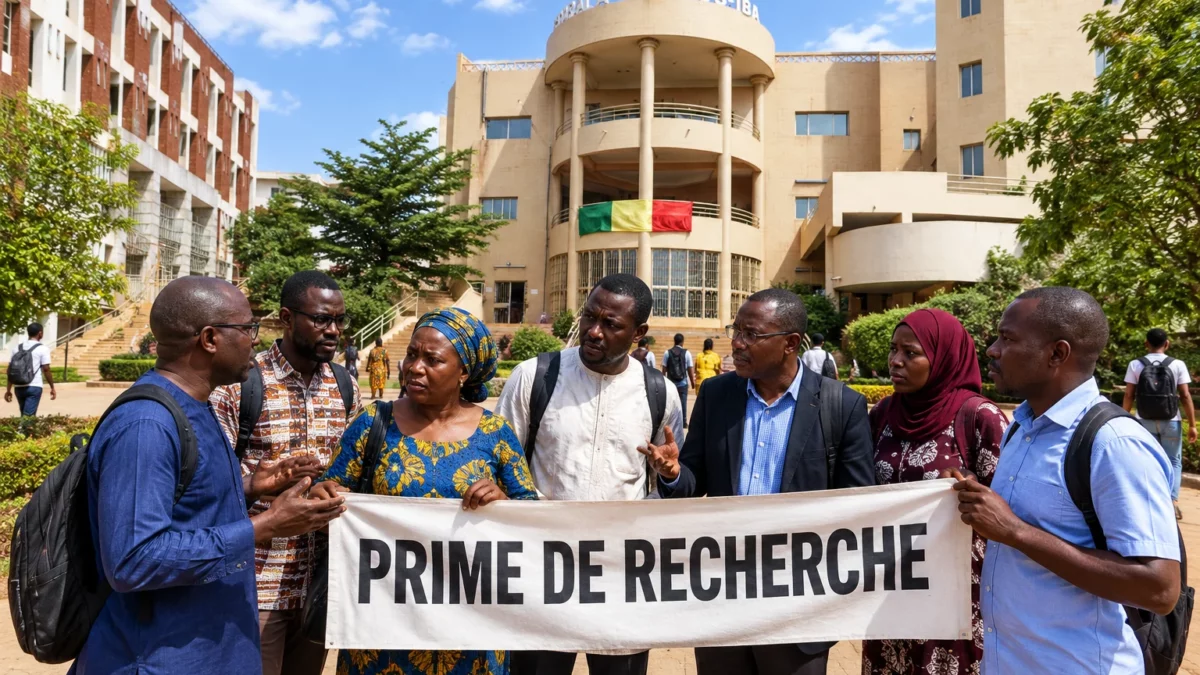
A strike at universities does not stop at the doors of lecture halls. In Mali, the suspension of classes and thesis supervision is affecting students, delaying research and confronting the government with a demand enshrined in its own legislation.
An allowance provided for, but with no arrangements in place
The action centres on the research allowance for university lecturers. The statute adopted in 2017 provides for this benefit, but its amount and payment arrangements remain at the heart of the dispute. The SNESUP — the National Union for Higher Education and Scientific Research — is calling for it to be implemented and for outstanding sums to be paid, according to Malian and regional media reports.
The strike began on 26 October 2026. Initially planned for five days, it was subsequently extended indefinitely. On 16 November, it enters its fourth week. Higher education and research institutions in several cities have been affected, although the exact scale of the disruption has not been established by an independent assessment published to date.
The reference text is Ordinance No. 2017-036 of 27 September 2017, supplemented by Decree No. 2017-0850 of 9 October that year. These texts establish the status of university lecturers and the arrangements for its implementation. The union’s demand is therefore centred on enforcing an existing framework, rather than adopting a new statute.
Meeting produces no publicly announced progress
In a statement published on Sunday 15 November, the SNESUP executive committee said it had been received by “the highest authorities” in the preceding days. It did not specify who took part or what was discussed. The union is maintaining its strike call and has reserved the meeting report and decision on what comes next for its members.
Malian media report that union leaders were also received at the ministry and the presidency. However, no concrete proposal has been made public. The distinction matters: a meeting signals an opening for dialogue, but does not yet amount to an agreement on the allowance’s amount, arrears or implementation timetable.
The prolonged action is increasing the consequences for students. When classes and teaching activities are interrupted, examinations, university calendars and thesis supervision may be delayed. Final-year students are particularly exposed if defences or research work cannot resume in time. The union has also referred to the suspension of supervision for master’s dissertations and doctoral theses.
Social dialogue in a constricted political space
The mobilisation is taking place at a time when forms of protest in Mali are being closely scrutinised. In May 2025, the transitional authorities first suspended the activities of political parties and then adopted a decision to dissolve them. These decisions prompted protests in Bamako and heightened concerns about the space available for expressing political dissent.
The current strike, however, concerns a professional and pay-related demand. There is no basis for saying that the authorities are tolerating it for that reason, or for presuming their intentions. The verifiable fact is that the SNESUP says it was received after several weeks of mobilisation, while no concrete outcome has been publicly announced.
Malian researcher Oumar Berté, cited in reports on the issue, believes a prolonged dispute could further weaken the authorities and encourage other unions to revive their demands. This is an analysis, not an established consequence. But it highlights a real issue: a dispute confined to higher education can become a test of the state’s ability to negotiate with professional organisations.
Repercussions beyond Bamako
The issue concerns more than lecturers and the authorities. In the capital and in regional university towns, students depend on the resumption of classes and administrative services to progress with their studies. Laboratories and research teams, meanwhile, risk seeing their work interrupted. The length of the delays will depend on when activities resume and on the measures taken to reorganise teaching.
The regional context has also changed. Mali’s withdrawal from ECOWAS, the West African organisation for economic and political integration, took effect on 29 January 2025. The country now operates within the Alliance of Sahel States alongside Burkina Faso and Niger. This realignment does not resolve the labour dispute, but it is a reminder that institutional stability and skills training also matter to national and regional development.
The next step will hinge on specific elements: a proposal with figures, arrangements for calculating arrears and a verifiable implementation timetable. Without these commitments, the announced meeting may not be enough to restart classes. For Malian students, the immediate priority is the effective resumption of activities and limiting delays to their studies.