Algeria
 Egypt
 Libya
 Morocco
 Sudan
 Tunisia
 Benin
 Burkina Faso
 Cabo Verde
 Côte d'Ivoire
 Ghana
 Guinea
 Guinea-Bissau
 Liberia
 Mali
 Mauritania
 Niger
 Nigeria
 Senegal
 Sierra Leone
 The Gambia
 Togo
 Cameroon
 Central African Republic
 Chad
 DR Congo
 Equatorial Guinea
 Gabon
 Republic of the Congo
 São Tomé and Príncipe
 Burundi
 Comoros
 Djibouti
 Eritrea
 Ethiopia
 Kenya
 Madagascar
 Malawi
 Mauritius
 Mozambique
 Rwanda
 Seychelles
 Somalia
 Tanzania
 Uganda
 Angola
 Botswana
 Eswatini
 Lesotho
 Namibia
 South Africa
 Zambia
 Zimbabwe
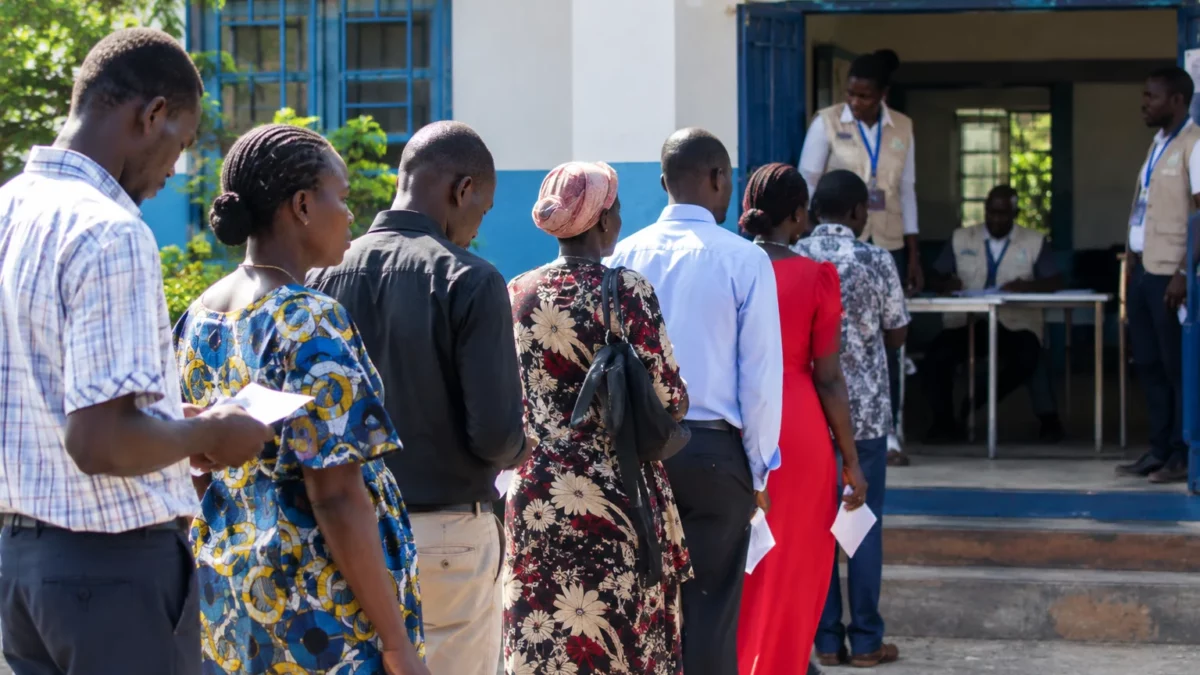
For South Sudanese, the electoral calendar has just lost another deadline. The national election announced for December is now scheduled for 11 February 2027. The postponement pushes back once again the moment when the country must translate its political transition into a mandate from the ballot box.
A transition under regional scrutiny
Independent since 2011, South Sudan has never held national elections. The country remains governed under a transition stemming from the 2018 revitalised peace agreement, signed after several years of civil war. The agreement brought rival forces together in a unity government, including those of President Salva Kiir and Riek Machar.
The transition has already been extended. In 2024, the parties postponed the election scheduled for that year and extended the transitional period until February 2027. They had set the elections for December 2026. The new timetable therefore places the vote 11 days before the planned end of this period, without specifying how the authorities intend to manage the discrepancy.
The issue extends beyond national borders. The Intergovernmental Authority on Development (IGAD), a regional organisation in the Horn of Africa, is supporting the peace process alongside the African Union and the United Nations. The African Union’s Peace and Security Council, for its part, has called for credible elections and the resumption of inclusive dialogue. Regional partners fear that a disputed or poorly prepared vote could further undermine the peace agreement.
A new timetable, with no public explanation
On 14 November, the National Elections Commission (NEC), the institution responsible for organising elections, published a revised timetable. The vote, previously scheduled for 22 December 2026, is to be held on 11 February 2027. The commission gave no reason for the change in the document it made public.
The electoral calendar had scheduled voter registration to open on 14 November and run until 28 November. NEC chairman Gabriel Bol Deng had announced these dates in Juba the day before the new timetable was published. The next steps include nominations and campaigning. The postponement therefore affects the practical organisation of the election, not just its date.
The NEC is legally responsible for voter registration, the nomination of candidates and announcing the date of the vote, according to the National Elections Commission of South Sudan. But setting a timetable does not, on its own, guarantee that operations can be carried out properly across the country.
The change of date was reported by several independent media outlets, including South Sudanese outlet Radio Tamazuj and the Associated Press. Both confirmed the shift from 22 December to 11 February. The Associated Press also reported concerns about security, available funding and the country’s state of readiness. These factors shed light on the context, but the commission has not officially explained its announcement.
The challenge goes beyond election day
For the election to be credible, the authorities must allow voters to register, parties to compete and citizens to take part without intimidation. The rules must also be understood, and results must be open to challenge through legal channels. These conditions concern both election administration and trust between political actors.
Preparation is uneven. On 10 November, the head of the United Nations mission in South Sudan told the Security Council that the ruling party was holding primaries, while electoral activity by other registered parties remained limited. This disparity raises a question about meaningful participation: a contest is pluralistic only if political groups can prepare and campaign under comparable conditions.
Security also weighs on the process. Two delegates from the ruling party were killed on 12 November in Western Equatoria State as they returned from political activities, according to reports by the Associated Press. This was a local incident and does not allow conclusions to be drawn about the country as a whole. It nevertheless highlights that meetings, travel and campaigning must be able to take place without violence.
The consequences of a delay are not the same for everyone. For those in office, extending the transition keeps the current institutions at the centre of power. For opposition parties and candidates, it prolongs uncertainty about the rules and the time available to prepare. For voters, particularly in areas far from Juba, the issue is more immediate: knowing where to register, when to vote and whether the election can take place near them.
February 2027, a political as well as electoral deadline
The new date does not end the debate over the transition. The election is set for 11 February 2027, while the transitional period is due to end on 22 February. This tight timetable leaves little room to resolve potential disputes or address logistical problems. It also makes clarity in the next official announcements crucial.
In August 2026, the African Union’s Peace and Security Council had called for credible elections to be held before the end of the year and for the transition not to be extended again. The shift announced in November puts that position to the test. The NEC’s decisions, party participation and steps taken by the authorities to ensure security and access to registration will need to be monitored.
For South Sudan, the issue is therefore not simply a matter of moving a date on the calendar. It is a question of whether institutions and political forces can still agree on an election inclusive enough to open a new chapter. For IGAD and the African Union, the process will also affect the credibility of regional mediation mechanisms and the stability of the Horn of Africa.