Algeria
 Egypt
 Libya
 Morocco
 Sudan
 Tunisia
 Benin
 Burkina Faso
 Cabo Verde
 Ghana
 Guinea
 Guinea-Bissau
 Liberia
 Mali
 Mauritania
 Niger
 Nigeria
 Senegal
 Sierra Leone
 The Gambia
 Togo
 Cameroon
 Central African Republic
 Chad
 DR Congo
 Equatorial Guinea
 Gabon
 Republic of the Congo
 São Tomé and Príncipe
 Burundi
 Comoros
 Djibouti
 Eritrea
 Ethiopia
 Kenya
 Madagascar
 Malawi
 Mauritius
 Mozambique
 Rwanda
 Seychelles
 Somalia
 South Sudan
 Tanzania
 Uganda
 Angola
 Botswana
 Eswatini
 Lesotho
 Namibia
 South Africa
 Zambia
 Zimbabwe
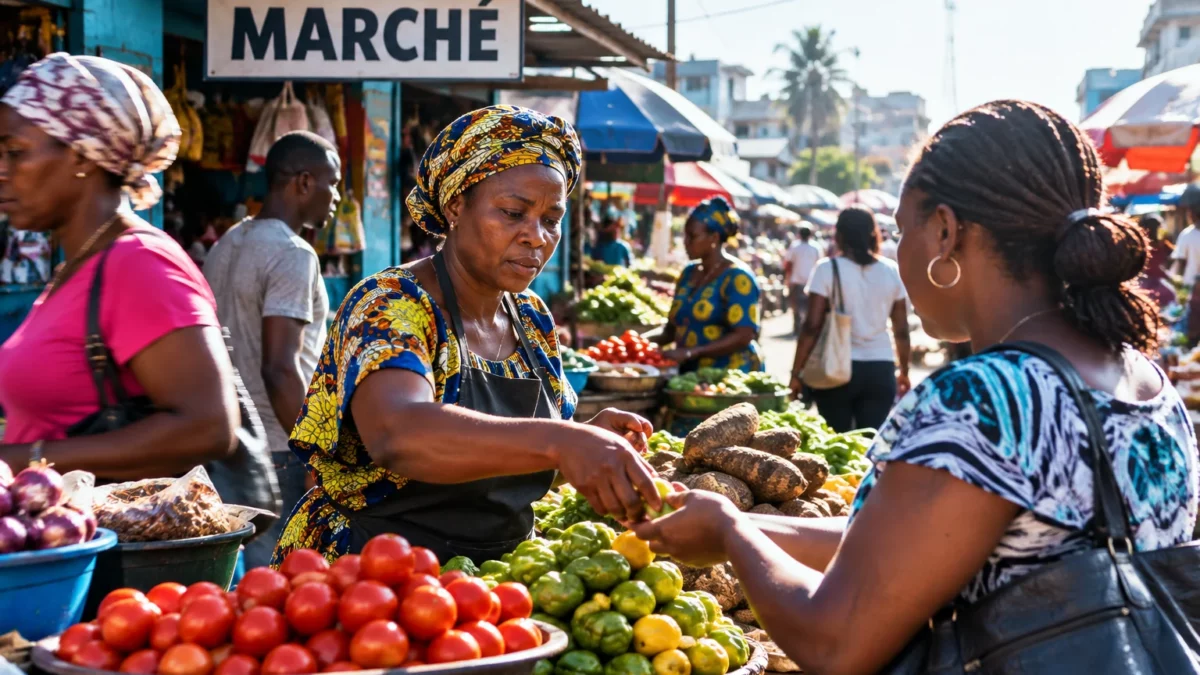
In Abidjan and secondary cities alike, a larger public budget can fund roads, schools and health centres. But its strength also depends on a less visible question: can the state broaden its revenues without placing an excessive share of the burden on businesses and employees who are already registered?
A rising budget, choices to be weighed
Côte d’Ivoire’s draft 2027 finance bill stands at CFAF 18,466.1bn, up 6.4% on the 2026 budget. Presented to the National Assembly in November, it is based on forecast economic growth of 6.6%. The government also plans to reduce the budget deficit from 3.8% of GDP in 2026 to 3.5% in 2027. These figures are forecasts, not confirmed outcomes.
The draft distinguishes between several categories of resources. It provides for CFAF 9,385.4bn in budget revenues and CFAF 7,399.1bn in treasury resources, in addition to the Treasury’s special accounts. Treasury resources include, in particular, borrowing and debt-management operations: they should therefore not be treated as tax revenues. The details were presented by the ministry and reported by the Ivorian Press Agency.
The budget increase addresses investment needs and the priorities of the 2026-2030 National Development Plan. The government has announced CFAF 4,638bn in investment, or 25.1% of the budget, as well as CFAF 100bn to launch the Côte d’Ivoire Sovereign Fund. It remains to be seen, during implementation, which regions and services will actually benefit from these allocations.
A narrow tax base
The government expects tax revenues to reach CFAF 10,496bn in 2027, with the tax burden — tax revenues as a share of gross domestic product — standing at 15.5%. This ratio would remain below the 20% benchmark set by the WAEMU Convergence Pact, the West African Economic and Monetary Union. This regional target gives a measure of the gap, but does not in itself show how to distribute taxation fairly.
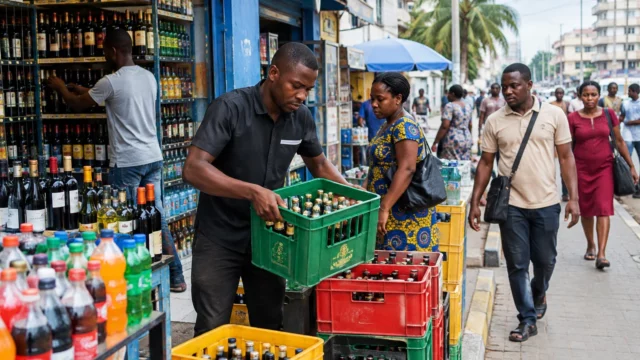
Available figures on informal employment also need to be dated precisely. The ERI-ESI survey conducted in 2017 by the INS with support from AFRISTAT estimated that informal jobs accounted for 91.6% of employment in Côte d’Ivoire. A more recent official indicator, published by the government, puts the share at 71.9% in 2025. The methodologies and periods differ: these findings should not be presented as a directly comparable trend. They nevertheless show how much economic activity takes place outside the usual reporting channels.
Informal does not necessarily mean making no contribution at all. Those concerned pay, among other things, consumption taxes and certain local levies. But their incomes and activities often remain less visible to the tax authorities. The challenge is therefore not simply to “tax the informal sector”: it is to understand the diversity of circumstances, from small self-employed activities to businesses able to evade their tax obligations over the long term.
Formalising without penalising the same taxpayers
When revenue collection relies mainly on formal businesses and registered employees, increasing levies on these groups can reduce their room for manoeuvre. It may also make formalisation less attractive to a small business whose administrative costs are already high. Conversely, a broader base would allow the burden to be shared more fairly and strengthen the state’s regular revenues.
The response lies in simple procedures, regimes tailored to small businesses and services that offer tangible benefits from registration: access to finance, public contracts and social protection. Digitalisation can make filing and payment easier, provided connectivity and cash-flow constraints are taken into account. For workers and traders, formalisation will be credible only if it also brings rights and opportunities, rather than an additional obligation with no perceptible return.
This transformation affects regions in different ways. Large companies and government agencies concentrated in Abidjan are easier to identify than dispersed rural activities or small shops in secondary cities. A uniform policy could therefore widen disparities in how people are treated. Progressive mechanisms, backed by better access to services, would help broaden contributions without conflating precarious livelihoods with organised tax evasion.
Debt can fund spending, but cannot replace revenue
Borrowing can smooth the financing of infrastructure and support growth when it is directed towards useful investment. However, it exposes public finances to refinancing costs and market conditions. The forecast deficit of 3.5% of GDP in 2027 also remains above the 3% regional threshold set out in the WAEMU convergence framework. The announced trajectory will therefore need to be assessed through executed budgets, not just forecasts.
The commodities outlook adds another uncertainty. Cocoa and other export products contribute to economic activity and revenue, but their prices fluctuate with global markets. For Côte d’Ivoire, a member of WAEMU and ECOWAS, the issue therefore goes beyond a single budget year: strengthening domestic revenues also increases the country’s ability to fund its priorities without relying as heavily on borrowing or export cycles.
The next steps will be the parliamentary review, followed by implementation of the budget in 2027. Indicators to watch will include the collection of tax revenues, the cost of debt and the tangible impact of investment on public services. The challenge is not merely to increase resources: it is to broaden sustainably the group of contributors while making clearer what their contributions pay for.