Algeria
 Egypt
 Libya
 Morocco
 Sudan
 Tunisia
 Benin
 Burkina Faso
 Cabo Verde
 Côte d'Ivoire
 Ghana
 Guinea
 Guinea-Bissau
 Liberia
 Mali
 Mauritania
 Niger
 Nigeria
 Senegal
 Sierra Leone
 The Gambia
 Togo
 Cameroon
 Central African Republic
 Chad
 DR Congo
 Equatorial Guinea
 Gabon
 Republic of the Congo
 São Tomé and Príncipe
 Burundi
 Comoros
 Djibouti
 Eritrea
 Ethiopia
 Kenya
 Madagascar
 Malawi
 Mauritius
 Mozambique
 Rwanda
 Seychelles
 Somalia
 South Sudan
 Tanzania
 Uganda
 Angola
 Botswana
 Eswatini
 Lesotho
 Namibia
 South Africa
 Zimbabwe
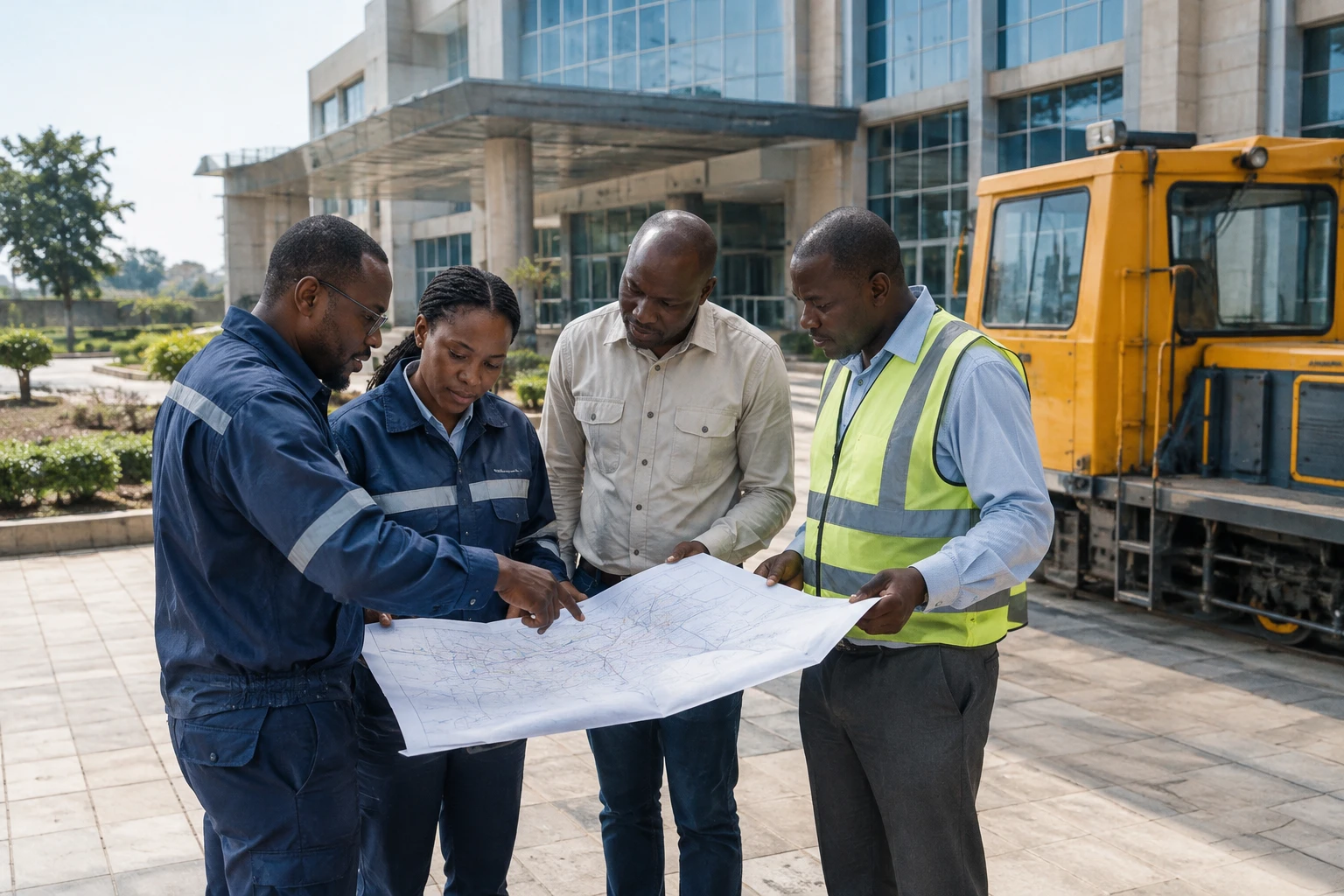
For a landlocked country such as Zambia, producing more copper is not enough: it must also be possible to transport it to ports at competitive cost and within competitive timeframes. In Lusaka, the rail reform announced for 2027 aims to open the network to new operators. It comes as roads still carry most exports.
A network to reorganise ahead of rising volumes
The Zambian government wants to replace the Railways Act of 1984. The 2027 national budget provides for separating track management from train operations. Zambia Railways Limited (ZRL), the state-owned company, would remain responsible for infrastructure management. Private companies could offer freight and passenger services, using the network under an open-access model. The reform is included in the budget speech presented to Parliament. The text of Zambia’s 2027 budget sets out the broad outline of this model.
In practice, several operators could run their trains on the same tracks. The network manager and the companies transporting goods would thus have distinct roles. This arrangement could make it easier for new players to enter the market. But by itself, it does not guarantee affordable rates, available train paths or punctual services. Rules on access, charges and responsibilities in the event of disruption will need to be defined.
The scale of the challenge is already apparent in trade data. Between January and July 2026, road transport carried 79.7% of the volume of Zambia’s exports, compared with 0.3% for rail, according to the national statistics agency. Rail carried 18,800 tonnes out of nearly 5.94 million tonnes of exports. These figures cover all goods, not copper alone. Data from the Zambia Statistics Agency also show that roads accounted for 95.8% of the value of exports over the period.
Copper puts logistics capacity to the test
The reform is part of the national goal of raising copper production to three million tonnes a year by 2031. The 2027 budget projects output of 930,000 tonnes for 2026. This is a forecast, not a final result. The official mining strategy confirms the 2031 target, but the gap between projected production and the goal underlines the scale of the industrial and logistical challenge. Zambia’s Ministry of Mines sets out this ambition in its national copper strategy.
Higher production could support export revenues and economic activity in the Copperbelt, the country’s northern mining region. However, if rail capacity does not keep pace, companies will remain reliant on lorries and road routes to borders and ports. This also affects transport operators, workers in the sector and local businesses that depend on the movement of goods. Conversely, more reliable logistics could serve other industries, including cereals, soya, sugar and forestry products.
The budget announces initial funding of €60 million to rehabilitate the Kapiri Mposhi–Ndola section. This sum is intended for the ZRL network; it should not be confused with funding announced for other projects or sections. The government says it is seeking additional resources to continue upgrading the national network. The budget also provides for replacing the railway law, but the detailed implementation rules will be crucial in determining whether the sector is genuinely opened up.
Corridors to the Atlantic and Indian oceans
Zambia is also banking on cross-border links. The Lobito Corridor extension project is intended to connect Chingola, in the Copperbelt, to Luacano in Angola, where the new line would join the Benguela Railway. It would provide access to the Atlantic port of Lobito. The budget speech puts the planned start of construction in the fourth quarter of 2027. This timetable still depends on project preparation and funding; it does not mean the line will be operational soon.
To the east, the TAZARA line links Kapiri Mposhi to the Tanzanian port of Dar es Salaam. Zambia, Tanzania and a Chinese company have concluded a revitalisation agreement valued at $1.4 billion. Zambia’s Ministry of Transport describes a programme covering more than 1,800 kilometres of track, as well as locomotives, wagons and facilities. Zambia’s Ministry of Transport and Logistics outlines the main components of the agreement. The project is transnational, so its success will depend on coordination between Lusaka and Dodoma as much as on the condition of the line.
These routes complement efforts to develop connections to Malawi and the port of Nacala, as well as outlets through Zimbabwe and Mozambique. Diversification could reduce reliance on a single route. However, it also exposes the country to coordination challenges, including border procedures, port capacity, charges and network compatibility. Corridors become reliable trade routes only if every link works.
SADC, a regional framework for connectivity
This strategy also concerns the Southern African Development Community (SADC), a regional organisation of which Zambia is a member. Infrastructure linking several countries requires agreements on operations, checks and network access. For producers, the benefits will depend on the total cost of transport, not just the distance to the port. For communities along the routes, the gains will also depend on the jobs, services and economic activity actually created around the corridors.
The reform of the 1984 law therefore creates an opportunity, not a guarantee. The next steps to watch are the adoption of the new legal framework, implementation of the Kapiri Mposhi–Ndola funding and tangible progress on the Lobito and TAZARA projects. Rail will only compete with roads over the long term if investment, access rules and regional cooperation advance together. That is what will enable Zambia to transport more copper without narrowing its logistics strategy to a single mineral or a single port.