Algeria
 Egypt
 Libya
 Morocco
 Sudan
 Tunisia
 Benin
 Burkina Faso
 Cabo Verde
 Côte d'Ivoire
 Ghana
 Guinea
 Guinea-Bissau
 Liberia
 Mali
 Mauritania
 Niger
 Nigeria
 Senegal
 Sierra Leone
 The Gambia
 Togo
 Cameroon
 Central African Republic
 Chad
 DR Congo
 Equatorial Guinea
 Gabon
 Republic of the Congo
 São Tomé and Príncipe
 Burundi
 Comoros
 Djibouti
 Eritrea
 Ethiopia
 Madagascar
 Malawi
 Mauritius
 Mozambique
 Rwanda
 Seychelles
 Somalia
 South Sudan
 Tanzania
 Uganda
 Angola
 Botswana
 Eswatini
 Lesotho
 Namibia
 South Africa
 Zambia
 Zimbabwe

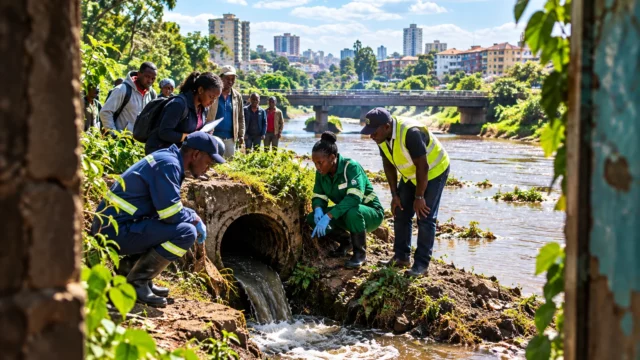
In Mathare, Nairobi, cleaning a river has become a collective safety measure. Residents are removing waste from riverbanks and drains as Kenyan authorities prepare for further heavy rain. But evacuating at-risk areas is not enough if families have nowhere to resettle.
Kenya keeps a close watch on the rainy season
Kenya is entering the “short rains” period, usually observed from October to December. The Kenya Meteorological Service forecasts above-average rainfall in many counties, including Nairobi, for November and the following three months. It also expects temperatures to be higher than the national average.
The forecasts do not mean that every region will experience the same rainfall or risks. The El Niño phenomenon, linked to the periodic warming of equatorial Pacific waters, can alter weather patterns. In East Africa, its effects combine with local conditions: watersheds, infrastructure and the state of the soil.
The National Disaster Operations Centre estimates that 1.5 million people could be affected in at-risk areas. It has urged residents of flood-prone areas to move to higher ground. This figure refers to a population at risk, not 1.5 million people who have already been ordered to leave their homes.
Nairobi County says it has identified 172 sites that could serve as shelters, with teams and emergency supplies planned. These arrangements are intended to address a problem exposed by the 2024 floods: when roads and access routes are cut off, rescue teams lose precious time.
In Mathare, warnings prompt practical action
Along the Mathare River, a tributary of the Nairobi River, homes and businesses are located in areas vulnerable to flooding. Residents are helping to clean the waterway and drains. Victor Ojoo, a local resident, says waste carried into the river affects first those living along its banks.
Official preparations also include pre-positioning teams and essential supplies. Bramwell Simiyu, Nairobi County’s disaster management official, says lessons from previous emergencies have led to better-organised operations. The authorities are also considering sending alerts by phone.
These measures address a risk that goes beyond the amount of rainfall alone. A World Resources Institute study published in July 2026 links the vulnerability of Nairobi’s informal neighbourhoods to several factors: inadequate drainage, waste blocking water flows, the degradation of wetlands and uneven enforcement of land-use rules.
For families, however, leaving can mean losing a home, a business or access to school and healthcare. Households living hand to mouth often have few means of finding safe accommodation. Evacuation without a lasting solution therefore risks shifting the danger rather than reducing hardship.
Preventing floods without shifting the problem
After the 2024 floods, buildings near the Nairobi River were demolished to clear a 30-metre river buffer zone. The measure is intended to reduce exposure in the most dangerous areas. Its implementation nevertheless raises an essential question: how can residents be protected without leaving them homeless or without adequate compensation?
The Kenya National Commission on Human Rights is calling for communities to be involved in evacuation plans and for fair access to shelters and aid to be guaranteed. It is also calling for clear, accessible warnings and particular attention to children, older people, people with disabilities and those with limited access to services.
Risk management involves several levels of government. In Nairobi, county authorities organise local emergency response, while meteorological services and national agencies coordinate warnings and the emergency response. Cooperation between these actors will be crucial if the forecasts materialise.
An issue beyond the capital
The risk affects other Kenyan counties and is part of a regional trend. IGAD, the regional organisation for the Horn of Africa, monitors seasonal outlooks for several East African countries, where intense rainfall can affect roads, harvests and livelihoods across borders.
In Kenya, the immediate priority is to act on the November forecasts: residents must be able to receive clear instructions, reach a safe shelter and find support after the emergency. For Nairobi, clean-up operations and the 172 sites announced will be only part of the response. Sustainable risk reduction will also require well-maintained drainage networks, wetland protection and fair resettlement solutions.