Algeria
 Egypt
 Libya
 Morocco
 Sudan
 Tunisia
 Benin
 Burkina Faso
 Cabo Verde
 Côte d'Ivoire
 Ghana
 Guinea
 Guinea-Bissau
 Liberia
 Mali
 Mauritania
 Niger
 Nigeria
 Senegal
 Sierra Leone
 The Gambia
 Togo
 Cameroon
 Central African Republic
 Chad
 DR Congo
 Equatorial Guinea
 Gabon
 Republic of the Congo
 São Tomé and Príncipe
 Burundi
 Comoros
 Djibouti
 Eritrea
 Kenya
 Madagascar
 Malawi
 Mauritius
 Mozambique
 Rwanda
 Seychelles
 Somalia
 South Sudan
 Tanzania
 Uganda
 Angola
 Botswana
 Eswatini
 Lesotho
 Namibia
 South Africa
 Zambia
 Zimbabwe
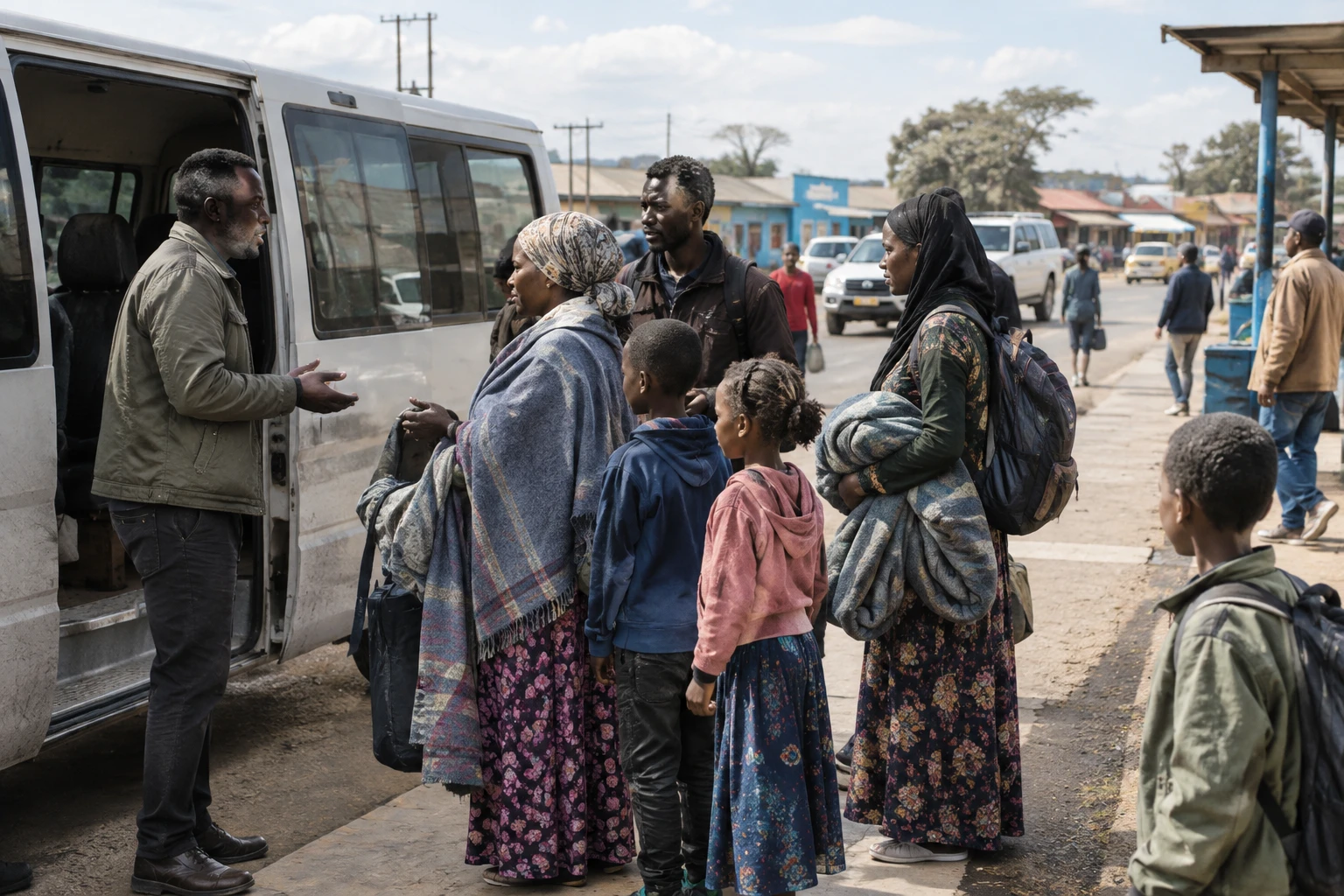
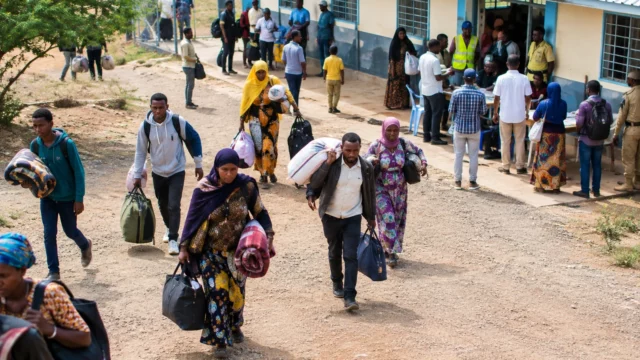
At Moyale, the border between Kenya and Ethiopia separates more than two states. It also marks the passage from fighting to the search for shelter. For families arriving on the Kenyan side, finding a safe place is not enough: they also need food, somewhere to sleep and healthcare for their children.
A local crisis with cross-border effects
Moyale is a border town divided between Kenya and Ethiopia. The recent clashes are taking place on the Ethiopian side, in an area disputed between the regional administrations of Oromia and Somali. This longstanding territorial dispute pits two regions of a federal state against each other, where questions of borders, local authority and community affiliation can weigh heavily on everyday life.
The crisis is also unfolding in an area of movement and exchange between communities living on either side of the border. When fighting disrupts travel and local activities, the consequences extend beyond those directly caught up in the violence. They also affect host families, markets and public services in Kenya’s Marsabit region.
The Horn of Africa regularly sees displacement linked to conflict and local tensions. But each movement is shaped by a specific situation: here, authorities and humanitarian organisations must distinguish between new arrivals, people staying with relatives and those settled in temporary sites.
Urgent needs beyond the initial reception
Ethiopian families have reached the Kenyan town after fleeing fighting that broke out in October. Some are living in temporary shelters, while others are being hosted by residents. The temporary site at Al-Huda is one of the places where displaced people are trying to rebuild their daily lives in precarious material conditions.
Shukria Dalacha, a displaced Ethiopian mother, says she arrived on foot late at night, carrying almost nothing. She says she lacks bedding and has no income. She is particularly worried that she is not producing enough milk to feed her baby, who needs specific care. Her account illustrates an immediate need: after fleeing, families must meet basic needs without their possessions or livelihoods.
Pregnant women, breastfeeding mothers, children under five and older people are among the most vulnerable groups. Henok Ochalla, senior emergency coordinator at the United Nations High Commissioner for Refugees (UNHCR), stresses the importance of medical care and regular food. At a camp or reception site, continuity of meals and access to suitable food matter as much as shelter.
Response teams are distributing meals, drinking water, blankets, mats and mosquito nets. This assistance meets immediate needs, but its reach depends on the ability to replenish supplies and also reach people staying with Kenyan families. A response limited to collective sites could leave some displaced people without support.
Figures should be treated with caution
On 6 November, UNHCR had profiled about 14,000 people to assess their needs. This figure does not represent total arrivals: it refers to people identified as part of this exercise, while border crossings and verification were continuing.
At the end of October, UNHCR relayed an estimate from local authorities that as many as 50,000 people had entered Kenya. The gap with the 14,000 people profiled is therefore not necessarily a contradiction: the two figures do not measure the same thing. The first is an estimate of arrivals, still to be verified; the second describes the progress of an identification exercise.
UNHCR, UNICEF, the International Organization for Migration and the World Food Programme said they were seeking $8.9 million to support up to 50,000 people for three months. This sum is a funding appeal, not an amount already received. The organisation says needs include food, shelter, water, sanitation, registration and protection.
Kenyan communities are also under pressure
For displaced families, the urgent needs are meals, shelter and healthcare. For residents of Moyale and nearby localities, the arrival of new households can increase demand for services and resources. Host families sometimes share their homes or supplies, while local authorities must organise the response with limited resources.
This distinction matters: someone registered at a reception site may not have the same immediate needs as a family dispersed among relatives. A well-distributed aid effort must therefore involve the Kenyan authorities, UNHCR, humanitarian organisations and local communities, rather than reducing reception to the management of camps alone.
The available information describes clashes and a territorial dispute, but does not make it possible here to establish all the responsibilities or the detailed circumstances of each act of violence. It is therefore important to distinguish reported facts from broader political explanations. The displacement of civilians already requires protection and assistance measures on both sides of the border.
A test for regional cooperation
Kenya and Ethiopia are members of the Intergovernmental Authority on Development (IGAD), a regional organisation in the Horn of Africa. The crisis is a reminder that local tensions can quickly take on a cross-border dimension. Cooperation between the two states and humanitarian actors will be crucial to tracking population movements and facilitating access to aid, while ensuring civilians are not exposed to the fighting.
In the short term, the issues to monitor are the course of the fighting, verification of arrival numbers, the delivery of aid and safer accommodation options. Figures will need to be updated as assessments progress. For mothers such as Shukria Dalacha, the stakes are already measured in immediate needs: feeding a baby, finding a blanket and accessing healthcare.
The testimony of displaced families in Moyale, UNHCR’s warning about humanitarian needs in Kenya, the Kenyan news agency’s reporting on the situation in Moyale and the Kenyan National Commission on Human Rights’ call for a rights-based response shed light on different aspects of the crisis.