Algeria
 Egypt
 Libya
 Morocco
 Sudan
 Tunisia
 Benin
 Burkina Faso
 Cabo Verde
 Côte d'Ivoire
 Ghana
 Guinea
 Guinea-Bissau
 Liberia
 Mali
 Mauritania
 Niger
 Nigeria
 Senegal
 Sierra Leone
 The Gambia
 Togo
 Cameroon
 Central African Republic
 Chad
 DR Congo
 Equatorial Guinea
 Gabon
 Republic of the Congo
 São Tomé and Príncipe
 Burundi
 Comoros
 Djibouti
 Eritrea
 Ethiopia
 Madagascar
 Malawi
 Mauritius
 Mozambique
 Rwanda
 Seychelles
 Somalia
 South Sudan
 Tanzania
 Uganda
 Angola
 Botswana
 Eswatini
 Lesotho
 Namibia
 South Africa
 Zambia
 Zimbabwe
For Kenyan tea producers, the reopening of the Sudanese market offers an additional sales opportunity, but does not guarantee a return to pre-crisis volumes. For Nairobi, the stakes are also diplomatic: restoring trade without relying on a limited number of destinations exposed to conflict and maritime disruption.
Regional market reopens after diplomatic crisis
Sudan has lifted its ban on imports of tea from Kenya. The measure was formalised on 8 November 2026 by an order from Sudanese Minister of Industry and Trade Mahasin Ali Yaqoub. It took effect upon signature, according to the text reported by the Kenyan public Kenya News Agency.
The decision ends a ban imposed in March 2025. Khartoum had reacted to Nairobi’s hosting of officials from the Rapid Support Forces (RSF), a paramilitary group engaged in the war in Sudan. Sudanese authorities viewed the meetings as an infringement of their sovereignty. Kenya defended its role in efforts to promote dialogue. The dispute thus spilled over from diplomacy into trade.
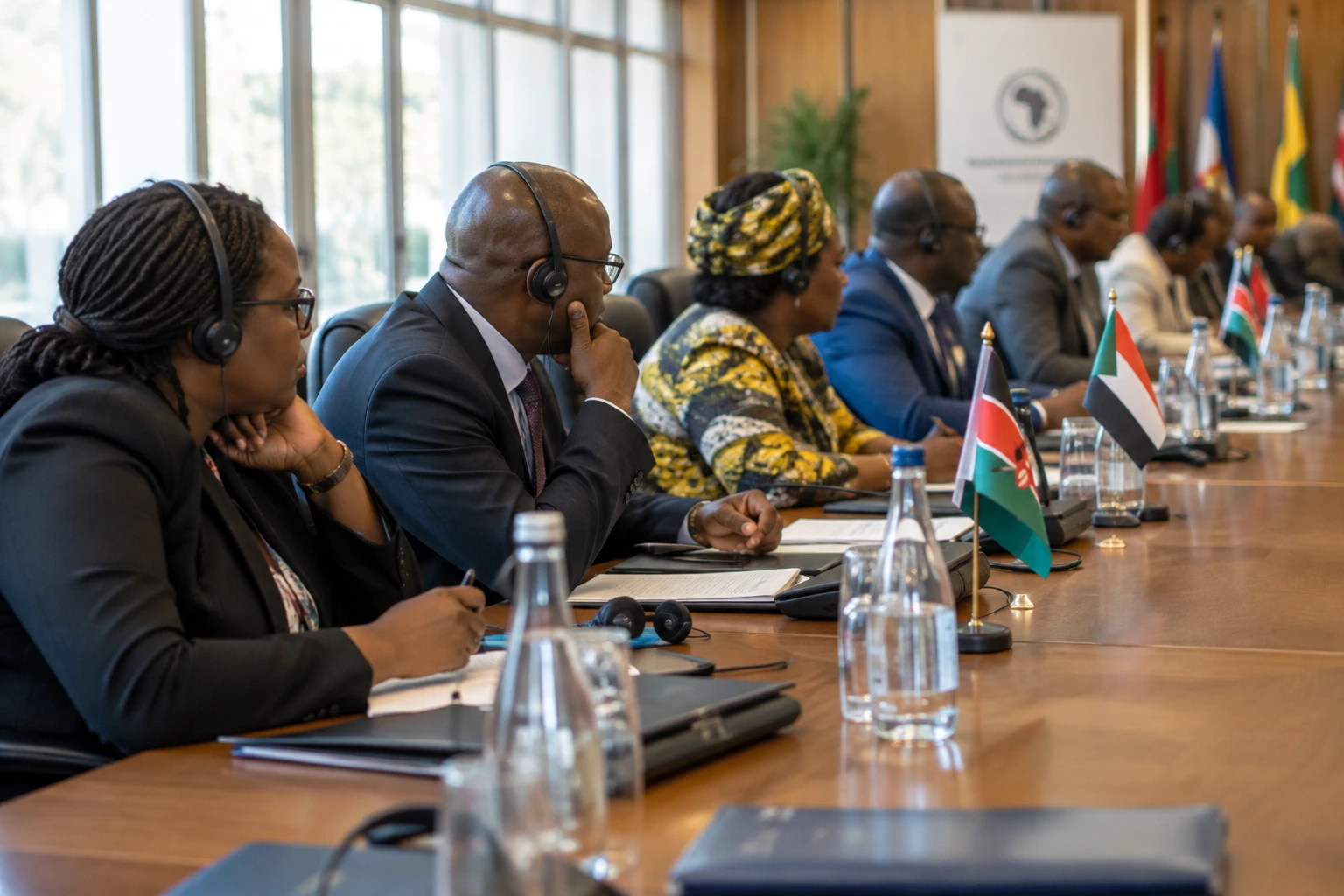
The resumption was announced on 11 November by Kenyan President William Ruto. He linked it to discussions with Sudanese Prime Minister Kamil Idris on the sidelines of the Common Market for Eastern and Southern Africa (COMESA) summit, held in Harare on 22 October. COMESA brings together countries in eastern and southern Africa to promote trade co-operation. The attendance of both leaders at the summit is confirmed by the official COMESA communiqué.
This timeline highlights the role of regional political exchanges in resolving a bilateral dispute. It does not, however, mean that logistical hurdles, payments or the organisation of Sudanese purchases have already been resolved. The order restores regulatory access to the market; companies will still have to rebuild their commercial relationships.
A market that had already lost ground
Sudan was among the major buyers of Kenyan tea, but sales were declining even before the ban. Data from the Kenya National Bureau of Statistics, attributed to the Tea Board of Kenya, show that tea exports to Sudan fell from about 20 million kilograms in 2022 to 12.7 million in 2023 and then 10.7 million in 2024. By 2024, the country had therefore become a less important destination than before. These figures appear in the Kenyan National Agriculture Production Report.
The figures do not fully align across organisations and accounting methods. For 2024, a global trade database drawing on customs data puts exports at about 11.3 million kilograms. This difference is a reminder not to present any one figure as a single, indisputable measure. Both sources nevertheless confirm a sharp fall compared with 2022.
The trade rupture then compounded exporters’ difficulties. In November 2026, Kenya News Agency, citing the sector regulator, reported that shipments to Sudan had fallen during the restriction period, affecting cargoes and revenues. Reopening could therefore help traders reconnect with buyers. But the volume recovered will depend on demand, shipping capacity and payment terms in a country still affected by war.
Industry seeks to spread risk
Tea is a major source of export revenue for Kenya. In 2025, the country sold more than 650,000 tonnes abroad, according to industry figures cited in local coverage. The sector links the Mombasa auctions with farms and co-operatives, including those of small-scale producers. An additional market can support sales and incomes, but the benefits will not be the same for everyone: they will depend on the prices achieved, transport costs and the role of intermediaries.
Diversification is all the more important because Kenyan exports depend on shipping routes and markets concentrated in the Middle East and Asia. In 2026, disruptions linked to the conflict in the Middle East slowed some shipments and left cargoes stranded at the port of Mombasa. The regional association of tea traders reported delays and losses for the industry. In this context, Sudan’s reopening adds an option, without replacing major markets or ending transport risks.
The challenge, then, is not simply to export more. Kenyan producers and authorities must also preserve the value earned from tea, maintain quality and prevent logistics costs from eating into revenues. For smallholders, an increase in export volumes does not automatically translate into a higher price at the farm gate.
A test for African trade co-operation
The resumption of trade between Kenya and Sudan illustrates both the potential and the fragility of intra-African commerce. Regional mechanisms such as COMESA provide forums for dialogue, but cannot by themselves prevent disruptions caused by political tensions. Kenya is also a member of the East African Community (EAC), while Sudan belongs to COMESA: these overlapping memberships can facilitate discussions without erasing national disagreements.
For the African Union and countries in the region, the case is a reminder that a trade border can close following a diplomatic dispute, with direct consequences for businesses and agricultural workers. The next step will be practical: checking whether orders resume, cargoes move again and payments reach exporters. The political decision opens a door; only the actual resumption of trade will show whether the Sudanese market regains a significant place for Kenyan tea.