Algeria
 Egypt
 Libya
 Morocco
 Sudan
 Tunisia
 Benin
 Burkina Faso
 Cabo Verde
 Côte d'Ivoire
 Ghana
 Guinea
 Guinea-Bissau
 Liberia
 Mali
 Mauritania
 Niger
 Nigeria
 Senegal
 Sierra Leone
 The Gambia
 Cameroon
 Central African Republic
 Chad
 DR Congo
 Equatorial Guinea
 Gabon
 Republic of the Congo
 São Tomé and Príncipe
 Burundi
 Comoros
 Djibouti
 Eritrea
 Ethiopia
 Kenya
 Madagascar
 Malawi
 Mauritius
 Mozambique
 Rwanda
 Seychelles
 Somalia
 South Sudan
 Tanzania
 Uganda
 Angola
 Botswana
 Eswatini
 Lesotho
 Namibia
 South Africa
 Zambia
 Zimbabwe
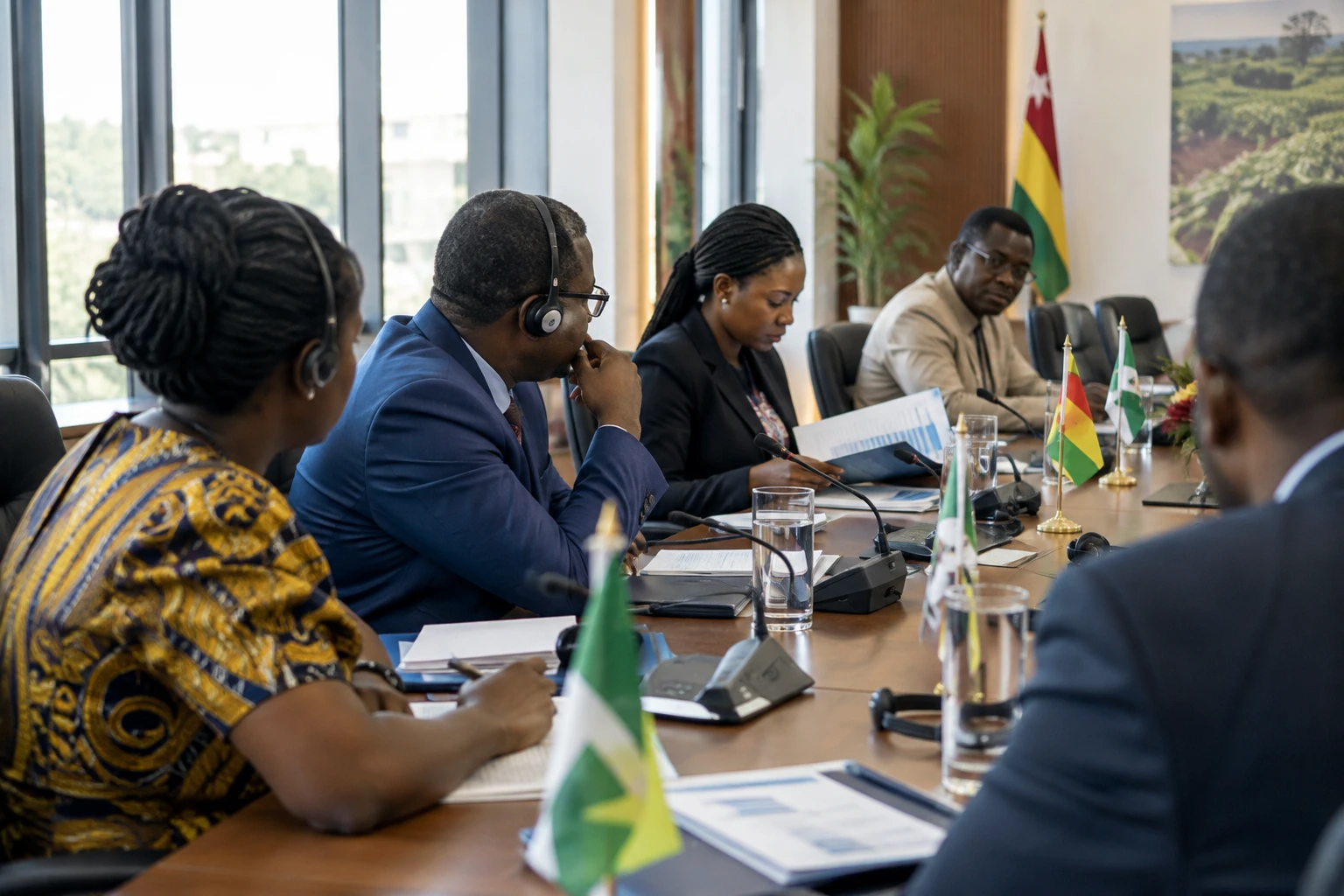
In Togo, turning a harvest into a year-round source of income takes more than good seeds. It also requires electricity, equipment, skills and buyers. These are the levers at the heart of the agricultural transformation discussed in Lomé this week.
From production to income: the value-chain challenge
Togolese agriculture does not stop at the fields. Between production and sale, opportunities to create value include storage, processing, transport and access to markets. They can also support jobs outside farms, particularly for young people and women.
But these activities remain difficult to develop without reliable energy and suitable finance. A farm that cannot irrigate, preserve its harvest or process its produce is more dependent on the seasons and middlemen. The challenge is therefore to link higher yields to real commercial outlets.
This priority forms part of a broader national strategy. The Programme for the Modernisation of Agriculture in Togo (ProMAT) runs from 2025 to 2034 and aims to strengthen farms and value chains. In June 2025, the World Bank approved $300 million to support its implementation. The programme includes investment in irrigation, drainage, mechanisation, financial services and market access.
The stated goals convey the scale of the ambition: improve water management across 7,200 hectares and benefit more than 340,000 producers through the programme. The institution also envisages the creation of 72,500 jobs. These are targets, not results already achieved. Their delivery will depend on actual investment and whether it reaches the farms concerned.
These figures appear in the World Bank’s presentation of ProMAT. They provide a concrete framework for the discussion of agricultural entrepreneurship: producing more is not enough if producers cannot sell, process or preserve their harvests on viable terms.
Electricity, training and market access
On Monday 9 November 2026 in Lomé, the President of the Council, Faure Gnassingbé, received Ousmane Diagana, the World Bank Group’s Vice-President for West and Central Africa. According to the account published by the Togolese authorities, discussions focused on agriculture, energy, digital technology and human capital.
Ousmane Diagana argued for an approach in which producers are also economic actors. “A farmer is not just a farmer; he is also an entrepreneur,” he said, according to the account. The meeting and its focus on agriculture were also reported by Togolese media outlet HAD, providing local corroboration of the main points.
Electricity is central to this vision. It can power agricultural equipment, processing units and storage facilities. However, access to energy does not automatically boost incomes: producers must also be able to afford equipment, obtain technical advice and sell their products at a remunerative price.
Training is just as important. Running a structured agricultural business requires managing costs, quality, production schedules and relationships with buyers. Needs vary across value chains and regions. A processing unit close to production areas faces different constraints from a farm far from roads or electricity networks.
The programme backed by the World Bank includes investment in mechanisation, financial services and markets. The institution also describes ProMAT as an effort involving its various entities, including the International Finance Corporation and the Multilateral Investment Guarantee Agency. One central question remains: how will financing and infrastructure reach small farms, rather than only operators already able to meet project requirements?
A Togolese challenge with regional ambitions
The framework for co-operation between Togo and the World Bank runs from 2025 to 2029. It links agricultural priorities to broader issues, including employment, education, health and digital technology. For the authorities, agricultural transformation can help diversify the economy. For producers, the stakes are more direct: regular outlets, controlled costs and a greater ability to withstand climate shocks.
The regional dimension also matters. Togo belongs to ECOWAS, the Economic Community of West African States, where cross-border trade can open up markets for agricultural products. But reaching those markets requires reliable supply chains, understood standards and suitable infrastructure. Lomé’s location alone does not guarantee that producers in the country’s interior will gain access to them.
In October 2026, Lomé also hosted discussions with the African Union and Benin on the Kampala Declaration on African Agricultural Development for 2026-2035. This continental framework emphasises more resilient agri-food systems. It gives regional scope to debates on investment, food security and the role of producers in value chains. Togo’s Ministry of Agriculture reported on this milestone in its account of the Lomé discussions on the Kampala Declaration.
The next measure of progress will therefore not be only the amount of financing announced. It will be necessary to track the land actually developed, the producers supported, the jobs created and how benefits are distributed among different regions and types of farm. That is the scale at which the ambition of the farmer-entrepreneur can be assessed, in Togo and neighbouring countries alike.