
 Algeria
 Egypt
 Libya
 Morocco
 Sudan
 Tunisia
 Benin
 Burkina Faso
 Cabo Verde
 Côte d'Ivoire
 Ghana
 Guinea
 Guinea-Bissau
 Liberia
 Mali
 Mauritania
 Niger
 Nigeria
 Senegal
 Sierra Leone
 The Gambia
 Togo
 Cameroon
 Central African Republic
 Chad
 DR Congo
 Equatorial Guinea
 Gabon
 Republic of the Congo
 São Tomé and Príncipe
 Burundi
 Comoros
 Djibouti
 Eritrea
 Ethiopia
 Kenya
 Madagascar
 Malawi
 Mauritius
 Mozambique
 Rwanda
 Seychelles
 Somalia
 South Sudan
 Tanzania
 Uganda
 Angola
 Botswana
 Eswatini
 Lesotho
 Namibia
 Zambia
 Zimbabwe
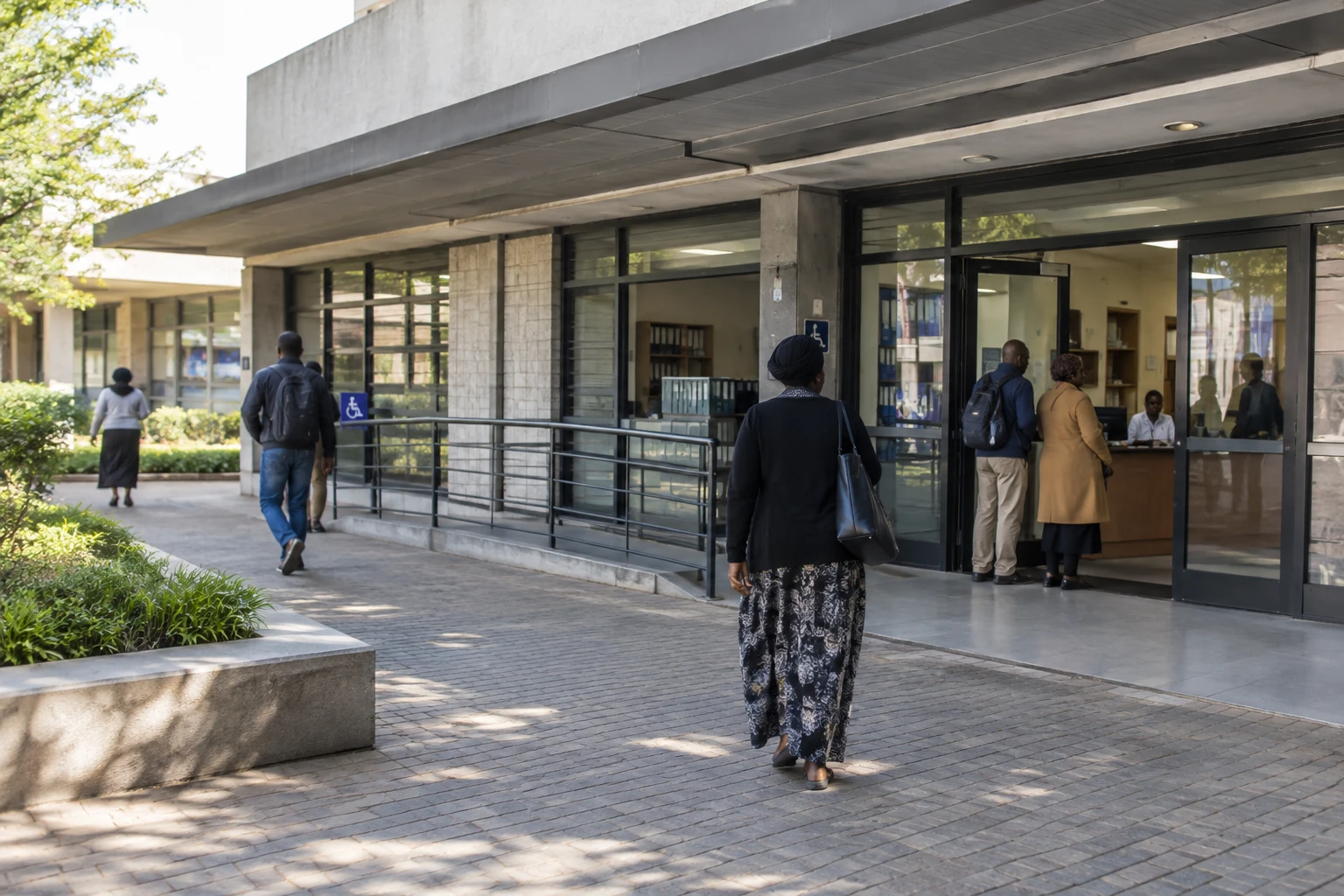
An asylum appeal pending for years delays more than an administrative decision: it holds up access to documents and leaves those concerned in uncertainty. In South Africa, a digital platform is intended to help organise applications more effectively. But its launch comes as courts, public services and people seeking protection face distinct obstacles.
A system under pressure in a region on the move
South Africa hosts refugees and asylum seekers from countries including Burundi, the Democratic Republic of the Congo, Somalia, South Sudan, Rwanda and Zimbabwe. In 2025, the country was hosting more than 167,000, according to the United Nations High Commissioner for Refugees (UNHCR). Most live in urban areas rather than camps. The quality of administrative procedures therefore has a direct bearing on their access to services and daily lives. UNHCR’s profile of South Africa also describes a protection environment weakened by documentation difficulties and social tensions.
The issue extends beyond South Africa’s borders. Within the Southern African Development Community (SADC), states have discussed with UNHCR better coordination of responses to refugee and migrant movements, including data-sharing and the harmonisation of procedures. The effectiveness of South Africa’s system therefore has consequences for people moving around the region, even though each country retains its own rules. Regional discussions between SADC and UNHCR underline the importance of this co-operation.
A portal to prepare applications, not yet decide them
On 10 November 2026, South Africa’s Department of Home Affairs announced the first phase of a digital asylum system. The portal allows people to indicate their intention to seek asylum, submit personal information, facial biometrics and supporting documents. It is initially open to a test group. The department plans to open it to the public after a software update scheduled for the following weekend. The department’s official announcement sets out the timetable and planned functions.
This preliminary registration is not a formal asylum application and does not confer any status. Its main purpose is to help the administration estimate how many people it will need to receive and plan its capacity. Subsequent stages are expected to add appointment booking, biometric checks and searches of departmental databases. The project also envisages machine-learning and artificial-intelligence tools to support the processing of applications and appeals. Their deployment and effectiveness remain to be established.
The department says people without internet access or digital equipment will be able to get help at refugee reception offices. This option will be crucial: a procedure available only online could exclude precisely those who have the least access to equipment. However, registration, even with assistance, does not replace an individual examination of the case or the safeguards provided for by law.
Thousands of appeals still pending
Figures published by the department show an improvement, but also the scale of the backlog. At the end of 2025, South Africa’s refugee appeals authority had 70,976 active appeals, down from 79,870 a year earlier. A separate backlog of 133,582 appeals had been identified. During the 2025/2026 financial year, 19,064 cases were removed from it following decisions, withdrawals or administrative closures. Some cases date back to 2008. The department’s data on appeals distinguishes these categories, which should not be added together as if they formed a single backlog.
South African media outlet GroundUp has also reported 70,976 active appeals, based on the department’s exchanges with Parliament. This cross-check confirms the published figure, but does not validate every explanation put forward about the causes or the future pace of reducing the backlog. GroundUp’s report on appeal cases notes that people whose appeals remain active can continue to renew their permits while they wait.
Home Affairs Minister Leon Schreiber attributes some of the delays to staff and funding shortages. He says only nine officials were handling thousands of appeals at the start of the current administration. Digitisation can reduce some repetitive tasks and organise caseloads more effectively. It cannot, however, replace adequate staffing or reasoned decisions delivered within a reasonable time.
Digital checks and legal safeguards
The reform also follows a Constitutional Court ruling on 7 July 2026. The court invalidated provisions that could prevent some people from having their applications considered on procedural grounds, including in connection with irregular entry or a delay in presenting themselves to the authorities. The judgment does not automatically grant refugee status: it concerns the possibility of having an application examined. The Constitutional Court judgment sets out the provisions concerned.
This distinction is central. A digital tool can help the administration register cases, but it must not turn a technical difficulty, a missing document or disputed biometric data into an automatic barrier to accessing the procedure. The criteria used by future artificial-intelligence tools must also remain understandable and subject to human oversight. In its announcement, the department has not yet publicly detailed how these safeguards will be incorporated.
For Pretoria, the challenge is therefore twofold: to process applications more efficiently while respecting access to a procedure that complies with the law. For those concerned, the practical measure will be the time between first contact with the administration, formal registration and a decision on the merits. Across SADC and the African Union, attention will focus on whether digital systems can improve access and the quality of decisions without reducing protection to an exercise in managing flows.



