Algeria
 Egypt
 Libya
 Morocco
 Sudan
 Tunisia
 Benin
 Burkina Faso
 Cabo Verde
 Côte d'Ivoire
 Ghana
 Guinea
 Guinea-Bissau
 Liberia
 Mali
 Mauritania
 Niger
 Nigeria
 Senegal
 Sierra Leone
 The Gambia
 Togo
 Cameroon
 Central African Republic
 Chad
 DR Congo
 Equatorial Guinea
 Gabon
 Republic of the Congo
 São Tomé and Príncipe
 Comoros
 Djibouti
 Eritrea
 Ethiopia
 Kenya
 Madagascar
 Malawi
 Mauritius
 Mozambique
 Rwanda
 Seychelles
 Somalia
 South Sudan
 Tanzania
 Uganda
 Angola
 Botswana
 Eswatini
 Lesotho
 Namibia
 South Africa
 Zambia
 Zimbabwe
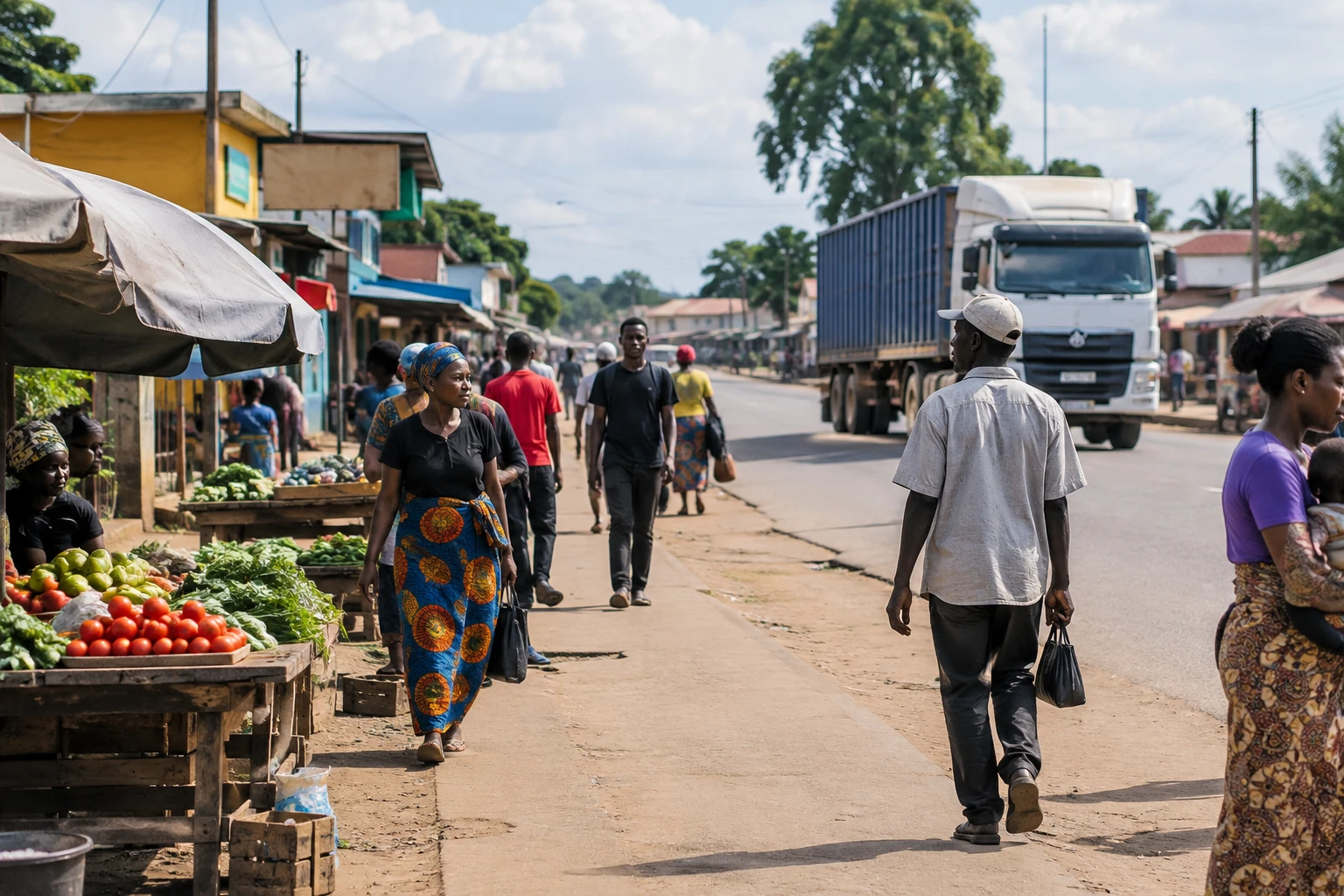
Can a mine open without knowing who will buy its output? In Malawi, the Kangankunde rare earths project is moving ahead with several outlets already announced. But these contracts do not yet turn ore into exports: construction, the start of operations and deliveries still have to materialise.
From Burundi to Malawi, production to be restarted
The project brings a previous case in Burundi back into focus. At Gakara, rare earth mining and processing were suspended in June 2021, following an earlier suspension of concentrate exports. The site, in western Burundi, has not resumed operations since, according to documents from the company that operated it. The stoppage halted production that was still limited and based on mining trials, not a large-scale industrial supply chain. Rainbow Rare Earths’ 2024 annual report confirms that the project remained suspended. Burundian media reported at the time that negotiations over operating conditions were at the heart of the dispute.
The Gakara case is a reminder that the presence of a deposit is not enough to guarantee sustainable operations. Export rules, revenue-sharing and relations between the state and the operator can have a direct bearing on a mine’s continuity. For Burundi, whose political capital is Gitega, the issue remains resource governance and the conditions for a possible restart. Kangankunde, meanwhile, is in Malawi, a country in southern Africa. The two projects therefore fall under different national frameworks and regional institutions.
A new buyer, but deliveries remain conditional
On 10 November 2026, Lindian Resources announced a binding term agreement with an unnamed refining group. The agreement covers Kangankunde monazite concentrate, an ore containing several rare earths. It provides for 10,000 dry metric tonnes in the first phase, over an initial one-year period starting in January 2027, followed by 20,000 tonnes a year for five years under a second phase. These two volumes relate to different stages and periods: they do not represent a single delivery of 30,000 tonnes. Details are set out in Lindian’s announcement and are also reported by Mining Weekly.
The buyer’s identity and the sale price have not been made public. The company plans an initial container shipment from the port of Nacala, Mozambique, in January 2027, followed by monthly shipments. However, the announcement states that deliveries still depend on concentrate production, definitive commercial contracts and third-party approvals. “Binding” describes the status of the signed document, not the certainty that the mine will produce on schedule or that every shipment will depart as announced.
This new commitment adds to previously announced agreements with Australia’s Iluka Resources and French group Carester. Lindian says that 45,000 tonnes of the annual output envisaged for the second phase are now covered, including up to 25,000 tonnes subject to Iluka’s right of first offer. This distinction matters: a right of first offer is not necessarily equivalent to a firm sale. For the first phase, the company says its capacity has been allocated between its buyers and its SARECO processing facility in Kazakhstan.
Securing sales does not resolve the project’s challenges
Identified buyers can help a company forecast its revenue more accurately and convince its financiers. But marketing does not guarantee either final profitability or equitable benefits for the host country. The actual timetable for construction, transport costs, sales terms, tax receipts and jobs created in Malawi will need to be monitored. The effects will differ for national authorities, communities near the site and local companies that may supply goods or services.
The challenge extends beyond Kangankunde. Malawi is seeking to develop its mining sector, which remains modest, and turn its resources into export revenues and economic activity. A World Bank document estimates that the mining sector as a whole could generate more than $30 billion in exports between 2026 and 2040, subject to projects being delivered and the necessary investments being made. It also highlights needs in electricity, infrastructure and reforms. This is a projection, not guaranteed revenue or a promise specific to Kangankunde. The World Bank’s roadmap for Malawi sets out these conditions.
Transport is a practical challenge for a landlocked country. The announced use of the port of Nacala depends on a reliable cross-border logistics chain, from the mine site to the Mozambican coast. The availability of energy and the capacity to transport the ore will affect costs and the pace of sales. Finally, exporting concentrate for refining elsewhere does not mean that all industrial value will remain in Malawi. Decisions on local processing, taxation and procurement from Malawian companies will help determine the national benefits.
A step for Africa, not yet a guaranteed comeback
On the global market, Kangankunde could help diversify rare earth supplies, whose processing is heavily concentrated in a handful of countries, notably China. But diversifying mines is not enough if refining capacity, skills and infrastructure remain elsewhere. The pan-African question is therefore twofold: producing more, but also negotiating better access to processing and the associated revenues.
For East Africa, the case is also a reminder that national mining decisions affect project credibility and relations between states and investors. Burundi and Malawi are members of the African Union, but Kangankunde is situated in the context of southern Africa and its trade corridors, while Burundi belongs to the East African Community. The regional frameworks should therefore not be conflated, nor should the two projects be presented as a single continental supply chain.
The next milestone to watch is the actual start of production, followed by the first shipment announced for January 2027. Until then, the commercial announcement is progress for Lindian, but not yet proof of a new African mining supply reaching the market. Monitoring construction, permits and the practical terms for sharing value will help measure what Kangankunde will actually bring to Malawi and the region.