Algeria
 Egypt
 Libya
 Morocco
 Sudan
 Tunisia
 Benin
 Cabo Verde
 Côte d'Ivoire
 Ghana
 Guinea
 Guinea-Bissau
 Liberia
 Mali
 Mauritania
 Niger
 Nigeria
 Senegal
 Sierra Leone
 The Gambia
 Togo
 Cameroon
 Central African Republic
 Chad
 DR Congo
 Equatorial Guinea
 Gabon
 Republic of the Congo
 São Tomé and Príncipe
 Burundi
 Comoros
 Djibouti
 Eritrea
 Ethiopia
 Kenya
 Madagascar
 Malawi
 Mauritius
 Mozambique
 Rwanda
 Seychelles
 Somalia
 South Sudan
 Tanzania
 Uganda
 Angola
 Botswana
 Eswatini
 Lesotho
 Namibia
 South Africa
 Zambia
 Zimbabwe
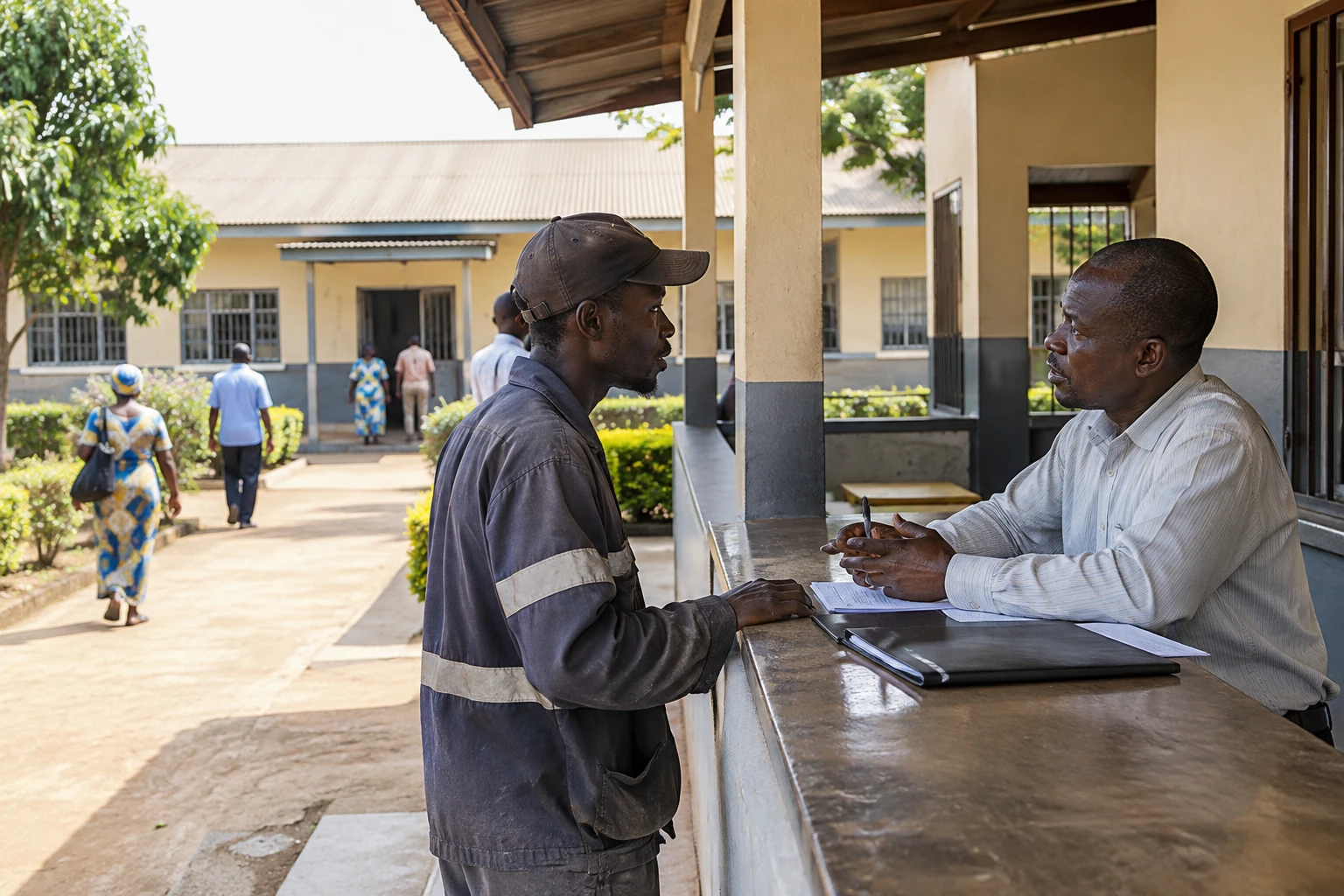
In Siguiri, gold mining provides a livelihood for thousands of people, but its expansion into waterways and farmland has become a matter of public oversight as well as an environmental issue. The ban imposed by Conakry has quickly shifted the problem beyond mining sites: hundreds of people have been arrested, while Mali is facing a significant influx of people from Guinea.
An operation extending beyond Siguiri
The administrative region of Siguiri, in north-eastern Guinea, is one of the country’s main centres of artisanal gold mining. It lies in an area with long-established movement between Guinea and Mali. Mining sites attract Guinean workers and nationals of several neighbouring countries, notably Burkina Faso and Mali. Gold mining provides income for households and fuels local trade, but some activities fall outside mining regulations.
On 2 November 2026, five members of the Guinean government announced a ban on unregulated gold mining in the region. The measure targets, in particular, the use of dredges and the extraction or washing of ore in the beds and on the banks of waterways. The authorities cite soil degradation, damage to farmland and pollution of rivers, including the Niger and the Tinkisso. They announced the permanent deployment of security forces.
On 7 November, a joint statement by Guinea’s ministries of defence and security reported that 1,263 people had been arrested and transferred to Conakry. The authorities described them as people who had resisted the ban. Figures reported by several Guinean media outlets include nationals of Guinea, Burkina Faso, Mali, Togo, Niger, Côte d’Ivoire and Ghana. The legal proceedings announced for those transferred remain to be clarified.
Human and administrative consequences
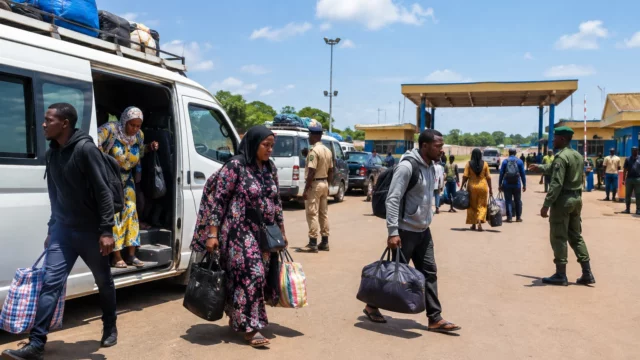
The Guinean measure is also having an impact across the border. On 7 November, the Malian government convened a crisis meeting on the arrival of people expelled from Guinean gold-mining areas. According to figures from the Centre for Coordination and Crisis Management (CECOGEC), nearly 160,000 people had been recorded in the district of Bamako and in Kourémalé, a border town. This figure was reported by the Malian authorities; on its own, it does not indicate how many people have already returned to their countries of origin.
Bamako announced the mobilisation of transport to organise returns, notably to Burkina Faso. The available figures therefore describe a regional operation to manage movements, not simply arrests in Guinea. Nor do they provide a precise picture of each person’s circumstances: Guinean workers, foreign migrants, families and minors may not all be affected in the same way.
For the Guinean authorities, the challenge is to enforce mining legislation and limit environmental damage. But a blanket ban also affects the immediate income of people who depend on gold mining, as well as businesses and services in mining communities. Transferring those arrested to Conakry also moves proceedings away from the places where the alleged offences were recorded. The authorities have yet to set out the judicial safeguards, prosecution criteria or return arrangements for foreign nationals.
The decision also has a local accountability dimension. The 2 November statement calls on territorial authorities to help implement it and urges communities, mining operators and local organisations to co-operate. This approach presents the administration with a practical difficulty: controlling sites without conflating illegal activity, foreign presence and artisanal work as a whole. Nationality alone does not establish whether an activity or stay is legal.
Regulating gold mining without ignoring livelihoods
Guinea is a member of ECOWAS, the Economic Community of West African States, while Mali and Burkina Faso are now associated with the Alliance of Sahel States. These different institutional affiliations do not erase neighbourly ties, labour migration or shared responsibilities for the movement and protection of people. The co-ordination announced between Bamako and Ouagadougou illustrates the importance of these relations in managing returns.
In Guinea, the challenge is not limited to deploying security forces. The damage cited by Conakry — particularly to waterways and farmland — calls for sustained monitoring and rules that can be enforced on the ground. But for households that rely on gold mining for their income, a shutdown without an alternative may push mining sites into other areas or deepen hardship. In the statements reviewed, the authorities have not outlined a detailed retraining or economic support scheme.
The next developments to watch are clarification of the procedures concerning the 1,263 people, the situation of those recorded in Mali and the administrations’ ability to enforce the ban without triggering disorderly movements. The outcome will also be measured by the quality of environmental monitoring and the solutions offered to communities dependent on the activity. In Siguiri, enforcing the rules involves the Guinean state, local communities and its West African neighbours.