Algeria
 Egypt
 Libya
 Morocco
 Sudan
 Tunisia
 Benin
 Burkina Faso
 Cabo Verde
 Côte d'Ivoire
 Ghana
 Guinea
 Guinea-Bissau
 Liberia
 Mali
 Mauritania
 Niger
 Nigeria
 Senegal
 Sierra Leone
 The Gambia
 Togo
 Cameroon
 Central African Republic
 Chad
 DR Congo
 Gabon
 Republic of the Congo
 São Tomé and Príncipe
 Burundi
 Comoros
 Djibouti
 Eritrea
 Ethiopia
 Kenya
 Madagascar
 Malawi
 Mauritius
 Mozambique
 Rwanda
 Seychelles
 Somalia
 South Sudan
 Tanzania
 Uganda
 Angola
 Botswana
 Eswatini
 Lesotho
 Namibia
 South Africa
 Zambia
 Zimbabwe
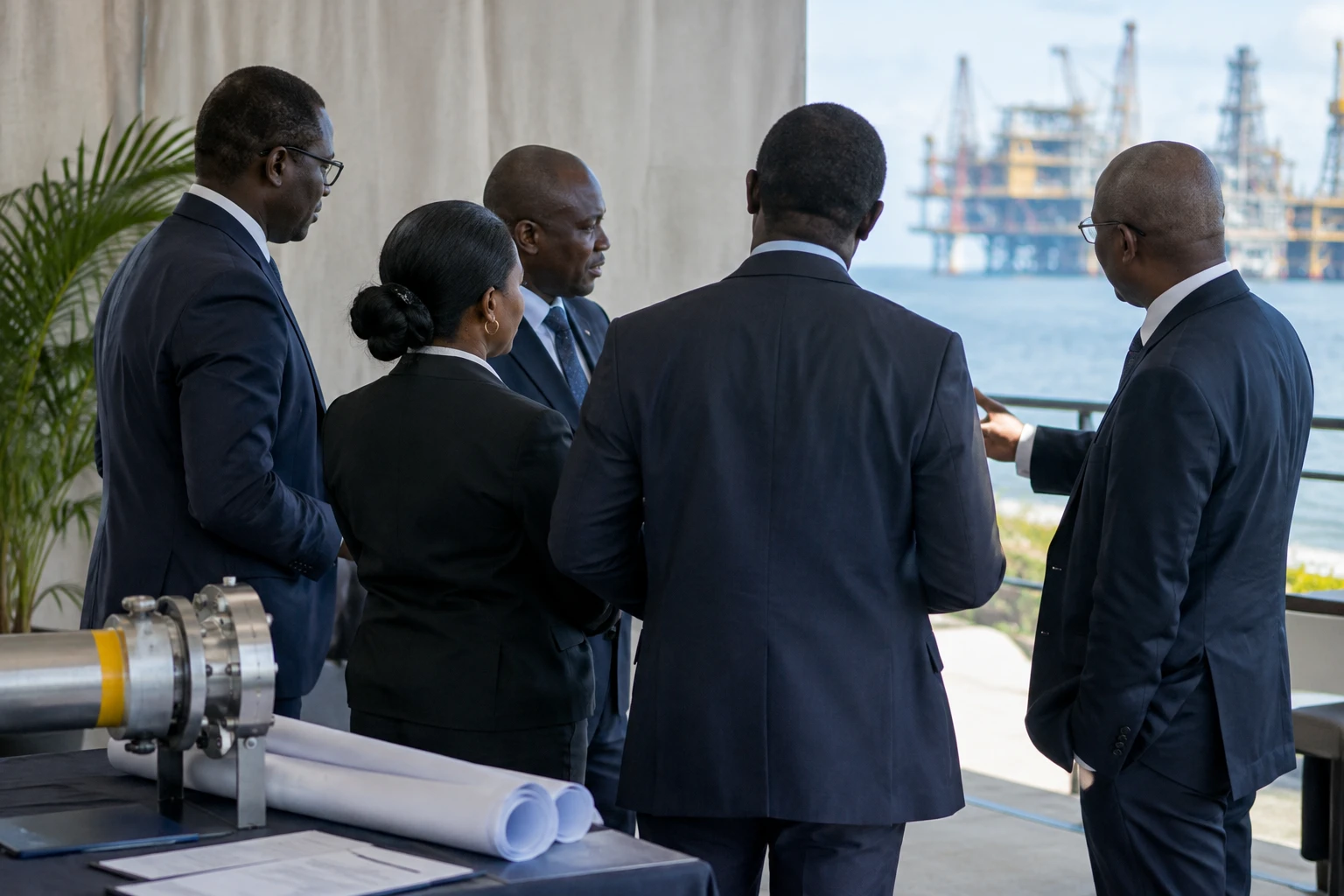
For Equatorial Guinea, producing more gas is not enough: the facilities that process and export it must also be supplied on a lasting basis. The Aseng project aims to address this challenge by linking an offshore field to equipment already in service. A new contract covers preparation of this subsea connection.
A tie-in to existing facilities
On 5 November 2026, EnerMech announced that it had secured a contract from Chevron to work on the Aseng gas development, off the coast of Equatorial Guinea. The British group will prepare around 19 kilometres of rigid pipeline to connect the field to existing offshore infrastructure. The contract value and duration of the work have not been disclosed. These details were also reported by Oil & Gas Journal.
The work includes front-end engineering, project management and pre-commissioning operations. This stage involves checking and preparing the pipeline before it is used. It does not mean the field is already beginning production. The contract covers the technical preparation of one part of the project, not its entire construction or the production of gas.
The pipeline is to connect Aseng to the existing Alen platform. By reusing offshore equipment, Chevron is opting to connect to available infrastructure rather than build an entirely new system. The company plans to mobilise a drilling rig in early 2027 to drill a development well. Production is still expected to start in 2028.
A project in the country’s gas strategy
Aseng reached a major milestone in March 2026, when Chevron took a final investment decision. The approval commits the company to developing the project, but is not in itself a guarantee of the schedule: operations still need to progress and final regulatory approvals remain to be obtained, according to information released about the decision.
Chevron estimates the investment at $690 million. The group says Aseng gas could help sustain Equatorial Guinea’s liquefied natural gas (LNG) exports — gas cooled for transport by ship — until the mid-2030s. This is the company’s forecast, not an independent guarantee of export volumes or benefits for households.
The project is part of Malabo’s strategy to consolidate the country’s role as a regional gas processing and export hub. It relies in particular on the Punta Europa facilities, on Bioko Island. Equatorial Guinea is a member of CEMAC, the Economic and Monetary Community of Central Africa. But the energy strategy described here also depends on offshore infrastructure and partnerships that extend beyond national borders.
This ambition comes as the authorities seek to renew the resources supplying existing facilities. Aseng’s development is also presented as a lever to support other Chevron gas investments in the country and the region. The company cites the Alen field and the cross-border Yoyo-Yolanda project, shared with Cameroon. The latter illustrates the regional dimension of the infrastructure: fields, pipelines and processing facilities can link several countries, while commercial and regulatory agreements must keep pace.
Benefits to be assessed beyond exports
State oil company GEPetrol is participating in the project alongside private partners. The available material refers to a 32.55% stake, but this figure could not be confirmed by a sufficiently clear second independent source; it is therefore not presented here as an established fact. The exact shares and any changes to them remain to be verified in official project documents.
For the state, Aseng could support activity in the gas sector, production-related revenues and the use of existing facilities. For service companies, the development phase offers specialised contracts. EnerMech says the project will be managed from its Houston base. The announcement does not specify the share of work to be subcontracted locally, the number of Equatoguinean jobs involved or the expected revenue for the public budget.
These questions matter in a country where hydrocarbon production accounts for a significant part of the economy. Continued exports alone say nothing about how revenues are distributed, access to energy across the country or the diversification of economic activity. The benefits will also depend on sharing rules, local contracts and the capacity to turn investment into skills and domestic added value.
Next steps to watch
The announced schedule puts drilling in 2027, followed by the start of production in 2028. Until then, the key milestones will be obtaining final approvals, progress on subsea operations and meeting drilling deadlines. Any change to the schedule could delay the arrival of new resources at the processing facilities.
Across Central Africa, Aseng is a reminder that energy co-operation depends as much on infrastructure and agreements between states and operators as on fields. The connection to Alen could extend the use of existing equipment. But the project’s economic impact will also be judged by its domestic benefits, the transparency of ownership stakes and tangible links with other regional projects. For now, EnerMech’s contract marks a technical step; production is still expected in 2028.