Algeria
 Egypt
 Libya
 Morocco
 Sudan
 Tunisia
 Benin
 Burkina Faso
 Cabo Verde
 Côte d'Ivoire
 Ghana
 Guinea
 Guinea-Bissau
 Liberia
 Mali
 Mauritania
 Niger
 Nigeria
 Senegal
 Sierra Leone
 The Gambia
 Togo
 Cameroon
 Central African Republic
 Chad
 DR Congo
 Equatorial Guinea
 Gabon
 Republic of the Congo
 São Tomé and Príncipe
 Burundi
 Comoros
 Djibouti
 Eritrea
 Ethiopia
 Kenya
 Madagascar
 Malawi
 Mauritius
 Rwanda
 Seychelles
 Somalia
 South Sudan
 Tanzania
 Uganda
 Angola
 Botswana
 Eswatini
 Lesotho
 Namibia
 South Africa
 Zambia
 Zimbabwe
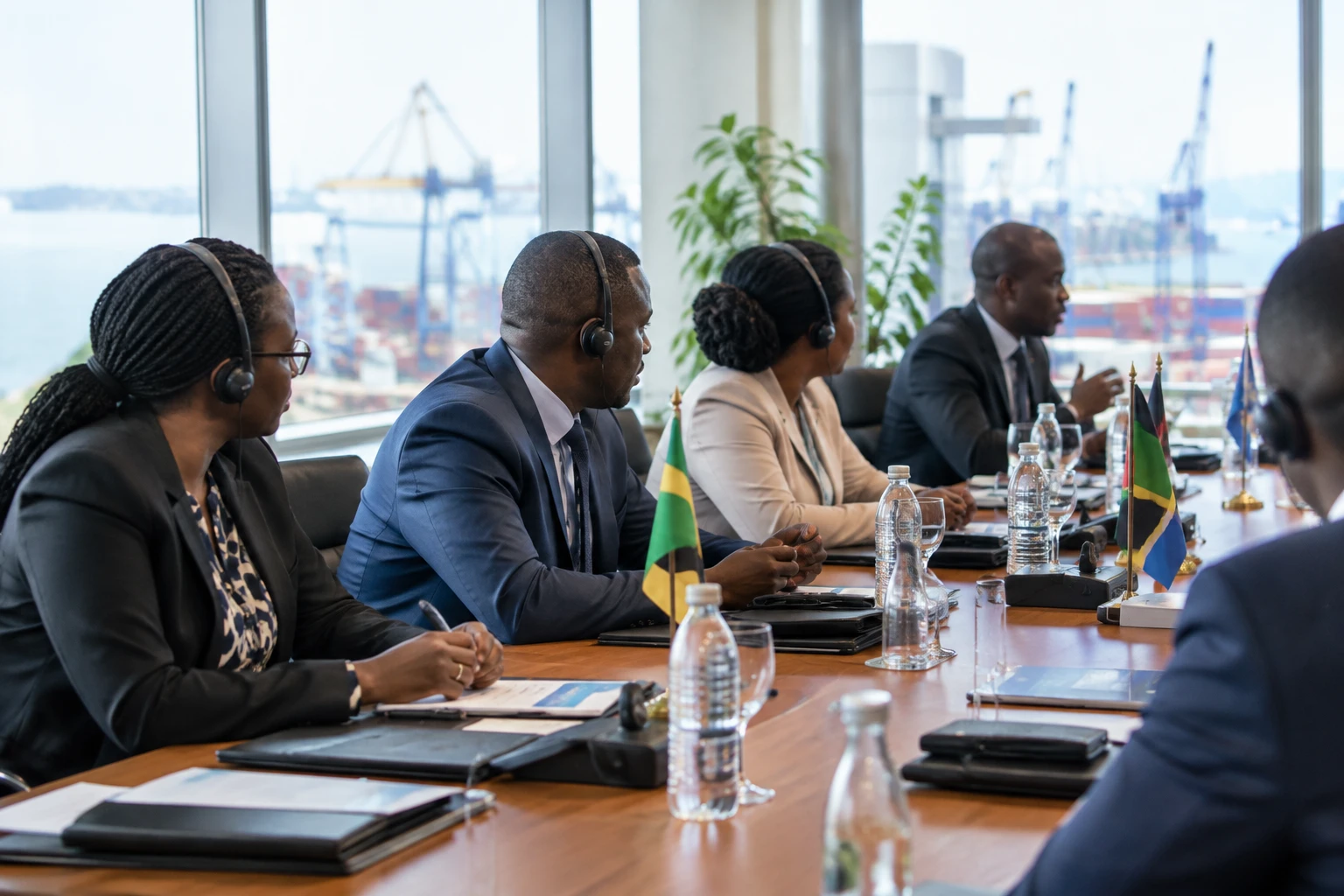
A port can attract ships without becoming a reliable gateway for an entire region. For Mozambique, the challenge is to connect its quays to roads, railways and border posts so that goods can reach markets in neighbouring countries.
Three routes serving neighbouring countries
Mozambique lies at the heart of several routes in the Southern African Development Community (SADC), the regional organisation bringing together countries in southern Africa. Its ports can serve landlocked economies, particularly Malawi, Zambia and Zimbabwe. But this position becomes an advantage only if land connections remain usable and border crossings run smoothly.
SADC stresses that corridors depend on more than roads, railways and ports. Customs procedures and coordination between administrations can also slow convoys. The organisation presents the Maputo, Beira and Nacala corridors as regional development routes, extending beyond the transport of goods alone.
The issue takes on particular significance as the country seeks to strengthen its infrastructure and its role in regional trade. The corridors connect areas with distinct profiles: the south towards South Africa, the centre towards Zimbabwe and Malawi, and the north towards Malawi and Mozambique’s mining regions.
More than $7.5bn announced
President Daniel Chapo announced on 4 November 2026 in Maputo that investments totalling more than $7.5bn were under way across the three corridors. The figures given were about $2bn for Maputo, more than $1bn for Beira and around $4.5bn for Nacala.
The figures were reported by the Mozambique Information Agency and picked up by regional media. They describe investments announced as under way, but published information does not provide a project-by-project breakdown of funds already disbursed, timelines or the respective shares of public and private funding.
In the south, the announced programme covers the port of Maputo, the EN4 national road and border infrastructure with South Africa. The corridor also relies on the Ressano Garcia railway link. Its efficiency will therefore depend as much on coordination between the port, the land network and the border crossing as on the construction work itself.
In the centre, the projects cited include the Dondo dry port and improvements to connections at Machipanda. The Beira corridor serves Zimbabwe and Malawi in particular via the Machipanda and Sena railway lines. In the north, the investments announced for Nacala cover port and railway infrastructure, as well as industrial and logistics facilities.
Benefits will depend on service quality
For landlocked countries, having several routes to the sea can reduce reliance on a single route. It does not, however, guarantee shorter transit times or lower costs. Carriers will compare the reliability of trains, road conditions, transit charges and time spent at borders.
The benefits will not automatically be shared equally. Port operators and transport companies may gain from increased traffic. Local producers and traders will benefit only if they can access the connections and logistics costs fall. Job creation and the growth of services around the hubs remain stated aims, not results already achieved.
Maintenance is just as important. Investment in a port or railway loses value if access roads, bridges and freight services do not keep pace. Likewise, border checks and customs formalities can wipe out the gains from upgraded infrastructure.
SADC specifically highlights these operational obstacles and the value of harmonising procedures between countries. The corridors cross several jurisdictions: their performance therefore depends on shared agreements and practices, not only on decisions taken in Maputo.
A regional test for SADC
The announced programme places Mozambique in a regional landscape of both competition and cooperation. The ports of Maputo, Beira and Nacala complement other outlets in southern Africa. For shippers, this variety may offer alternatives when disruption affects one route, provided the routes remain reliable and competitive.
The significance of the announcement will therefore be measured by its implementation: projects actually launched, funding mobilised, continuity of connections and improved services at borders. Corridor development could also go beyond transit if logistics zones attract processing and industrial activity in Mozambique. For now, this is an ambition whose results remain to be seen.
The next steps to watch are the publication of detailed timelines, clarification of where the capital is coming from and tangible progress on each route. Across SADC, the question will be whether these investments make trade more predictable for businesses and people in the countries connected to Mozambique’s ports.
Details of the investments announced by Mozambique’s Local Content Office ; corroboration by Pan African News Media.