Algeria
 Egypt
 Libya
 Morocco
 Sudan
 Tunisia
 Benin
 Cabo Verde
 Côte d'Ivoire
 Ghana
 Guinea
 Guinea-Bissau
 Liberia
 Mali
 Mauritania
 Niger
 Nigeria
 Senegal
 Sierra Leone
 The Gambia
 Togo
 Cameroon
 Central African Republic
 Chad
 DR Congo
 Equatorial Guinea
 Gabon
 Republic of the Congo
 São Tomé and Príncipe
 Burundi
 Comoros
 Djibouti
 Eritrea
 Ethiopia
 Kenya
 Madagascar
 Malawi
 Mauritius
 Mozambique
 Rwanda
 Seychelles
 Somalia
 South Sudan
 Tanzania
 Uganda
 Angola
 Botswana
 Eswatini
 Lesotho
 Namibia
 South Africa
 Zambia
 Zimbabwe
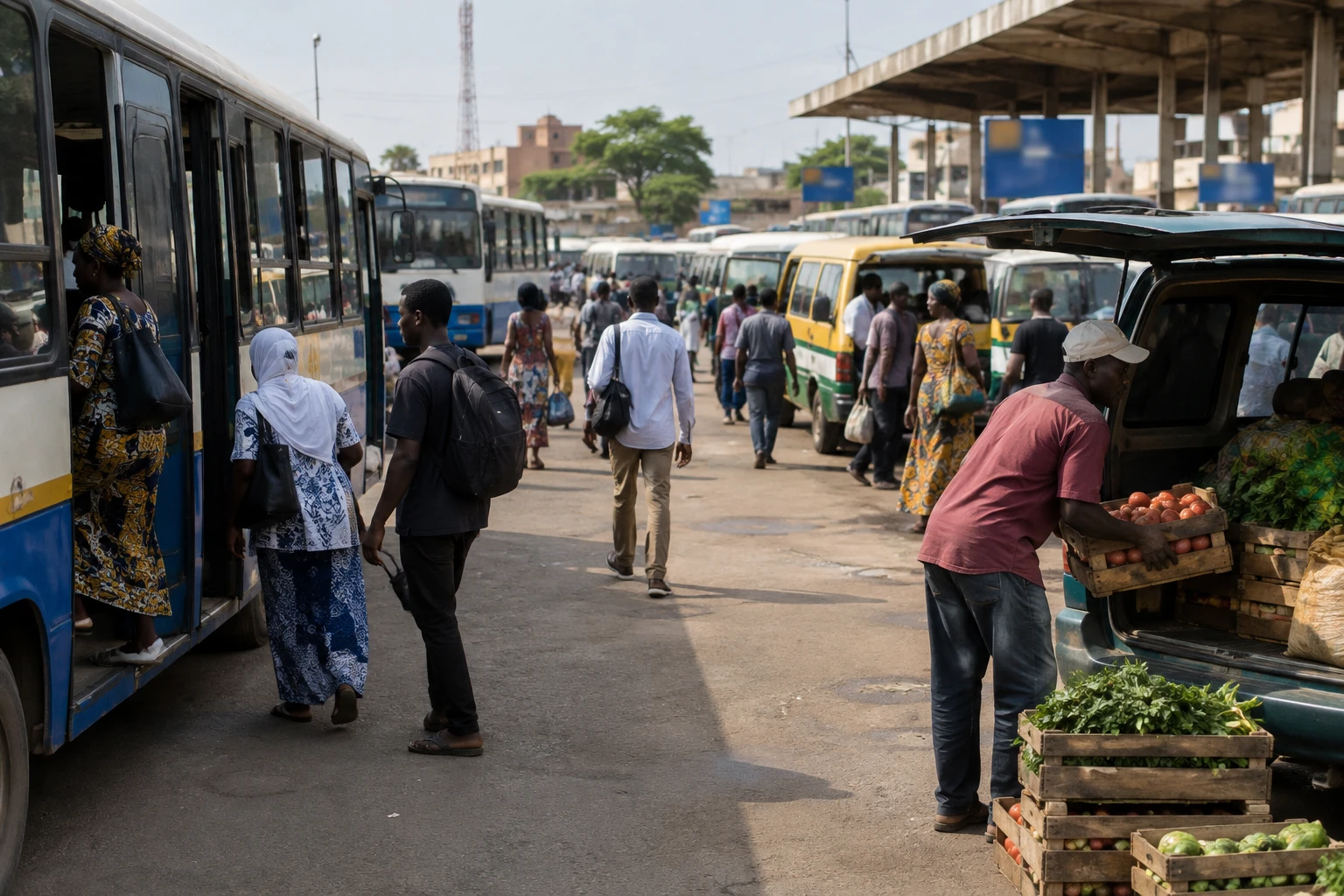
A rise in gross domestic product alone does not show whether households will be better off. In Burkina Faso, the outlook for 2027 rests on two key sectors — gold and agriculture — but their performance will also depend on energy prices, rainfall and security conditions.
Gold and agriculture, two drivers with different realities
In Ouagadougou, a mission from the International Monetary Fund (IMF) reached a staff-level agreement with the Burkinabe authorities on 4 November 2026 on the continuation of two economic programmes. The institution forecasts growth of 4.4% in 2026, followed by 4.8% in 2027. These figures remain projections, not guaranteed outcomes.
The gold sector is expected to support activity through high prices and increased production. The IMF also points to reforms aimed at better regulating artisanal mining. Formalisation can increase public revenue and make transactions more traceable. But its effects will depend on the ability to integrate workers and small production units, rather than simply push their activities into the informal sector.
Agriculture is the other expected driver. Increased access to fertilisers, irrigation, the rehabilitation of dams and the construction of boreholes have helped limit the effects of unfavourable rainfall, according to information released after the mission. These investments could support the 2027 harvest. Their impact, however, will depend on water availability, the upkeep of infrastructure and producers’ access to inputs.
The two drivers do not distribute their benefits in the same way. Gold contributes to exports and revenue, while agriculture directly affects rural incomes and food supplies. Overall growth can therefore coexist with very different conditions in mining areas, rural communities and cities.
Risks affecting prices and harvests
The outlook remains exposed to climate-related shocks. The IMF cites, in particular, the possible effects of El Niño on food security. A less favourable growing season could reduce local supply and increase pressure on food prices, directly affecting households that spend a large share of their income on food.
Energy is the other area of concern. Higher global oil prices, linked to tensions in the Middle East according to the IMF’s analysis, make fuel imports more expensive. They can also drive up transport and production costs. For the state, this complicates the balance between public spending, support for consumers and the funding of essential services.
The institution expects inflation in 2026 to be in the middle of the 1–3% range targeted by the Central Bank of West African States (BCEAO), which conducts monetary policy for the countries of the West African Economic and Monetary Union. It could rise in 2027 while remaining within that limit, according to the forecasts released. This trajectory remains sensitive to energy and food prices.
Two financing packages still subject to a decision
The staff-level agreement reached with the IMF paves the way for two disbursements, but does not yet amount to final approval. The institution’s executive board is due to consider the reviews, provisionally in mid-January 2027.
The first proposed tranche amounts to 48.16 million special drawing rights (SDRs), the IMF’s unit of account, under the sixth review of the Extended Credit Facility (ECF). The second, worth 16.42 million SDRs, is part of the second review of the Resilience and Sustainability Facility (RSF). Together, these amounts total 64.58 million SDRs, subject to the board’s approval.
These programmes form part of an ongoing financial relationship between Burkina Faso and the Fund. The ECF supports the country’s economic and budget programme; the RSF aims to support resilience measures, particularly in response to climate shocks. The financing can provide fiscal room, but it also comes with commitments and periodic reviews. The disbursement timetable should therefore not be confused with money already paid out.
A challenge for Burkina Faso, with regional implications
For the authorities, the challenge will be to turn increased production into more widely shared gains: public revenue, jobs, infrastructure and food security. For households, the most tangible indicators will remain the cost of food, transport and energy. For rural producers, sustainable access to water and inputs will matter as much as the announced national growth rate.
The regional context also matters. Burkina Faso belongs to the West African Economic and Monetary Union and ECOWAS, the Economic Community of West African States. Disruptions to trade, transport or agricultural markets in the sub-region can therefore affect prices and supplies. Ouagadougou’s economic choices are being made in an environment where regional balances are shifting.
The next clearly identified step is the IMF executive board’s consideration of the two reviews, expected in mid-January 2027. Until then, data on harvests, gold production, oil prices and inflation will show whether the 4.8% scenario remains viable. Beyond the growth rate, the question will be what share of this activity translates into income and accessible services across the country’s different regions.