Algeria
 Egypt
 Libya
 Morocco
 Sudan
 Tunisia
 Benin
 Burkina Faso
 Cabo Verde
 Côte d'Ivoire
 Ghana
 Guinea
 Guinea-Bissau
 Liberia
 Mali
 Mauritania
 Niger
 Nigeria
 Senegal
 Sierra Leone
 The Gambia
 Togo
 Cameroon
 Central African Republic
 Chad
 DR Congo
 Equatorial Guinea
 Gabon
 Republic of the Congo
 São Tomé and Príncipe
 Burundi
 Comoros
 Djibouti
 Eritrea
 Ethiopia
 Kenya
 Madagascar
 Malawi
 Mauritius
 Mozambique
 Rwanda
 Seychelles
 Somalia
 South Sudan
 Tanzania
 Uganda
 Angola
 Botswana
 Eswatini
 Lesotho
 South Africa
 Zambia
 Zimbabwe
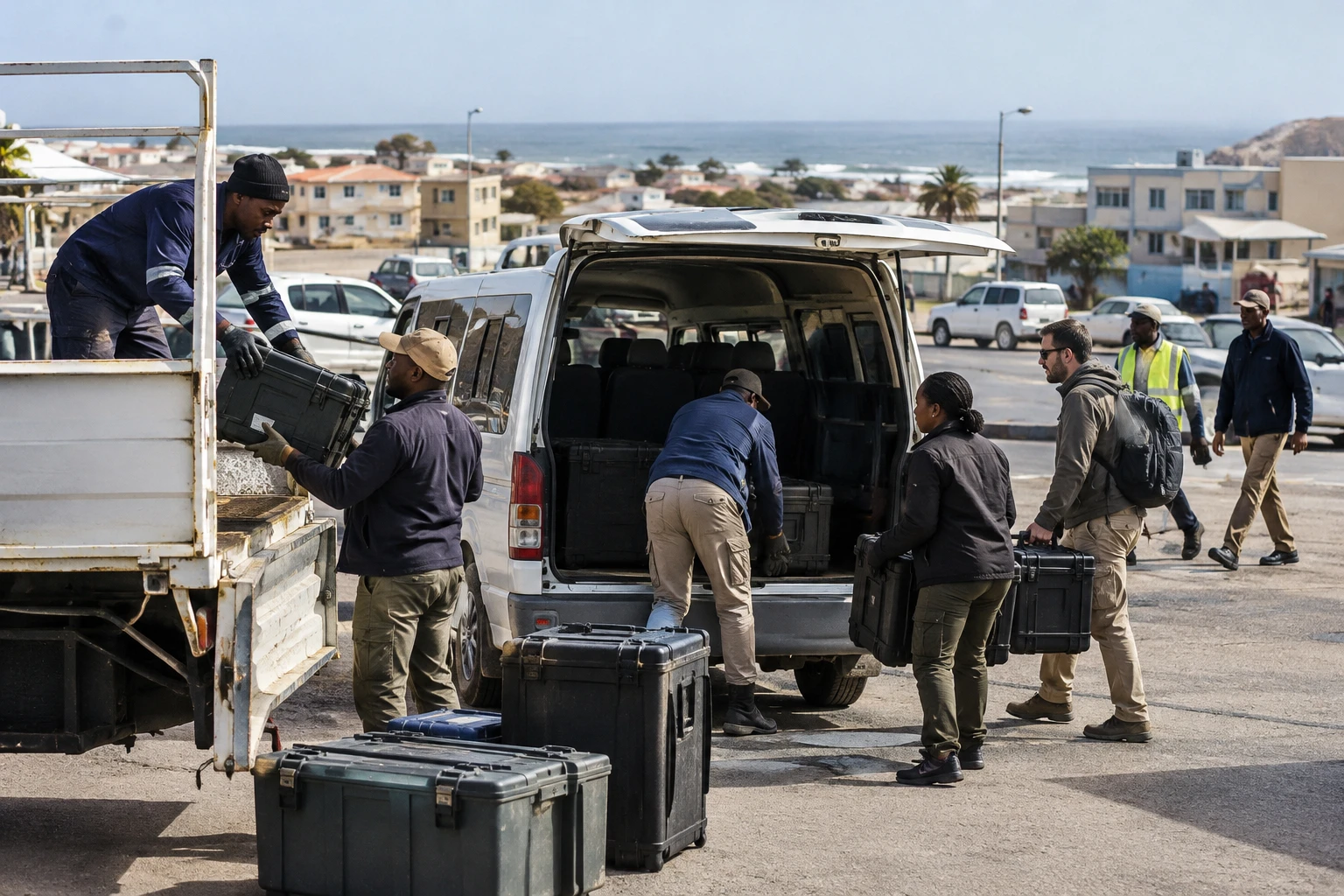
In Swakopmund, on Namibia’s coast, teams are training to answer a question that demands solid evidence: has a nuclear explosion taken place? The exercise involves neither a real test nor radioactive material. Instead, it tests the international community’s ability to establish the facts, at a time when the ban on testing still lacks universal legal force.
Full-scale simulation in the Erongo region
Namibia is hosting IFE26, an integrated field exercise organised by the Preparatory Commission for the Comprehensive Nuclear-Test-Ban Treaty Organization (CTBTO). Operations are taking place in October and November 2026 in the Erongo region, with a base in Swakopmund. The timetable announced by the organisers sets 20 November as the end date. About 250 participants from dozens of countries are taking part in the simulation.
The scenario is fictional: inspectors must examine a site following suspected nuclear explosion. They are practising how to collect and analyse evidence, coordinate teams and apply procedures set out in the treaty. The aim is to test methods, equipment, communications and logistics together, not to conduct a real investigation.
The deployment requires considerable resources. About 150 tonnes of specialised equipment are to be transported by sea and air. Namibian media have reported the arrival of an initial shipment of about 80 tonnes at Walvis Bay International Airport, before its transfer to Swakopmund. Residents may therefore see more vehicles and logistical activity in the area.
IFE26 is the third integrated exercise of this scale organised by the CTBTO, following those held in Kazakhstan in 2008 and Jordan in 2014. It is also the first to be hosted in Africa. For Namibia, the event involves local authorities and service providers, while giving Namibian specialists practical experience in verification and seismic monitoring.
A widely supported treaty that remains inactive
Opened for signature in 1996, the Comprehensive Nuclear-Test-Ban Treaty (CTBT) prohibits any test explosion of a nuclear weapon. It has won almost universal support, but has not entered into force. According to CTBTO data consulted in November 2026, 188 states have signed it and 179 have ratified it. Its entry into force nevertheless requires ratification by the 44 states listed in Annex 2, nine of which have yet to do so.
This creates a gap: the norm against testing is widely recognised, but the treaty’s full legal mechanism remains on hold. Testing has fallen sharply since 1996, but has not ceased. The CTBTO counts ten tests since the treaty opened for signature, compared with more than 2,000 in previous decades. A simulation such as IFE26 will not resolve the political impasse, but it can check whether the technical tools are ready to operate.
The verification regime combines an international monitoring system with field inspections. Monitoring stations can flag events consistent with an explosion. An on-site inspection, authorised under the treaty’s rules, would then make it possible to seek concrete evidence in the area concerned. As long as the CTBT has not entered into force, the exercise prepares capabilities and tests procedures, without constituting an inspection conducted under a fully operational treaty.
Namibia’s regional significance
Hosting the exercise forms part of a specific diplomatic trajectory. Namibia signed the treaty in 1996 and ratified it in 2012. It is also a party to the Pelindaba Treaty, which makes Africa a nuclear-weapon-free zone. Adopted in 1996 and entering into force in 2009, the continental treaty prohibits states parties from developing, acquiring or testing nuclear weapons, among other things.
The regional context also matters. Namibia belongs to the Southern African Development Community (SADC), which brings countries in the region together around cooperation and security. Windhoek hosted the 1992 signing of the treaty that transformed the previous regional organisation into SADC. Holding an international exercise on Namibian soil extends this diplomatic role, even though IFE26 primarily forms part of the CTBTO’s global verification system.
The benefits are not limited to exchanges between diplomats. Organising the exercise involves transport, accommodation and local services, while the presence of experts may strengthen the technical skills available in the country. These benefits remain tied to a temporary operation: they do not, in themselves, mean that permanent infrastructure will be created or that the regional economy will undergo lasting change.
The practical dimension also matters for residents and businesses in Erongo. The organisers say the scenario is fictional and involves neither nuclear material nor a real explosion. The movement of equipment and personnel may nevertheless temporarily affect local activity. Clearly distinguishing a simulation from a real operation helps prevent the exercise’s visibility from being mistaken for a security incident.
What the exercise can — and cannot — change
A successful field test does not oblige any state to ratify the CTBT. It can, however, show that verification is a tangible capability, relying on trained teams, shared procedures and coordination between countries. Conversely, any logistical or technical weaknesses identified during the exercise can guide improvements ahead of a real inspection.
For African countries, the stakes are twofold: to consolidate the continent’s commitment against nuclear weapons and to take part in decisions shaping international verification. Africa already has the Pelindaba Treaty, but the effectiveness of the global system also depends on cooperation with states outside the continent, particularly those whose ratifications are still required.
As the planned end date of 20 November approaches, attention is turning to IFE26’s operational assessment: what the teams will have demonstrated, what shortcomings they identify and the role of Namibian expertise in the exercise. The full-scale test can strengthen collective preparedness. The next decisive step, however, remains political: securing the outstanding ratifications so that the ban can be fully implemented.