Algeria
 Egypt
 Libya
 Morocco
 Sudan
 Tunisia
 Benin
 Burkina Faso
 Cabo Verde
 Côte d'Ivoire
 Ghana
 Guinea
 Guinea-Bissau
 Liberia
 Mali
 Mauritania
 Niger
 Nigeria
 Senegal
 Sierra Leone
 The Gambia
 Togo
 Cameroon
 Central African Republic
 Chad
 DR Congo
 Equatorial Guinea
 Gabon
 Republic of the Congo
 São Tomé and Príncipe
 Burundi
 Comoros
 Djibouti
 Eritrea
 Ethiopia
 Madagascar
 Malawi
 Mauritius
 Mozambique
 Rwanda
 Seychelles
 Somalia
 South Sudan
 Tanzania
 Uganda
 Angola
 Botswana
 Eswatini
 Lesotho
 Namibia
 South Africa
 Zambia
 Zimbabwe
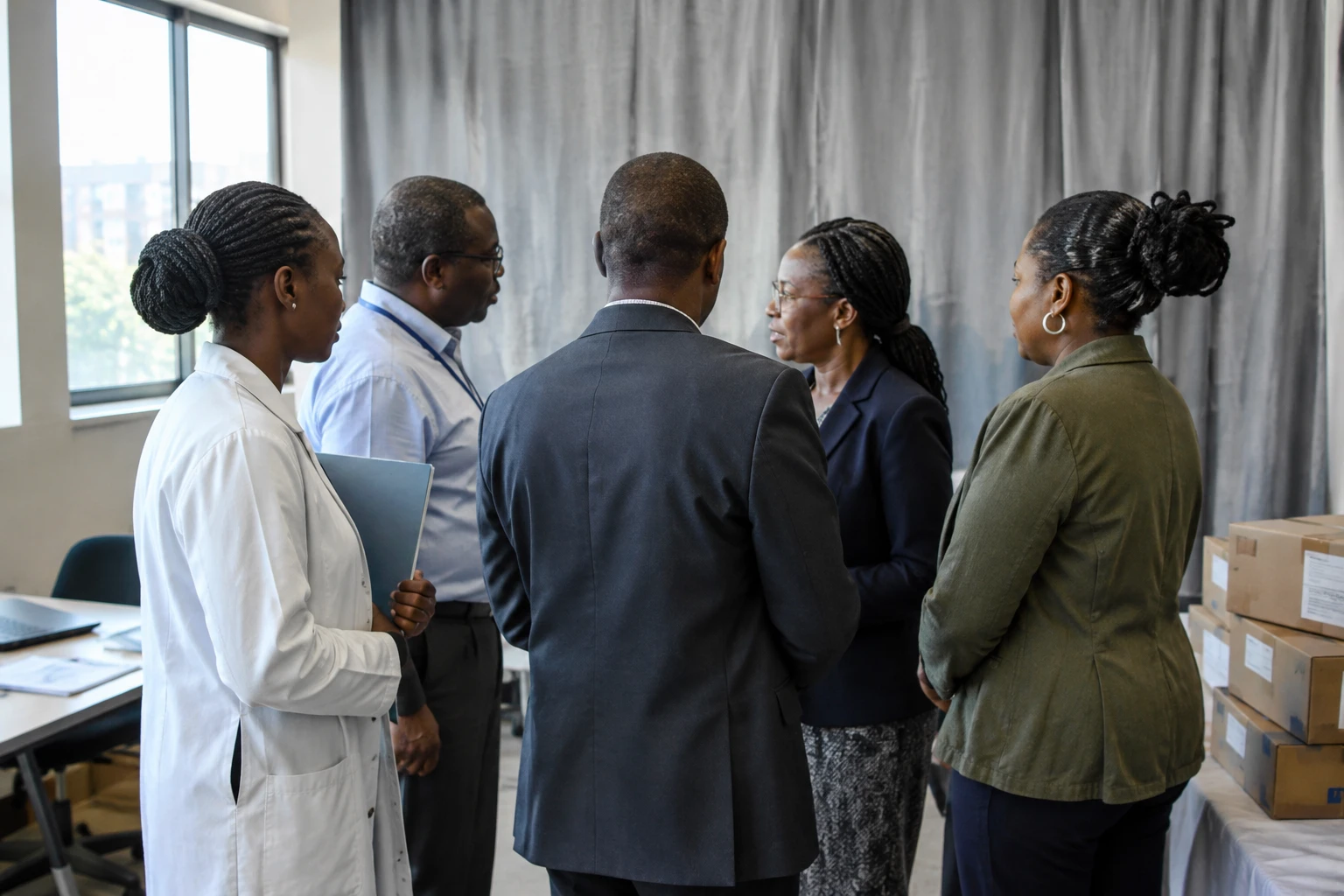
Health funding can change channels, but care cannot wait. In Kenya, the decline in external aid has brought this tension to the fore: Nairobi is seeking to secure essential programmes while strengthening domestic financing.
A rapid fall in external resources
The shock is reflected in the figures. For the 2025-2026 financial year, external health funding in Kenya is estimated at 54 billion Kenyan shillings, down from 126 billion the previous year. The estimate comes from the Centre for Epidemiological Modelling and Analysis (CEMA), affiliated with the University of Nairobi, whose analysis attributes the fall to the withdrawal of US government funding and a decline in other contributions. A CEMA publication and reports in the Kenyan press cite the same order of magnitude. CEMA’s analysis of health funding in Kenya details the trend. The Kenyan press has also reported these estimates.
The decline affects both resources recorded in the budget and funds spent directly by donors and their partners. The latter, known as “off-budget” funding, can pay for medicines, staff or prevention activities without passing through state accounts. According to the CEMA report, it fell from 87 billion shillings in 2024-2025 to 26 billion in 2025-2026. External resources recorded in the budget fell from 39 billion to 28 billion.
The US Agency for International Development (USAID) was an important channel for this aid. The shift in US policy launched in 2025 therefore disrupted programmes already under way. But external sector funding does not depend on a single donor: contributions from the Global Fund and the World Bank have also fallen, according to CEMA’s analysis.
Programmes under pressure beyond the figures
The issue has practical consequences for patients and health services. The CEMA report examines the potential effects on medicines, human resources and information systems, particularly for HIV, tuberculosis and malaria. A funding disruption does not automatically mean care is interrupted everywhere. It does, however, make it harder to maintain stocks, teams and medical follow-up when replacement resources do not arrive in time.
The effects may vary by location. National programmes organise some care, but Kenya’s counties play an important role in service delivery. Facilities reliant on targeted funding, areas far from major centres and patients receiving long-term care may be affected differently. Funding for primary care and community health workers also matters: prevention and screening reduce the risk of diseases later requiring more intensive treatment.
For households, the stakes go beyond the public budget. When facilities run short of supplies or follow-up becomes less regular, patients may have to seek alternatives. Access to those alternatives depends on income, distance and local provision. The ability to replace external funding therefore cannot be reduced to a national announcement: it also depends on whether the money actually reaches facilities and communities.
New agreement with Washington, but questions remain
Kenya and the United States signed a bilateral health co-operation framework on 4 December 2025. In July 2026, Kenya’s Ministry of Health announced an associated grant agreement providing for about $1.6 billion over five years. The stated priorities include tackling HIV, tuberculosis and malaria, strengthening supply chains and developing digital services. Kenya’s Ministry of Health has outlined the agreement’s objectives.
The funding announcement does not remove the uncertainties. The framework has been challenged in court, particularly over safeguards for medical data and the procedure followed. In October 2026, the Court of Appeal lifted the interim measures blocking its implementation. That decision does not, by itself, rule on the substance of the case. The debate is therefore about both continuity of funding and the conditions under which it is used. The Kenyan press reported on the Court of Appeal’s decision.
Kenyan authorities present the agreement as a way to increase national ownership of programmes. A shift to a government-to-government funding model could give the state a more direct role in management. But the scale of needs, the predictability of disbursements and institutions’ ability to procure and distribute supplies remain decisive. A sum planned over five years is not, by itself, money already available in health centres.
Transition to more domestic funding
This shift is part of Kenya’s health coverage reforms. The country has launched Taifa Care and the Social Health Authority, while seeking to widen access to care. These mechanisms could help mobilise domestic resources. They cannot, however, instantly replace external funding that supported targeted programmes, or the logistical capacity built around those programmes.
The CEMA report calls for stronger domestic financing and better targeting of resources towards primary care. It also highlights the importance of tracking off-budget spending, since its withdrawal can leave needs that are difficult to identify in routine public accounts. The transition will therefore need to involve national authorities, counties, health professionals, communities and funding partners.
At regional level, the challenge also concerns East Africa. Kenya is a member of the East African Community (EAC), which brings together countries with different health systems and public resources. Communicable diseases, epidemiological surveillance and the supply of health products do not stop at borders. For the African Union, the issue illustrates a broader question: how can essential programmes be maintained when donors’ priorities change, without undermining health sovereignty or continuity of care?
What happens next will depend on two tests: whether the announced funds are actually disbursed and whether Kenya can increase domestic resources without shifting an excessive share of the cost to patients. The court ruling has cleared the way for the US agreement, but sustainable financing for Kenya’s health system remains to be built.