Algeria
 Egypt
 Libya
 Morocco
 Sudan
 Tunisia
 Benin
 Burkina Faso
 Cabo Verde
 Côte d'Ivoire
 Ghana
 Guinea
 Guinea-Bissau
 Liberia
 Mali
 Mauritania
 Niger
 Nigeria
 Senegal
 Sierra Leone
 The Gambia
 Togo
 Cameroon
 Central African Republic
 Chad
 DR Congo
 Equatorial Guinea
 Gabon
 Republic of the Congo
 São Tomé and Príncipe
 Burundi
 Comoros
 Djibouti
 Eritrea
 Ethiopia
 Kenya
 Madagascar
 Malawi
 Mauritius
 Mozambique
 Rwanda
 Seychelles
 Somalia
 South Sudan
 Tanzania
 Uganda
 Angola
 Botswana
 Eswatini
 Lesotho
 Namibia
 Zambia
 Zimbabwe
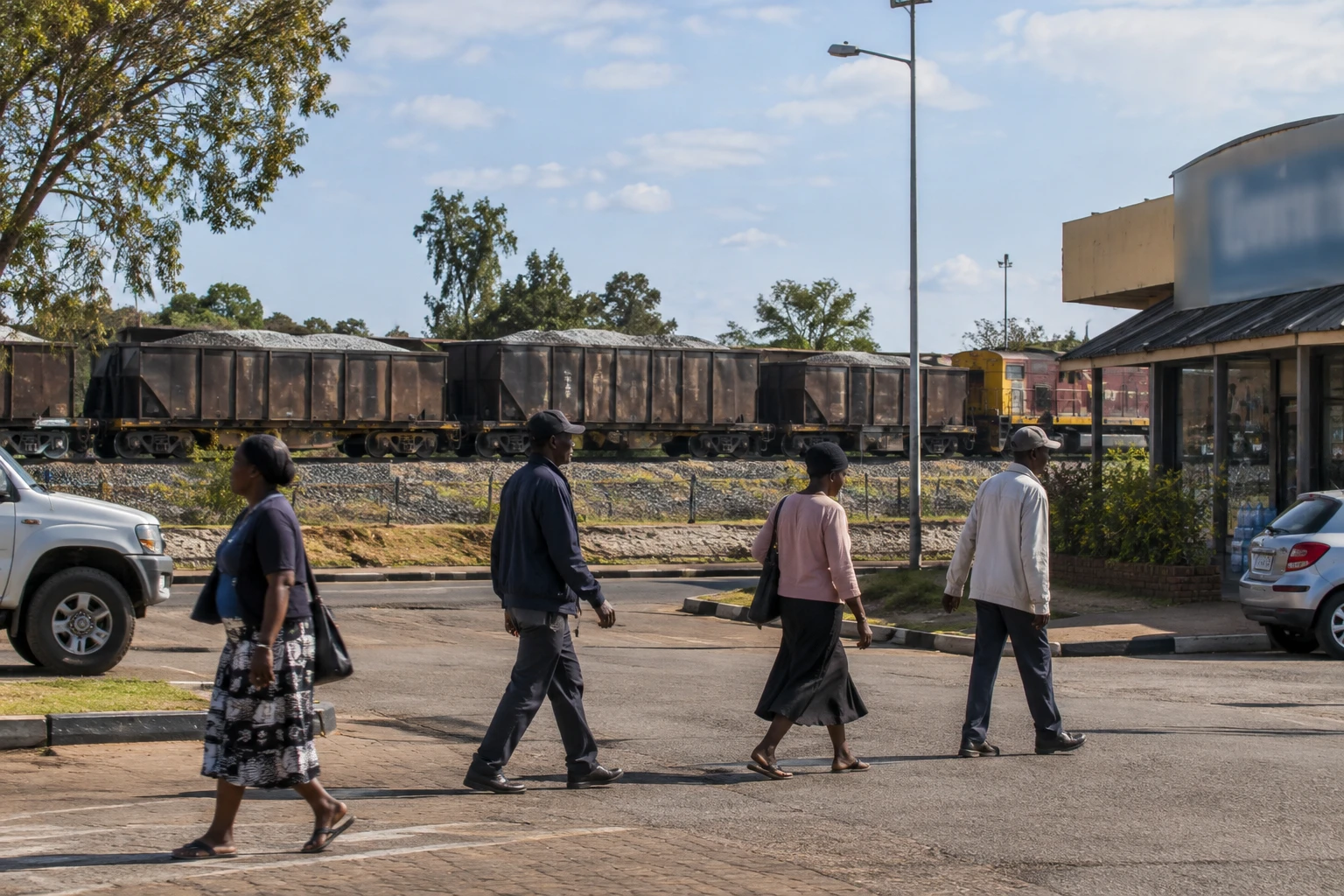
A train carrying nearly 3,000 tonnes has travelled on South Africa’s rail network without being operated by Transnet. The trial opens up a new option for exporters, but it does not yet show whether goods will reach ports more reliably or at lower cost.
A shared network, still publicly owned
The change concerns freight, or the transport of goods. The tracks remain state-owned. Transnet Rail Infrastructure Manager, the Transnet division responsible for the network, manages the infrastructure and operators’ access. Private companies can now run their own trains on certain corridors.
The reform is part of South Africa’s strategy to restore its logistics sector, following several years of declining rail volumes. Rail matters for mining exports, as well as for industry and regional trade. Roads have taken up some of the slack, at higher cost for bulk goods.
The stakes extend beyond South Africa’s borders. The north-east corridor links mining areas in Mpumalanga to the Matola terminal in Mozambique. Both countries are members of the Southern African Development Community (SADC), which aims to facilitate trade between its member states. A more reliable link could therefore matter for cross-border supply chains, even if it does not by itself resolve port or road bottlenecks.
First trial ahead of commercial services
Grindrod and Transnet Rail Infrastructure Manager confirmed that a Grindrod test train left Komatipoort empty on 1st November 2026, then returned the next day carrying 2,991 tonnes. The company thus became the first private operator to complete a loaded journey on the national network under the open-access system. Grindrod’s statement on the rail trial says the operation used its own locomotives and wagons.
The test demonstrates operational capability. It is not yet a regular commercial service. Grindrod plans to start transporting coal from Mpumalanga to its Matola terminal in 2027. The company has set a target of about 288,000 tonnes in its first year, subject to available capacity and allocated train paths.
The scheme is not limited to Grindrod. In May 2026, Transnet said that eleven private companies had signed access agreements. The state-owned group estimated that the allocated train paths could add 24 million tonnes of annual capacity, with scope for an increase over time. This is announced capacity, not tonnage already transported. Transnet sets out the agreements and selected operators.
The cost of delays is measured in exports
Rail difficulties have reduced the volumes mines can move to ports. The Minerals Council South Africa estimates that constraints affecting rail and port facilities led to a shortfall of 98 billion rand in coal and iron ore export earnings between 2021 and 2023. This estimate comes from the mining industry body, which bases it on export volumes and average prices. Its report on the state of the mining sector in 2023 also notes the use of alternative ports, including Maputo, and road transport.
Signs of recovery vary between companies and corridors. Thungela Resources said it had sold 7.4 million tonnes of South African coal for export in the first half of 2026, against saleable production of 6.3 million tonnes. The company attributes the difference, among other factors, to improved Transnet rail services and additional capacity. Thungela’s interim results provide these figures, which describe one group’s performance and do not represent the sector as a whole.
For mining companies, more available train paths will make a difference only if trains run predictably and ports can handle the cargo. Larger exporters have more resources to organise alternative routes. Smaller companies are more likely to be affected by delays, road transport costs and fluctuations in capacity. The consequences may also affect jobs and public revenues linked to mining and logistics activities.
Tracks and ports remain the decisive test
The shared network still depends on the condition of its tracks, locomotives, wagons and signalling systems. On the 861-kilometre iron ore line between Sishen and the port of Saldanha, the government has announced a refurbishment programme worth 8.9 billion rand by 2030. It also says 1.47 billion rand is being spent on maintaining rolling stock assigned to the corridor. The South African government news service describes the work.
The reform must therefore advance on two fronts. On the one hand, opening the network allows other companies to bring in equipment and offer services. On the other, Transnet and the state must maintain the network and ensure fair access rules. Without these conditions, more operators could end up competing for infrastructure whose limitations remain unchanged.
The South African government is targeting 250 million tonnes of rail freight a year by 2030. Grindrod’s trial marks a tangible step, but a modest one in relation to that goal. The decisive indicators will be regular services actually launched, volumes transported, corridor reliability and shipping times. For exporters and trade with Mozambique and the rest of SADC, opening the network will bear fruit only if cargo moves to ports without bottlenecks simply shifting from one link in the chain to another.