Algeria
 Egypt
 Libya
 Morocco
 Sudan
 Tunisia
 Benin
 Burkina Faso
 Cabo Verde
 Côte d'Ivoire
 Ghana
 Guinea
 Guinea-Bissau
 Liberia
 Mali
 Mauritania
 Niger
 Senegal
 Sierra Leone
 The Gambia
 Togo
 Cameroon
 Central African Republic
 Chad
 DR Congo
 Equatorial Guinea
 Gabon
 Republic of the Congo
 São Tomé and Príncipe
 Burundi
 Comoros
 Djibouti
 Eritrea
 Ethiopia
 Kenya
 Madagascar
 Malawi
 Mauritius
 Mozambique
 Rwanda
 Seychelles
 Somalia
 South Sudan
 Tanzania
 Uganda
 Angola
 Botswana
 Eswatini
 Lesotho
 Namibia
 South Africa
 Zambia
 Zimbabwe
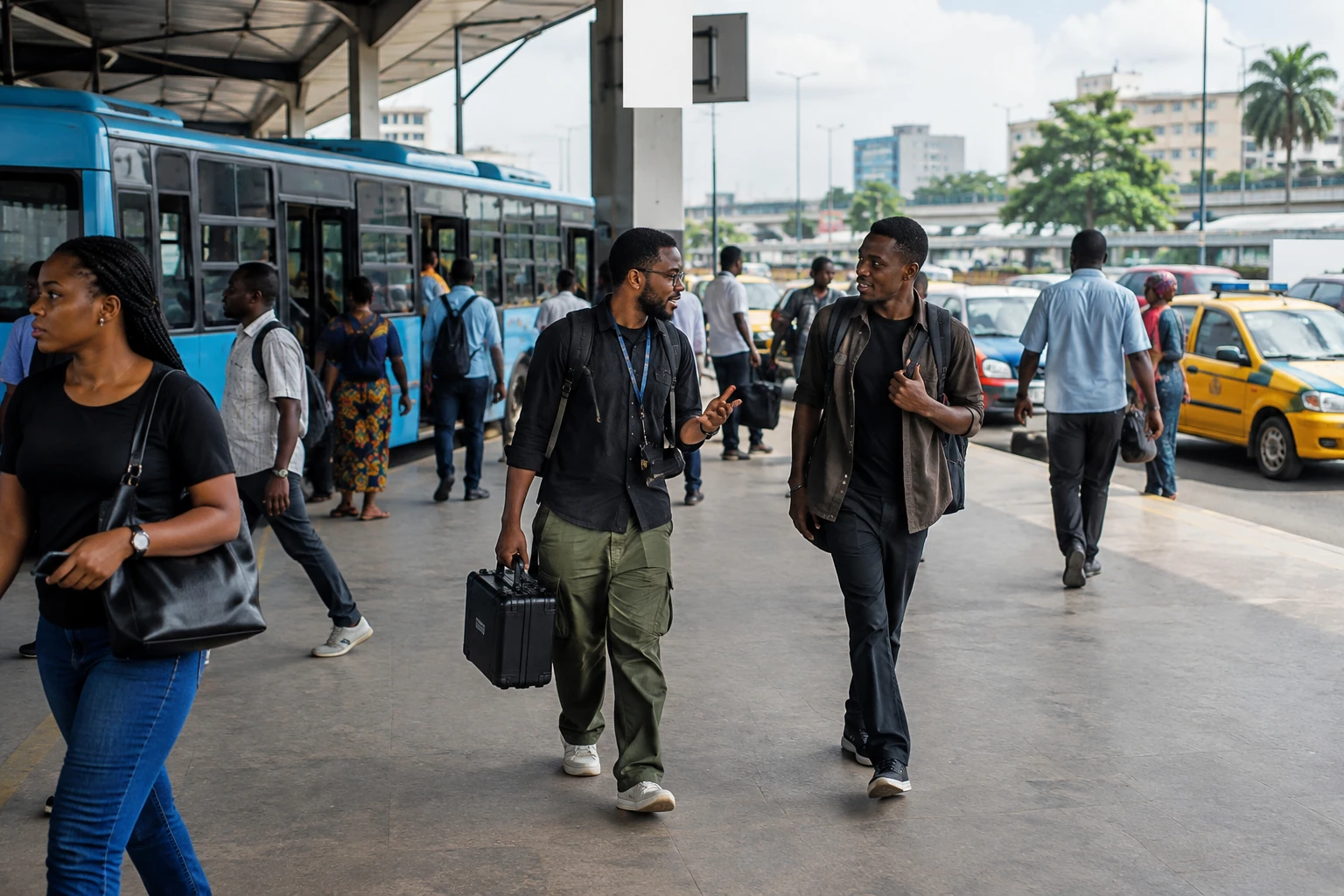
In Lagos, a film’s value is not determined solely by the number of people in the cinema. It also depends on its ability to secure funding, a distributor and an audience beyond national borders. The Africa International Film Festival (AFRIFF) is putting this challenge facing the entire industry at the heart of its 15th edition.
In Lagos, cinema is also looking for partners
The festival runs from 1 to 7 November 2026 in Nigeria’s commercial capital. Alongside the screenings, the African Film and Content Market (AFCM) brings industry professionals together from 2 to 5 November. Producers, buyers, broadcasters and investors can make contacts and consider co-production or distribution projects. The market is therefore designed as a business forum, not merely a cultural showcase.
This shift addresses a practical challenge. A film can be selected and attract public interest without having the resources needed for production or lasting access to screens. The professional meetings aim to bring creators together with people able to finance, sell and distribute their work.
The AFCM programme includes discussions on production financing, international co-productions, distribution and artificial intelligence. The festival website advertises four days of meetings between African and international producers, investors, distributors and platforms. For programme details, see the AFCM market’s professional programme.
A pan-African selection, figures to treat with caution
The edition is organised around the theme “Frames of the Future: Africa’s Creative Intelligence”, focusing on the future of African creativity in the face of technological change. The question of artificial intelligence sits alongside longer-standing concerns: the means of production, the circulation of works and control over rights.
Figures published about the selection do not, however, fully align. Nigerian coverage reports 135 films, including 23 feature films. The official selection page, by contrast, lists 119 films across nine categories at the time it was consulted. The difference may reflect a programme update or different counting criteria. In the absence of public clarification, these figures should not be presented as directly equivalent. The online programme lists the announced titles and screenings: the official AFRIFF 2026 selection.
The market also gives different estimates across its materials. Coverage published on 4 November refers to nearly 1,500 expected participants. The AFCM website, meanwhile, announces 1,000 participants, ten national delegations and around 100 invited companies. These figures describe targets or stated capacity, not necessarily actual attendance. They therefore do not yet show how many contracts were concluded.
The event is part of a longer history. Founded in 2010 by Nigerian producer and entrepreneur Chioma Ude, AFRIFF has made Lagos a meeting point for African filmmakers and the diaspora. The previous edition reportedly drew about 21,000 spectators, according to figures cited in coverage of the 2026 edition. As that figure is not independently confirmed here by a second source, it should remain attributed.
From visibility to revenue: the industry’s challenge
For filmmakers, moving from a festival to a market can open up avenues for financing and distribution. For buyers and platforms, it makes it easier to discover new content and partners. But holding professional meetings guarantees neither investment, contracts nor a commercial release. The AFCM’s real impact will depend on the agreements reached and whether they translate into jobs and revenue for productions.
The potential benefits are also unevenly distributed. Established companies, often based in major cities, generally have more resources to travel, present a project and negotiate. Independent filmmakers and those from regions less connected to funding networks may face greater obstacles. A continental market can only be inclusive if access to meetings and finance is not limited to professionals who are already visible.
Nigeria has a substantial audiovisual sector, notably thanks to Nollywood, but Nigerian films do not represent the full diversity of cinema across the continent. A selection bringing together works from several countries can help stories and expertise travel. Distribution deals must, however, extend beyond the event and reach cinemas, television channels and digital services in each market.
A test for Lagos and regional exchanges
The ambition therefore extends beyond Nigeria’s borders. In West Africa, the Economic Community of West African States (ECOWAS) brings together countries whose audiovisual industries could benefit from co-production and shared distribution networks. But languages, regulations, the costs of moving across borders and access to finance still complicate these exchanges. A professional market can bring industry players together; on its own, it cannot remove these barriers.
Across the continent, the challenge is to turn cultural recognition into economic capacity: to negotiate rights, finance projects over the long term and distribute works to diverse audiences. The next indicators to watch are the concrete outcomes of the meetings in Lagos, actual market attendance and the circulation of selected films after the festival.
AFRIFF 2026 thus highlights a decisive question for African cinema: how to ensure that a film does not stop at its screening, but also finds the means to be produced, sold and seen. The answer will be measured less by announcements than by the lasting partnerships forged in Lagos and the works that actually reach their audiences.