Algeria
 Libya
 Morocco
 Sudan
 Tunisia
 Benin
 Burkina Faso
 Cabo Verde
 Côte d'Ivoire
 Ghana
 Guinea
 Guinea-Bissau
 Liberia
 Mali
 Mauritania
 Niger
 Nigeria
 Senegal
 Sierra Leone
 The Gambia
 Togo
 Cameroon
 Central African Republic
 Chad
 DR Congo
 Equatorial Guinea
 Gabon
 Republic of the Congo
 São Tomé and Príncipe
 Burundi
 Comoros
 Djibouti
 Eritrea
 Ethiopia
 Kenya
 Madagascar
 Malawi
 Mauritius
 Mozambique
 Rwanda
 Seychelles
 Somalia
 South Sudan
 Tanzania
 Uganda
 Angola
 Botswana
 Eswatini
 Lesotho
 Namibia
 South Africa
 Zambia
 Zimbabwe
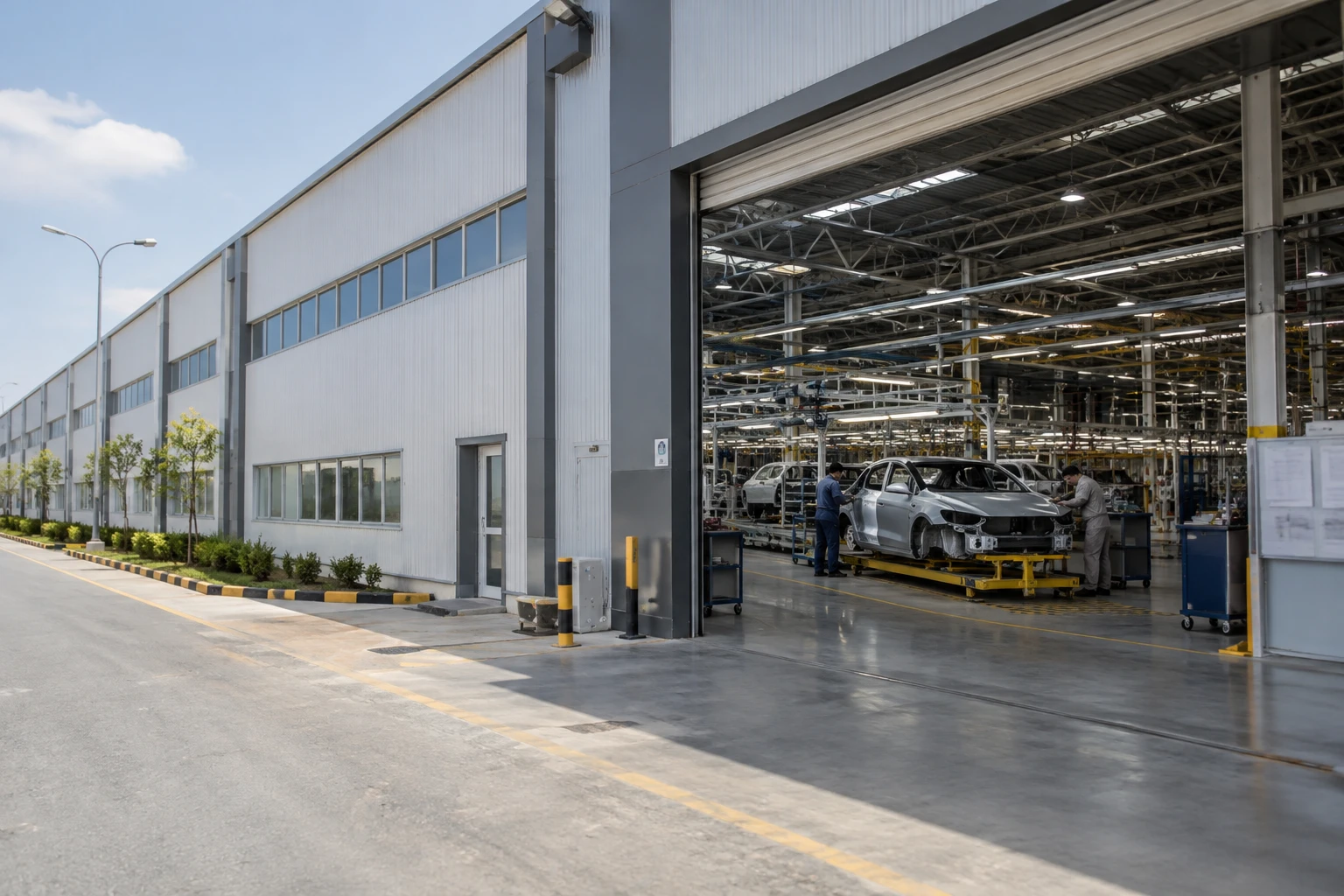
Assembling an electric car in Egypt is an industrial milestone. But the decisive question remains how much value is created locally: parts, skills, jobs and suppliers able to go beyond simple assembly.
From local assembly to an industrial sector
On 31 October 2026, El Nasr Automotive launched production of the MAGE EV at its plant in Helwan, near Cairo. The electric vehicle, made by Chinese brand Dongfeng, is being assembled under a partnership bringing together the state-owned company, SN Automotive and Egyptian group Al-Safi. The announcement was reported by state news agency MENA and confirmed by Ahram Online.
Executives have announced that up to 45% of components will be local. This rate marks a starting point, but does not mean that nearly half the vehicle’s value is produced in Egypt: details of the components concerned and their economic weight have not been made public. Sales are scheduled to begin in the first quarter of 2027.
El Nasr’s revival is based on the refurbishment of its assembly, welding and paint lines. The challenge therefore goes beyond launching a model. It is about bringing a state-owned industrial facility back into operation and connecting it with private partners and a foreign manufacturer. The announced volume of 3,000 vehicles in the first year remains a forecast attributed to the company’s chief executive.
A growing but still limited market
Egyptian demand for electric cars is rising rapidly from a still-low base. According to the International Energy Agency, around 7,900 new electric cars were sold in the country in 2025. Egypt was then Africa’s largest market, ahead of Morocco and South Africa. Together, these three markets accounted for nearly 70% of the continent’s sales.
This growth does not mean electric cars are already affordable for most households. Purchase prices, financing, the availability of charging points and maintenance services will all affect uptake. Consumers in Cairo and other major urban centres may benefit from infrastructure sooner, while the needs of secondary cities and rural areas will depend on its rollout.
The transition also depends on the capacity of the electricity grid and the availability of reliable charging points. Producing vehicles in the country may reduce some dependence on imports, but it will not by itself resolve questions of cost, range, maintenance and access to electricity.
A national strategy, several partnerships
The project is part of the Egyptian authorities’ efforts to develop car production and retain more value in the country. In August 2026, El Nasr, Geely and distributor Abou Ghali Motors signed a memorandum of understanding to study the local assembly of new-energy vehicles. This is a potential area of cooperation, not yet an announced production programme.
The private sector is also preparing new capacity. The Mansour Group plant under construction in 6th of October City is expected to be able to assemble up to 50,000 vehicles a year in its first phase, with both combustion and electric powertrains. Banque Misr says it is scheduled to start operating in the first quarter of 2027. This project, like El Nasr’s, illustrates investors’ interest in the domestic market and local supply chains.
For these investments to have a lasting impact, assembly will need to be accompanied by technical skills, Egyptian suppliers and sufficient demand. Strategic components, particularly batteries and electric motors, account for a large share of a vehicle’s value. The announced local-content rate will therefore need to be tracked over time, with more detailed information on the parts actually manufactured locally.
A regional role still to be built
Egypt is a member of the African Union and the Arab League, and belongs to the Arab Maghreb Union, a North African regional organisation. Developing a local automotive base could strengthen component trade and open up opportunities in other African and Arab markets. But this prospect will depend on costs, standards, infrastructure and the ability to produce beyond domestic demand.
Across Africa, the concentration of electric car sales in a few countries shows that the continental market remains young and unevenly distributed. Egypt’s challenge is therefore not just to launch a vehicle, but to turn industrial experience into a competitive value chain. The next milestones will be the sales launch announced for 2027, the actual growth in local components and the realisation of other assembly projects.