Algeria
 Egypt
 Libya
 Morocco
 Sudan
 Tunisia
 Benin
 Burkina Faso
 Cabo Verde
 Côte d'Ivoire
 Ghana
 Guinea
 Guinea-Bissau
 Liberia
 Mali
 Mauritania
 Niger
 Nigeria
 Senegal
 Sierra Leone
 Togo
 Cameroon
 Central African Republic
 Chad
 DR Congo
 Equatorial Guinea
 Gabon
 Republic of the Congo
 São Tomé and Príncipe
 Burundi
 Comoros
 Djibouti
 Eritrea
 Ethiopia
 Kenya
 Madagascar
 Malawi
 Mauritius
 Mozambique
 Rwanda
 Seychelles
 Somalia
 South Sudan
 Tanzania
 Uganda
 Angola
 Botswana
 Eswatini
 Lesotho
 Namibia
 South Africa
 Zambia
 Zimbabwe
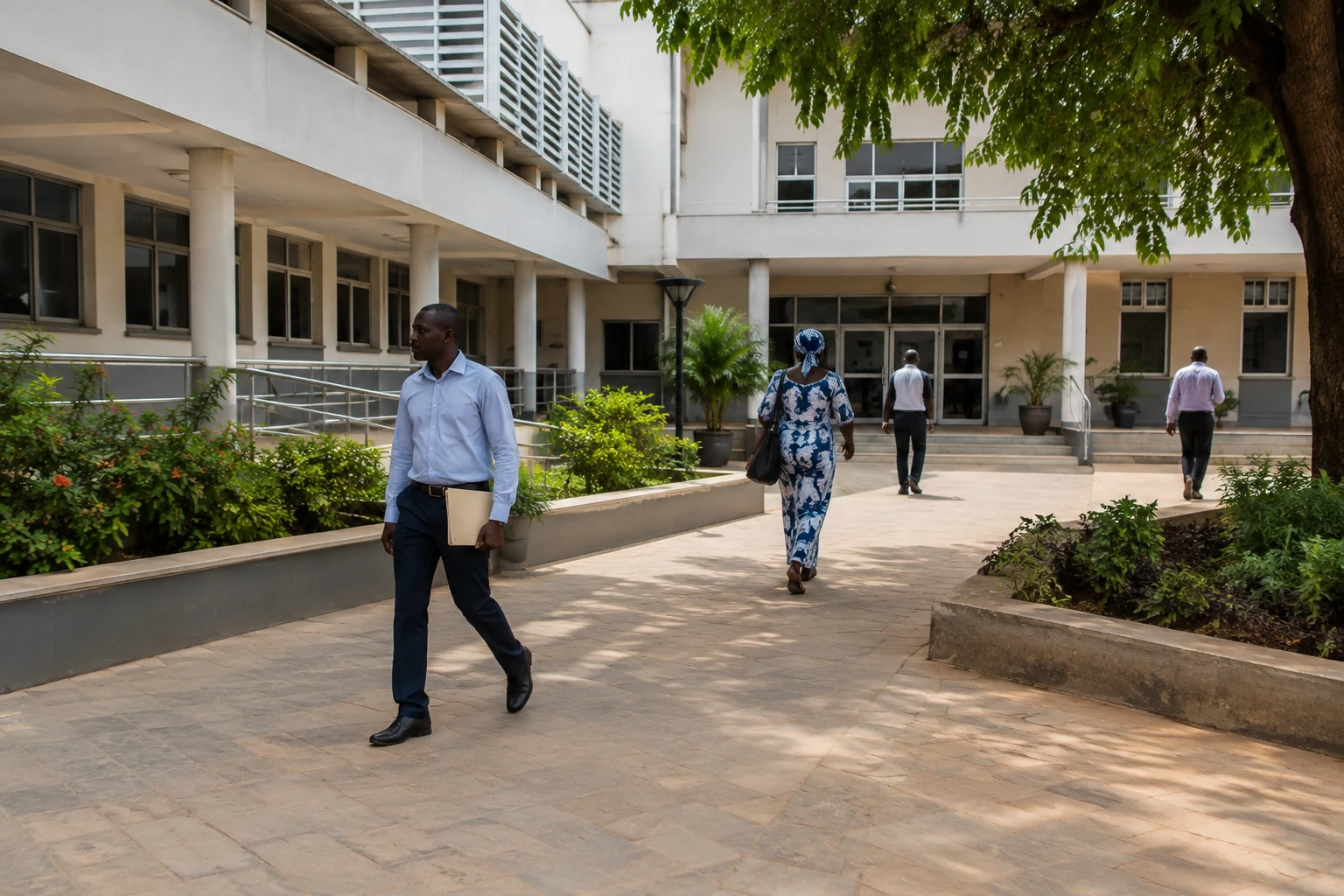
For households and businesses in The Gambia, growth is measured not only by construction sites or visitor numbers. It is also felt in the cost of living, the reliability of electricity and the state’s ability to fund public services. The latest forecasts point to sustained activity, but they do not make these daily constraints disappear.
An economy driven by services and investment
In Banjul, the Gambian authorities are seeking to maintain activity while restoring fiscal room for manoeuvre. The country is progressing with a programme backed by the International Monetary Fund (IMF), which links financing to reform targets. The Extended Credit Facility (ECF) supports economic and budgetary reforms. The Resilience and Sustainability Facility (RSF) supports, in particular, measures related to climate risks.
This framework forms part of the economic trajectory set in motion after the financial difficulties of the early 2020s. It exists alongside national development priorities and The Gambia’s regional commitments within the Economic Community of West African States (ECOWAS), which brings together countries linked by trade, mobility and shared stability issues.
The IMF forecasts real gross domestic product growth of 5.1% in 2026 and 5.1% in 2027. The 2026 projection marks a slowdown from the 6% estimated for 2025. Construction, tourism and diaspora remittances are expected to support activity, according to information released after the institution’s mission to Banjul.
These drivers do not all affect residents in the same way. Construction projects can create jobs and boost local suppliers, but their impact depends on the share of materials and skills sourced in the country. Tourism generates income for businesses and workers in the sector. Diaspora remittances directly support many households, but they do not replace stable jobs or public revenue.
Prices and electricity are pressure points
Slowing inflation offers some relief, but prices continue to rise. According to figures reported for September 2026, annual price growth fell from 7% in April to 6.1% in September. It remains above the Central Bank of The Gambia’s 5% target. For households, lower inflation means prices are rising more slowly, not that they are returning to their previous level.
Electricity supply remains another weak point. Disruptions have led the government to provide emergency financial support to the National Water and Electricity Company, NAWEC. The IMF is calling for further measures to reduce the company’s losses, improve bill collection and strengthen its financial position.
This issue goes beyond the management of a public company. Outages or an unreliable supply make it harder for shops, workshops and service providers to operate, and they sometimes have to bear additional costs to keep their businesses running. Public financial support may prevent an immediate deterioration in service, but it also uses resources that cannot be allocated to other needs.
The outlook remains exposed to fluctuations in commodity prices, geopolitical uncertainty and climate shocks. These risks can make imports more expensive, disrupt energy supplies or weigh on revenues. The growth forecast therefore indicates an expected trend, not a guarantee of every household’s income or the quality of services.
Financing deal still awaiting approval
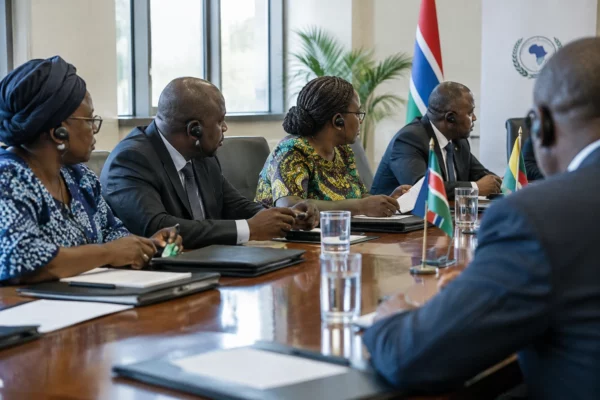
At the end of a mission to Banjul from 19 to 30 October 2026, IMF staff and the Gambian authorities reached a staff-level agreement on the sixth review of the ECF and the third review of the RSF. According to reports published by Gambian media, completion of both reviews could pave the way for 20.73 million special drawing rights, or about $28 million.
This financing is not yet secured: it remains subject to approval by the IMF’s executive board and completion of the agreed prior actions. It would be added to disbursements already made under the two facilities. The announced figure therefore represents possible financing, not money immediately available in government coffers.
The authorities reportedly met all eight quantitative performance criteria set for the end of June, while three of the four indicative targets were said to have been met. The tax revenue target was reportedly not fully achieved. These results, reported at the end of the review, shed light on the programme’s monitoring, but are not in themselves enough to measure the impact of budget choices on services or purchasing power.
Consolidating public finances without squeezing social priorities
The IMF is calling for continued revenue mobilisation, spending restraint and improved cash management. It also stresses the need to clear arrears and protect priority social spending. The Gambian government’s challenge is to reduce debt risks without shifting the cost of adjustment on to the most vulnerable households.
This balancing act plays out in concrete budget decisions: which spending to protect, how to prevent unpaid bills from piling up, and how to fund urgent needs while limiting borrowing? More effective tax collection can strengthen state resources. But results will also depend on the quality of spending and the ability of public administrations to direct it towards the services people need.
The next milestone is the IMF executive board’s consideration of the agreement. Until then, the points to watch are whether the financing is secured, the trajectory of public revenues, decisions to stabilise NAWEC and price movements. For The Gambia and its ECOWAS partners, the issue illustrates a tension shared across the region: supporting economic activity and essential services while preserving public finances that can absorb new shocks.
Background data and the programme’s previous reviews can be consulted in the IMF’s official communications on previous reviews in The Gambia, reports by Gambian outlet The Gambia Journal on the October agreement and price data published by the Central Bank of The Gambia.