Algeria
 Egypt
 Libya
 Morocco
 Sudan
 Tunisia
 Benin
 Burkina Faso
 Cabo Verde
 Côte d'Ivoire
 Ghana
 Guinea
 Guinea-Bissau
 Liberia
 Mali
 Mauritania
 Niger
 Senegal
 Sierra Leone
 The Gambia
 Togo
 Cameroon
 Central African Republic
 Chad
 DR Congo
 Equatorial Guinea
 Gabon
 Republic of the Congo
 São Tomé and Príncipe
 Burundi
 Comoros
 Djibouti
 Eritrea
 Ethiopia
 Kenya
 Madagascar
 Malawi
 Mauritius
 Mozambique
 Rwanda
 Seychelles
 Somalia
 South Sudan
 Tanzania
 Uganda
 Angola
 Botswana
 Eswatini
 Lesotho
 Namibia
 South Africa
 Zambia
 Zimbabwe
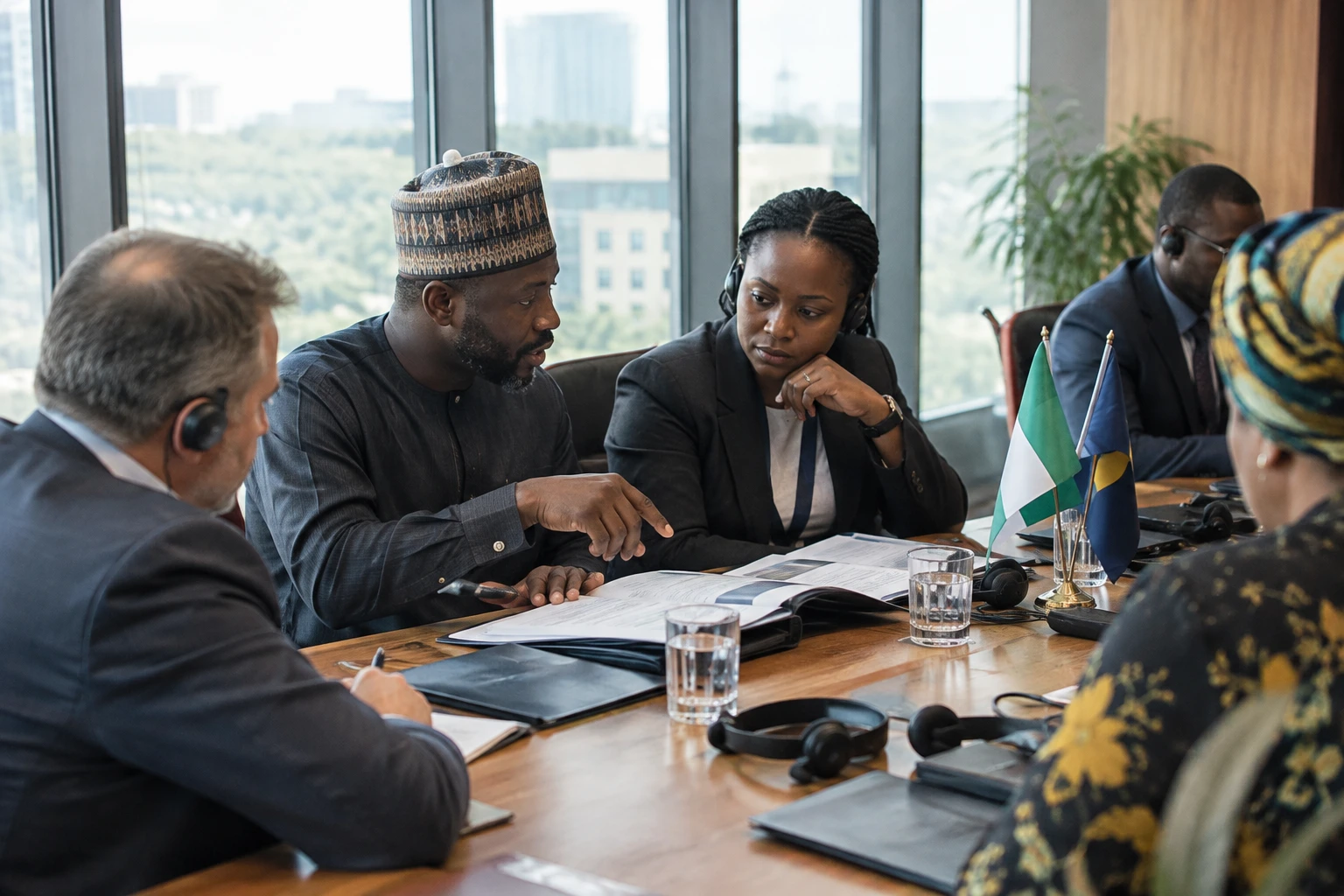
A film can travel the world, and a Nigerian song can fill venues abroad. But for the small businesses that produce, distribute or style this visibility, credit is often still hard to obtain. A new agreement signed in Abuja aims to bring banks closer to these activities, whose revenues do not always fit conventional financing models.
Funding channelled through the public development bank
On 27 October 2026, the Bank of Industry of Nigeria (BoI) and the French Development Agency (AFD) signed a $30 million credit facility. The BoI, a public institution that finances industrial development, is to redistribute the funds to businesses in film, music, fashion, design, video games and visual arts. The agreement was signed in Abuja by the bank’s managing director, Olasupo Olusi, and AFD chief executive Christophe Lecourtier, according to several accounts published after the ceremony.
At least 90% of the facility is to be directed towards micro, small and medium-sized enterprises. Businesses led by women or young people are among the priority beneficiaries. The agreement also includes technical assistance to help the BoI assess creative projects more effectively and design suitable products. One media outlet specialising in audiovisual industries puts its value at €500,000, while reports carried in Nigeria cite about $557,000.
This credit line does not mean that the money has already reached producers’ accounts. Practical terms — interest rates, collateral, repayment periods, amounts per application and the application process — will be decisive. Until these are specified, the announced facility opens a funding channel, but it is not yet possible to assess how many businesses will actually benefit.
Recognition does not guarantee access to credit
Nigeria has cultural industries recognised far beyond its borders. Nollywood produces more than 2,500 films a year, according to the Nigerian Investment Promotion Commission and the US government’s trade guide. Afrobeats and Nigerian fashion also contribute to the country’s profile. But international visibility does not resolve cash-flow, distribution, copyright protection or production financing difficulties.
These businesses often earn revenue from a specific project: a film must be made before it can be sold, a music catalogue depends on rights and how they are exploited, while a fashion label must pay for materials and stock before making sales. For a bank, these assets are harder to value than conventional equipment or property. A lack of collateral and irregular revenues can therefore shut out small businesses, even when they have an audience.
The BoI already operates in this ecosystem. AFD supports, among other initiatives, the i-DICE programme, which combines support for digital and creative businesses with training. In Nigeria, the Central Bank and the Bankers’ Committee have also operated a financing initiative since 2018 covering film, music and fashion, among other sectors. The new facility stands out for its scale and dedicated focus on cultural industries, but it is part of a series of efforts to tailor financial tools more closely to the sector.
A bet on jobs and the Destination 2030 strategy
For Olasupo Olusi, the creative sector is among the areas with the potential to support employment and economic activity in Nigeria. This ambition aligns with Destination 2030, the government framework aimed at strengthening the creative economy and tourism. In October, the relevant federal ministry launched a data platform to map these activities more effectively and guide investment decisions. The authorities link the strategy to job creation and growth targets, which remain ambitions rather than results already achieved.
The issue extends beyond businesses based in Lagos or Abuja. A production chain can employ technicians, tailors, screenwriters, artisans, developers and service providers in different states. However, the benefits will depend on whether small businesses, including those outside the main economic centres, can access loans. Eligibility criteria and the treatment of collateral will therefore matter as much as the overall amount announced.
Turning to credit also represents an economic choice: supporting businesses that can repay and grow, rather than funding projects solely through grants. This model can provide a more sustainable source of capital. It also carries a risk of exclusion: newer or less formalised initiatives, or those with uncertain revenues, may be left out. The technical assistance planned for the BoI will need to help it assess the specific realities of creative professions, without mechanically applying criteria designed for manufacturing.
A West African reach to be built
Nigeria is a major member of the Economic Community of West African States (ECOWAS), which brings countries in the region together around economic and political cooperation. From 21 to 23 October, experts from member states met in Lomé to advance a regional cultural calendar and a shared database. The organisation is also seeking to promote the market for cultural goods and services and the visibility of West African artistic expression.
This regional momentum could expand opportunities for Nigerian businesses through co-productions, tours, digital distribution and the circulation of creative work across borders. But that requires enforceable copyright rules, reliable payment systems and balanced partnerships between markets. The financing agreement signed in Abuja is national; it does not, by itself, create a shared mechanism across ECOWAS.
The next steps will depend on the practical arrangements for distributing the $30 million and on the first loans awarded. The number of SMEs supported, the effective participation of businesses led by women and young people, and access for less established creators will show the reach of the scheme. For now, the agreement puts credit at the centre of a broader debate: how to turn a global cultural audience into viable businesses and lasting jobs in Nigeria and the region.
For more information, see reports on the Bank of Industry of Nigeria carried by Proshare, Broadcast Media Africa’s account of the AFD-BoI agreement and data from the Nigerian Investment Promotion Commission on the creative economy.